Skip to content
Total Skills UK
City & Guilds AccreditedJIB Preferred Provider

City & Guilds 2365 Level 2 & 3 Electrician Diploma Package

Complete City & Guilds electrical installation training combining the Level 2 Diploma (2365-02), Level 3 Diploma (2365-03), and the 2-day 18th Edition Wiring Regulations course (C&G 2382-26). Fast-track your way to becoming a qualified electrician — study theory online from anywhere in the UK, attend practical training at our centre. Learners join from across the UK.

5.0(146 reviews)|8-12 Months|Nottingham
£4,650or from £250/mo
Enrol NowPayment Plans
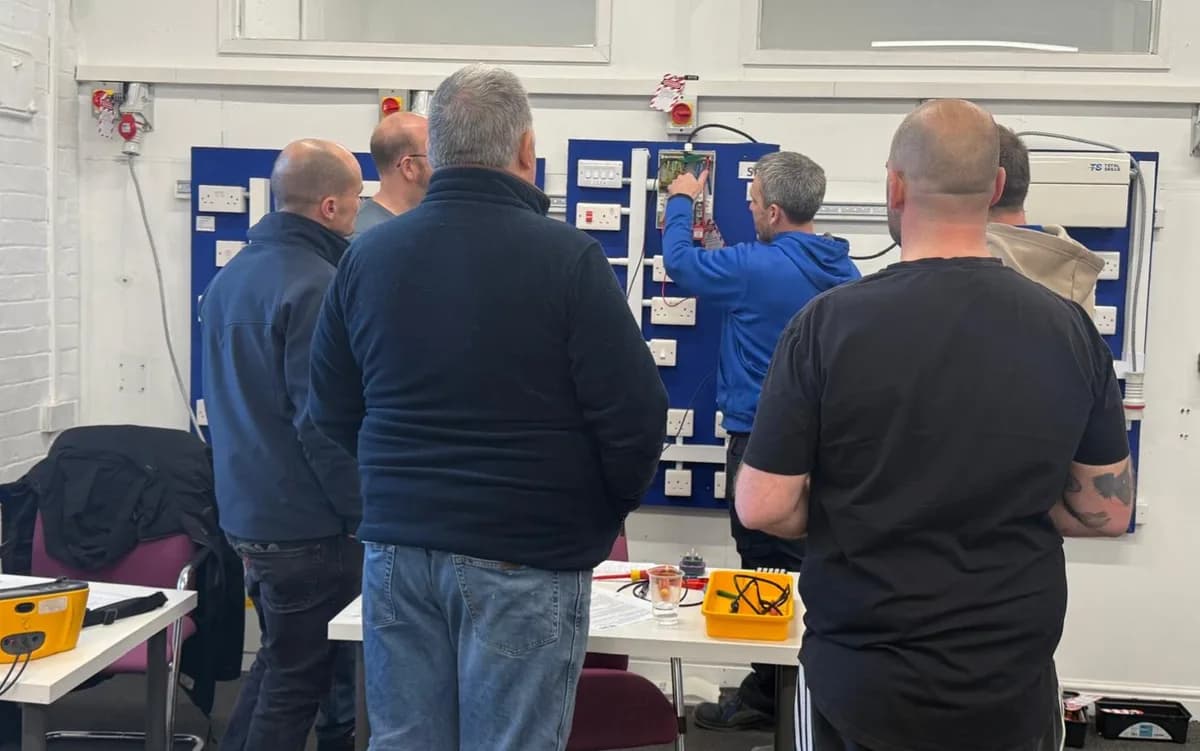
Group of trainees gathered around blue electrical training panel, learning hands-on wiring and circuit installation techniques.
C&G 2365 Level 2 + 3
8–12 months18th Edition includedSave £300
2,800+ students trained95% pass rateCity & Guilds Centre 009512

Professionals from these organisations train with us

AmazonNHSJLRBurberryPepsiCoRBSBalfour BeattyGE VernovaThermo FisherKier GroupDB CargoIMI PrecisionNG BaileyBritish Geological SurveyUniversity Of NottinghamMODAmazonNHSJLRBurberryPepsiCoRBSBalfour BeattyGE VernovaThermo FisherKier GroupDB CargoIMI PrecisionNG BaileyBritish Geological SurveyUniversity Of NottinghamMOD
BabcockBritish ArmyBureau VeritasGalliford TryNottingham City CouncilNottinghamshire County CouncilOpenreachParker HannifinRAFRS ComponentsScottishpowerSertecToyotaWalkersWest Yorkshire PoliceRoyal NavyBabcockBritish ArmyBureau VeritasGalliford TryNottingham City CouncilNottinghamshire County CouncilOpenreachParker HannifinRAFRS ComponentsScottishpowerSertecToyotaWalkersWest Yorkshire PoliceRoyal Navy
No Waiting List

Start Immediately

Enrol today and get instant access — no need to wait for a start date

Study at your own pace24/7 online accessLearn from any device

Flexible Payment Options

Choose the payment plan that works best for you

Rated 5.0/5 from 146+ Google reviews
Great place to do all your electrical courses, The team is amazing from Administration to Tutors, they will do everything to help you pass the course. I've completed, Level 3, 18th Edition, 2391-52 with Total Skills. With no experience in the electrical field, i struggled a little bit with 2391 but the team helped to make me understand and passed the course. Next step is NVQ and EV course.
ATTA NKRUMAH ASUBONTENGa few days ago
I recently completed my Level 2 Electrical Installation course and had a great experience from start to finish. The flexible structure worked perfectly around my job, allowing me to study at my own pace and properly understand the content. The weekend practical sessions were a huge advantage. The tutors were excellent throughout. Their guidance, attention to detail, and support during the practical sessions really built my confidence. From day one through to assessment, the standard of teaching was first class. I felt well prepared going into each of the exams and the practical assessment, achieving strong results across all areas. I’d highly recommend this course to anyone looking to get into the electrical industry.
Neil Birda few days ago
Only the best experience. Very friendly staff, knowledgeable tutors, lot of information and learning provided. Definitely will continue with Total Skills for future development in electrical field. 10 out of 10.
Leonards Opriskoa month ago

Not ready to book? Get the full course details by email.

What's Included

On-Site Guide BS 7671:2018+A4:2026
City & Guilds accredited — 2365-02 and 2365-03
Complete Level 2 & Level 3 training in one enrolment
Includes the 2-day 18th Edition course (C&G 2382-26)
Study online from anywhere in the UK
Unlimited practical training days at our centre
Flexible hybrid learning — study online, train in-centre
Free parking
Small class sizes

Course Overview

Last updated June 2026

The Complete Electrical Installation Diploma — Level 2 and Level 3 Combined

The Level 2 & 3 Diploma Package combines both City & Guilds 2365 electrical installation qualifications into a single enrolment. You get the Level 2 Diploma (2365-02), the Level 3 Diploma (2365-03), and a 2-day Wiring Regulations classroom course — everything you need to build a solid foundation for your electrician career, with the convenience of one enrolment and one payment plan.

Who Is This Package For?

  • Career changers — No prior electrical experience required. This is the most popular route for adults retraining as electricians. Many of our learners come from completely different industries and successfully qualify.

  • Those committed to the full pathway — If you already know you want to progress through Level 2 and Level 3, enrolling on the combined package means no gap between qualifications. You move straight from Level 2 into Level 3 while the knowledge is fresh.

  • Industry workers without formal qualifications — If you're already working in electrical or construction but lack recognised credentials, this package takes you from entry-level through to advanced theory in one continuous programme.

  • Employers upskilling their workforce — We work with companies across the UK who book this package for their employees. In-centre practical days can be scheduled flexibly around your business needs, on weekdays or weekends.

What's Included

The package includes three qualifications:

  • City & Guilds 2365-02 Level 2 Diploma in Electrical Installations — The UK's most recognised entry-level electrical qualification. Covers electrical science fundamentals, health and safety, wiring systems, cable installation, and the BS 7671 Wiring Regulations.

  • City & Guilds 2365-03 Level 3 Diploma in Electrical Installations — Advanced electrical theory including three-phase systems, fault diagnosis and rectification, inspection and testing procedures, and electrical systems design.

  • 2-day Wiring Regulations classroom course — An intensive classroom session at our Nottingham training centre covering the requirements of BS 7671, preparing you for the electrical industry's most essential regulation.

How the Course Works

This is a hybrid course combining flexible online theory with hands-on practical training at our Nottingham centre. Study the theory units at your own pace through our online learning platform — available 24/7 on desktop, or via our mobile app for iOS and Android, with no live sessions to attend. When you're ready, book your in-centre practical days at times that suit you.

In-Centre Training & Assessments

You'll need approximately 13 to 16 days at our training centre across both levels, depending on your existing practical skills. Level 2 sessions cover hands-on wiring, testing, and fault finding. Level 3 builds on this with fault diagnosis and rectification, inspection and testing procedures, and electrical systems design.

We offer unlimited training days — attend as many sessions as you need until you feel fully confident, at no additional cost. In-centre days are available on both weekdays and weekends, giving you complete flexibility to fit training around work or other commitments.

Exams are normally taken at the centre. If you prefer, these can also be sat remotely with online invigilation for a small additional fee.

Your Career Pathway After the Package

After completing both diplomas, the remaining steps to your JIB Gold Card are:

Qualified electricians in the UK earn £35,000–£50,000+ per year, making the training investment one of the fastest-returning career decisions available.

JIB ECS Card Support

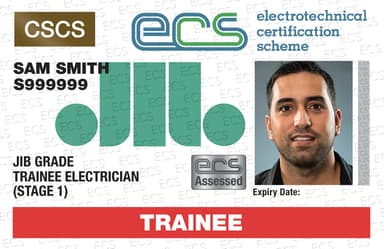
As a recognised JIB training provider, we help you apply for your JIB Trainee Electrician ECS Card from the point of enrolment — essential for working on construction sites and demonstrating your credentials to employers.

ELCAS Funding

This package is eligible for ELCAS (Enhanced Learning Credits) funding for serving and former Armed Forces personnel. Total Skills is an approved ELCAS provider (Provider Number: 12999), offering up to 80% financial support.

Flexible Payment Options

We offer interest-free payment plans with no credit checks required. Pay a deposit to secure your place, then spread the remaining cost over up to 18 monthly instalments. Pay in full and save £300 — bringing the total to £4,650.

The package awards two separate City & Guilds certificates: the 2365-02 (Level 2) and the 2365-03 (Level 3). Together they cover everything from electrical fundamentals through to advanced three-phase systems and installation design. A 2-day Wiring Regulations classroom session is included, taught to the current BS 7671:2018+A4:2026 (the "Orange Book", Amendment 4) standard.

Who Is This Course For?

The package is the most popular route for adult career changers who want to become electricians without an apprenticeship. Rather than booking Level 2 and Level 3 separately, the package runs both qualifications back-to-back with no gap between them — keeping your momentum going and reducing the total training time. It suits anyone starting from scratch with no prior electrical knowledge, as well as experienced workers who need both qualifications to progress to the NVQ and Gold Card. Experienced electricians with 5+ years of practising work may alternatively qualify via the Experienced Worker Assessment (EWA), which skips the 2365-03 Diploma.

Home Study + Online E-Learning

Theory for both Level 2 and Level 3 is delivered 100% online as home study e-learning. You can study from anywhere in the UK — iOS and Android apps included — typically putting in around 8 hours of self-study per week. You only travel to our Nottingham training centre for practical days and (for Level 3) in-person written exams. Practical days are booked individually as you are ready, or combined into short 2–3 day blocks where dates align — not taken all at once. Part of our home study electrician course range.

Fast-Track Diploma Package

If you have some trade experience already, most package learners complete both qualifications in 6 to 10 months on a flexible schedule, or 8–12 months attending weekends only. That compares to 3 to 4 years at a typical local college running evening classes for both levels. The package spreads cost across up to 18 monthly payments interest-free (£450 deposit + 18 × £250 = £4,950), or pay in full up-front and save £300 (£4,650).

What This Qualification Unlocks

Completing the package gives you both Level 2 and Level 3 Diplomas — the knowledge qualifications needed to begin the NVQ Level 3 (2357), which is assessed entirely on site through your real work. From there, you complete the full 18th Edition (2382-26), Inspection and Testing (2391-52), and the AM2 practical assessment to earn your Installation Electrician Gold Card. The package is the fastest classroom route to Gold Card eligibility for someone starting with no qualifications. You are eligible for a Trainee Electrician ECS card from day one of your training, allowing you to work on site under supervision while you complete the rest of the pathway. Certification authority — the legal right to issue EICs, Minor Works Certificates and EICRs — is unlocked by the NVQ Level 3 + Gold Card, not the diplomas alone.

Career and Earning Potential

The package is more cost-effective than booking Level 2 and Level 3 individually, and the continuous schedule means you can be ready for employed work sooner. Qualified electricians who complete the full pathway typically earn £33,000 to £43,000 employed or £50,000 and above self-employed. Many of our package students start earning as trainees within months of beginning the course, at around £16 per hour, while they build the on-site experience needed for the NVQ. The package gives you the strongest possible foundation for whichever direction you take your career — domestic, commercial, industrial, or specialist areas like EV charging and solar PV. The package is ELCAS eligible — Armed Forces personnel can access up to 80% funding towards the course fee.


See Our Training Centre

Take a look inside our fully equipped electrical training centre in Nottingham.

Learners attend from across the UK. Our training centre is easily accessible — 30 minutes from Derby, 40 minutes from Leicester, under an hour from Sheffield. Free parking on site.

Upcoming In-Centre Dates

Pick whichever dates work for you — they don't need to be attended in order. weekends in blue and weekdays in grey.

Level 2 — Health & Safety Assessment
Wed 24 JunSat 27 JunFri 3 JulSat 18 JulThu 30 JulSun 9 AugFri 14 Aug
Level 2 — Practical Training Day
Sat 13Sun 14 JunWed 17 JunFri 19 JunMon 22 JunWed 24Thu 25 JunSat 27Sun 28 JunSat 4Sun 5 JulSat 11Sun 12 JulMon 27Wed 29 JulTue 4 AugSat 8Sun 9 AugWed 12 AugSat 15Sun 16 AugSat 22Sun 23 Aug
Level 2 — Practical Assessment
Wed 10Thu 11 JunMon 29Tue 30 JunSat 11Sun 12 JulFri 31 JulSat 1 AugMon 3Tue 4 AugSat 22Sun 23 Aug
Level 3 — Design Unit Support Session
Sat 20 Jun
Level 3 — Practical Training Days
Sat 13 JunSat 27 JunSat 11 JulMon 13 JulSun 19 JulWed 22 JulSat 1Sun 2 AugSat 8 Aug
Level 3 — Practical Assessment Days
Sun 28 JunSun 12 JulTue 14 JulMon 3 AugSun 16 Aug
In-Centre Exam Dates (Level 2 & 3)
Sun 14 JunSat 20 JunSun 28 JunSat 4Sun 5 JulFri 10 JulWed 15 JulSun 19 JulFri 24Sat 25 JulFri 31 JulSun 2 AugWed 5 AugSat 8 AugSat 15 AugWed 19 AugWed 26 Aug

Mix and match any combination of weekday and weekend sessions to fit your schedule. Dates are regularly updated.

Why Choose This Course

City & Guilds accredited — 2365-02 and 2365-03

Complete Level 2 & Level 3 training in one enrolment

Includes the 2-day 18th Edition course (C&G 2382-26)

Study online from anywhere in the UK

Unlimited practical training days at our centre

Flexible hybrid learning — study online, train in-centre

Weekday and weekend training sessions available

Learners join from across the UK — London, Birmingham, Manchester and beyond

Interest-free payment plans — spread over up to 18 months

JIB Trainee ECS Card support from enrolment

ELCAS funding eligible for Armed Forces personnel

Save £300 when paying in full

From Our Training Centre

How It Works

Total Skills uses a hybrid model: study theory online and attend hands-on practical sessions at the Nottingham training centre — side by side, at your own pace. You choose when to book your in-centre days, whether that is alongside your online study or after. You get the same City & Guilds qualification as a full-time college course, completed in a fraction of the time.

AspectCollegeTotal Skills
TheoryClassroom, fixed scheduleOnline, self-paced, 24/7
PracticalOn-site, term datesIn-centre, unlimited days included
Duration1–2 academic years3–5 months (Level 2) / 4–8 months (Level 3)
ScheduleTerm dates onlyWeekday and weekend sessions
QualificationCity & GuildsSame City & Guilds certificate

Course Structure

Units, learning content, and assessments

Level 2 Diploma in Electrical Installations (Buildings and Structures)

2365-026 units

Blend theory with practical — our recommended approach

You can take these units in any order. Most learners study the online theory for a few weeks, then start booking practical days in parallel so they build hands-on skills alongside the knowledge — not as a separate phase after all the reading.

UNIT 201

Health and safety in building services engineering

The statutory framework that governs every electrical job in the UK.

  • HASAWA · EAWR · PUWER
  • COSHH · CDM · Asbestos
  • Safe isolation to BS 7671
  • PPE · Working at Height
  • RIDDOR reporting

Assessments (2)

Practical3 hoursPass/FailIn-Centre

Required Materials

  • Safety Boots (Steel Toe Cap)
  • Safety Glasses
  • Safety Gloves
Online Test1 hour 40 minsPass 60%In-Centre or Remote
Read full unit description

Unit 201 gives you the health and safety foundation every working electrician needs on site. You will learn the roles and responsibilities set out in the Health and Safety at Work Act, the Electricity at Work Regulations, PUWER, COSHH, Working at Height, Manual Handling, PPE and Control of Asbestos at Work Regulations — the statutory framework that governs every electrical job in the UK.

The unit covers safe isolation procedures, risk assessments and method statements, permits to work, PPE selection, and the procedures for dealing with accidents including electric shock, burns and fires. You will learn to identify hazards on real installations — including asbestos in decorative finishes, fuse-carrier flash guards and distribution-board matting — and the CLP pictograms for hazardous substances, correct fire-extinguisher selection and RIDDOR reporting.

UNIT 202

Principles of Electrical Science

The science foundation that underpins everything else on the diploma.

  • Ohm's law · series/parallel DC
  • Magnetism · electromagnetism
  • AC supplies · sine-waves · RMS
  • SI units · power factor
  • Capacitors · diodes · transistors

Assessment (1)

Online Test1 hour 30 minsPass 50%In-Centre or Remote

Required Materials

  • Casio fx-83GTCW Black Scientific Calculator
Read full unit description

Unit 202 is the science foundation that underpins every other unit on the Level 2 Diploma. You will cover the mathematical principles used in electrical work — fractions and percentages, algebra, indices, transposition, triangles and trigonometry — and the SI units used for measuring electrical quantities including resistance, voltage, current, power, energy, impedance, inductive and capacitive reactance, and power factor.

The unit builds up from Ohm's law and series and parallel DC circuits through to mechanics (force, work, energy, power, levers), magnetism and electromagnetism, and the generation of AC supplies — including sine-wave characteristics such as RMS value, peak-to-peak, periodic time, frequency and amplitude. You will also learn about the electronic components used in modern electrical systems: capacitors, resistors, diodes, LEDs, thermistors, transistors, thyristors and invertors — and how they appear in security alarms, dimmer switches, heating controls, motor control and wireless control systems.

UNIT 203

Electrical Installations Technology

How installations work — wiring systems, earthing, protection.

  • Ring final & radial circuits
  • TT · TN-S · TN-C-S earthing
  • BS 7671 Orange Book
  • Cable tray · SWA · MICC
  • Micro-renewables intro

Assessment (1)

Online Test1 hour 15 minsPass 60%In-Centre or Remote

Required Materials

  • On-Site Guide
  • Casio fx-83GTCW Black Scientific Calculator
Read full unit description

Unit 203 is the "how electrical installations work" knowledge unit. You will learn the statutory regulations that govern the trade (HASAWA, EAWR, ESQCR, PUWER, COSHH, CDM) and the non-statutory guidance documents — BS 7671 (the current Amendment 4 "Orange Book"), the IET On-Site Guide, the IET Guidance Notes and industry Codes of Practice — and how to use each to specify and install compliant systems.

The unit covers wiring systems for domestic, commercial, industrial, hazardous and agricultural environments: ring final and radial circuits, cable tray, ladder racking, cable conduit (steel and PVC), cable trunking, steel-wire armoured, MICC and fire-resistant cables. You will learn the UK earthing systems (TT, TN-S, TN-C-S/PME), Automatic Disconnection of Supply (ADS), circuit protective conductors (CPC), main and supplementary bonding, earth-loop impedance terms (Zs, Ze, R1, R2) and the main earthing terminal (MET). The unit also covers how electricity is generated and distributed through the national grid from 400 kV transmission down to 400/230 V distribution, plus an introduction to micro-renewable technologies including solar PV, solar thermal, heat pumps, micro-wind, micro-hydro and mCHP.

UNIT 204In-centre

Installation of wiring systems and enclosures

The practical heart of the qualification — where you wire real circuits.

  • Tools & safe isolation
  • Install SWA · conduit · tray
  • Terminate · bond to MET
  • Inspect dead installation
  • Continuity · IR · ring test

Assessment (1)

Practical3 hoursPass/FailIn-Centre

Required Materials

  • On-Site Guide
  • Safety Boots (Steel Toe Cap)
  • Safety Glasses
  • Safety Gloves
Read full unit description

Unit 204 is the practical heart of the Level 2 qualification — the unit where you actually wire circuits under assessor observation. Under assessor supervision at our Nottingham training centre, you will install real wiring systems using thermoplastic single and multi-core cable, SWA, fire-resistant cable, cable tray, cable conduit (steel and PVC) and cable trunking.

You will select the right hand and power tools for each task and carry out the correct safety checks before use; select materials and dimensions from working drawings; mark out and fix accessories; terminate cables correctly; and bond mains services to the main earthing terminal — identifying cable sizes, terminating cables, connecting bonding clamps and testing continuity. You will use JIB safe isolation procedures throughout.

Once installed, you will inspect the dead installation to confirm it conforms to IET standards, then carry out the initial tests: continuity of the protective conductor, ring final circuit test, insulation resistance, polarity, and functionality of switches and devices — recording every test result as you would on a real job. This is where you develop the practical competence employers and the NVQ assessor will expect.

UNIT 210

Understand How to Communicate with Others Within Building Services Engineering

Working relationships, paperwork and customer handovers on site.

  • Construction team roles
  • Statutory & British Standards
  • Job specs · work programmes
  • Quotations · invoices
  • Conflict resolution

Assessment (1)

Online Test1 hour 40 minsPass 60%In-Centre or Remote
Read full unit description

Unit 210 develops the working relationships and information-handling skills every electrician needs on site. You will learn the roles of the construction team — architect, project manager/clerk of works, structural engineer, surveyor, building services engineer, quantity surveyor, buyer, estimator, contracts manager and construction manager — and how they relate to sub-contractors, site supervisors and other trades including bricklayers, joiners, plasterers, tilers, heating and ventilation fitters, gas fitters and ground workers. You will also know the key roles of site visitors: building control inspectors, water inspectors, HSE inspectors and electrical services inspectors.

The unit then covers the paperwork and commercial side of site work — statutory legislation (data protection, equal opportunities, health and safety, employment), British Standards, codes of practice and manufacturer guidance; job specifications, plans, work programmes, delivery notes and time sheets; and the customer-facing documents electricians produce: quotations, estimates, invoices and handover information. You will also develop practical communication skills — oral and written methods including email and letters, accessible communication for learners with physical disabilities or language differences, conflict resolution between co-workers or customers, and the business impact of poor communication on an electrical contractor.

UNIT 201

Health and safety in building services engineering

The statutory framework that governs every electrical job in the UK.

  • HASAWA · EAWR · PUWER
  • COSHH · CDM · Asbestos
  • Safe isolation to BS 7671
  • PPE · Working at Height
  • RIDDOR reporting
Read full unit description

Carried forward from Level 2. Working safely on site, key regulations, protective equipment, and hazard procedures including asbestos. Per City & Guilds 2365-03 handbook v1.13: Unit 201 is one of the seven mandatory units for the Level 3 Diploma; learners who completed Unit 201 in Level 2 are exempt from re-assessment.

Level 3 Diploma in Electrical Installations (Buildings and Structures)

2365-036 units

Blend theory with practical — our recommended approach

You can take these units in any order. Most learners study the online theory for a few weeks, then start booking practical days in parallel so they build hands-on skills alongside the knowledge — not as a separate phase after all the reading.

UNIT 301

Understand the Fundamental Principles and Requirements of Environmental Technology Systems

Micro-renewable energy and water-conservation technologies.

  • Solar PV · solar thermal
  • Heat pumps (ASHP · GSHP)
  • Micro-wind · micro-hydro · mCHP
  • MCS & Part L framework
  • Smart Export Guarantee

Assessment (1)

Online Test1 hour 15 minsPass 60%In-Centre or Remote
Read full unit description

Unit 301 is the Level 3 introduction to micro-renewable energy and water-conservation technologies — an increasingly central part of modern electrical work as domestic solar, battery storage, heat pumps and EV charging become mainstream. You will learn the fundamental working principles of solar photovoltaic (PV), solar thermal, ground-source and air-source heat pumps, biomass, micro-wind, micro-hydro and micro-combined heat and power (mCHP), plus rainwater harvesting and greywater re-use.

The unit covers the building-location and building-feature requirements that determine whether each technology can be installed on a given site — roof orientation and pitch for solar, wind resource for micro-wind, available head for micro-hydro, heat-loss calculations for heat pumps — and the regulatory framework that applies, including Part L of the Building Regulations, the Smart Export Guarantee and MCS scheme requirements. You will also know the typical advantages and disadvantages of each technology so you can advise clients honestly about what will and will not work for their property.

UNIT 302

Principles of Electrical Science

Three-phase systems, AC motors and commercial supply characteristics.

  • Single- & three-phase supplies
  • Star (wye) & delta connections
  • DC machines & AC motors
  • Power factor correction
  • Lighting & heating principles

Assessments (2)

Written Exam2 hoursPass 50%In-Centre

Required Materials

  • Casio fx-83GTCW Black Scientific Calculator
WRITTEN_ASSESSMENT30 minsPass/FailIn-Centre

Required Materials

  • Casio fx-83GTCW Black Scientific Calculator
Read full unit description

Unit 302 takes the science from Level 2 into the territory a working electrician actually needs: three-phase systems, complex AC circuits, and the machines and components found on commercial and industrial sites. You will understand electrical supply systems from generation through transmission and distribution, the relationship between single-phase and three-phase supplies, and the characteristics of star (wye) and delta connections.

The unit covers how different electrical properties — resistance, impedance, inductance, capacitance, frequency — affect real circuits, systems and equipment. You will learn the operation of DC machines and AC motors (induction, synchronous, single-phase and three-phase), power factor correction, and the electronic components used in motor control, lighting and heating systems.

Topics also include the principles of lighting and heating — lumen method calculations, luminaire selection, LED driver electronics, direct and indirect heating systems — giving you the theoretical grounding for the circuit design work you will meet in Unit 305. Assessed by written exam and a small practical exam.

UNIT 303

Electrical Installations: Fault Diagnosis and Rectification

Fault diagnosis on live electrical installations.

  • Safe isolation & live-work PPE
  • Open, short & earth faults
  • Insulation breakdown & transients
  • Multifunction testers · clamp meters
  • Reporting & remedial certs

Assessments (2)

Practical3 hoursPass/FailIn-Centre

Required Materials

  • Casio fx-83GTCW Black Scientific Calculator
  • Guidance Note 3: Inspection & Testing
  • Safety Boots (Steel Toe Cap)
Online Test1 hourPass 60%In-Centre or Remote

Required Materials

  • Casio fx-83GTCW Black Scientific Calculator
Read full unit description

Unit 303 is one of the most practical Level 3 units — fault diagnosis on live electrical installations. You will learn the specific health and safety requirements that apply when diagnosing faults: safe isolation to BS 7671, live working dispensation under EAWR, hazards specific to testing live circuits, and the PPE and test-instrument requirements for fault-finding work.

The unit covers the common fault types encountered on domestic, commercial and industrial installations — open circuits, short circuits, high-resistance joints, insulation breakdown, earth faults, overload faults, transient and intermittent faults — and the diagnostic procedures to isolate each one: logical fault-finding, test-instrument selection (multifunction testers, clamp meters, thermal imaging), circuit diagrams and manufacturer data.

You will also cover the importance of clear reporting and customer communication — what to tell the customer, what goes on the remedial certificate, and when to escalate. The unit is assessed by both a practical exam (under observation) and a written online exam, so you will spend significant time at our Nottingham centre practising real fault-finding before sitting the assessment.

UNIT 304

Electrical Installations: Inspection, Testing and Commissioning

Inspection, testing and commissioning — the Level 3 EIC/EICR foundation.

  • Initial verification steps
  • Dead tests · CPC · ring · IR
  • Live: loop impedance · PFC · RCD
  • EICs · minor works certs · EICRs
  • C1/C2/C3/FI coding

Assessments (3)

Practical1 hour 30 minsPass/FailIn-Centre
Written Exam2 hoursPass 60%In-Centre

Required Materials

  • Casio fx-83GTCW Black Scientific Calculator
Online Test1 hour 20 minsPass 60%In-Centre or Remote

Required Materials

  • Casio fx-83GTCW Black Scientific Calculator
Read full unit description

Unit 304 is the inspection, testing and commissioning unit — the Level 3 companion to the City & Guilds 2391 and the knowledge base you will rely on for every job you sign off. You will understand the statutory requirements for safe isolation of electrical circuits, the steps in initial verification of a new installation, and the sequence of inspection before an installation is placed into service.

The unit covers the full set of pre-energisation dead tests (continuity of protective conductors, ring final continuity, insulation resistance, polarity, earth-electrode resistance where applicable) and energised tests (earth-fault loop impedance, prospective fault current, RCD/RCBO operation and auto-disconnection times, phase rotation on three-phase). You will learn how to complete Electrical Installation Certificates (EICs), minor works certificates and Electrical Installation Condition Reports (EICRs) using the C1/C2/C3/FI coding system, and the commissioning steps for new circuits, consumer units and distribution boards.

Assessment is by practical exam and written paper plus an online multiple-choice test — so the unit combines significant practical time at our Nottingham centre with structured knowledge assessment.

UNIT 305

Electrical Systems Design

Electrical design — specify your own circuits for real buildings.

  • Earthing (TT · TN-S · TN-C-S)
  • ADS · main & supplementary bonding
  • Fuses · MCBs · RCDs · RCBOs
  • Cable sizing · correction factors
  • Voltage drop · Zs · PFC

Assessments (2)

Online Test1 hour 10 minsPass 70%In-Centre or Remote

Required Materials

  • Casio fx-83GTCW Black Scientific Calculator
  • On-Site Guide
HOME_BASED_ASSIGNMENT40 hoursPass 70%Remote only
Read full unit description

Unit 305 is the electrical design unit — where you move from installing circuits someone else specified to designing your own. You will learn how to prepare for the installation of wiring systems, select the right wiring system for each application, and follow the correct work practices and procedures from site survey through to handover.

The unit covers supply systems and consumer equipment: single-phase and three-phase supplies, consumer unit selection, switchgear, distribution boards and busbar systems. You will learn the full earthing and protection landscape — earthing arrangements (TT, TN-S, TN-C-S), main and supplementary bonding, automatic disconnection of supply (ADS), and the selection of overcurrent protective devices (fuses to BS 88 and BS 3036, circuit breakers to BS EN 60898, RCDs to BS EN 61008 and RCBOs to BS EN 61009).

The design work itself covers circuit design calculations — cable current-carrying capacity using the BS 7671 tables, correction factors (Ca, Cc, Cg, Ci), voltage drop, earth-loop impedance (Zs) and prospective fault current — so you can specify compliant final circuits, distribution circuits and the full installation for a real building. Assessed by practical exam, written paper and online exam.

UNIT 308

Career Awareness in Building Services Engineering

The qualified-electrician pathway and career options after Level 3.

  • NVQ Level 3 (2357) route
  • AM2 end-assessment
  • JIB Gold Card · ECS
  • Competent Person Schemes
  • Self-employed vs employed

Assessments (2)

Written Exam1 hour 30 minsPass 70%In-Centre
HOME_BASED_ASSIGNMENT1 hourPass/FailRemote only
Read full unit description

Unit 308 closes the Level 3 Diploma with an overview of the qualified-electrician pathway and the career options that open up once you hold the 2365 Level 3. You will understand how to plan for a career in building services engineering: the role of the NVQ Level 3 (2357) in formalising on-site competence, the AM2 practical end-assessment, and the route to the JIB Gold Card and ECS registration that employers and site managers look for.

The unit also covers the wider industry picture — the different trade routes you can specialise in after qualification (inspection and testing, EV charging, solar PV and battery storage, commercial and industrial installation, maintenance, design), the Competent Person Schemes (NICEIC, NAPIT, ELECSA) and what registering with one of them enables, and the self-employment versus employed trade-off in earnings and responsibility. By the end of the unit you will know exactly where the 2365 Level 3 fits in the bigger qualification landscape and what the next steps look like.
Level 3 Award in the Requirements for Electrical Installations (18th Edition, Amendment 4 Orange Book)

2382-266 units

Blend theory with practical — our recommended approach

You can take these units in any order. Most learners study the online theory for a few weeks, then start booking practical days in parallel so they build hands-on skills alongside the knowledge — not as a separate phase after all the reading.

UNIT 301

Understand the Fundamental Principles and Requirements of Environmental Technology Systems

Micro-renewable energy and water-conservation technologies.

  • Solar PV · solar thermal
  • Heat pumps (ASHP · GSHP)
  • Micro-wind · micro-hydro · mCHP
  • MCS & Part L framework
  • Smart Export Guarantee

Assessment (1)

Online Test1 hour 15 minsPass 60%In-Centre or Remote
Read full unit description

Unit 301 is the Level 3 introduction to micro-renewable energy and water-conservation technologies — an increasingly central part of modern electrical work as domestic solar, battery storage, heat pumps and EV charging become mainstream. You will learn the fundamental working principles of solar photovoltaic (PV), solar thermal, ground-source and air-source heat pumps, biomass, micro-wind, micro-hydro and micro-combined heat and power (mCHP), plus rainwater harvesting and greywater re-use.

The unit covers the building-location and building-feature requirements that determine whether each technology can be installed on a given site — roof orientation and pitch for solar, wind resource for micro-wind, available head for micro-hydro, heat-loss calculations for heat pumps — and the regulatory framework that applies, including Part L of the Building Regulations, the Smart Export Guarantee and MCS scheme requirements. You will also know the typical advantages and disadvantages of each technology so you can advise clients honestly about what will and will not work for their property.

UNIT 302

Principles of Electrical Science

Three-phase systems, AC motors and commercial supply characteristics.

  • Single- & three-phase supplies
  • Star (wye) & delta connections
  • DC machines & AC motors
  • Power factor correction
  • Lighting & heating principles

Assessments (2)

Written Exam2 hoursPass 50%In-Centre

Required Materials

  • Casio fx-83GTCW Black Scientific Calculator
WRITTEN_ASSESSMENT30 minsPass/FailIn-Centre

Required Materials

  • Casio fx-83GTCW Black Scientific Calculator
Read full unit description

Unit 302 takes the science from Level 2 into the territory a working electrician actually needs: three-phase systems, complex AC circuits, and the machines and components found on commercial and industrial sites. You will understand electrical supply systems from generation through transmission and distribution, the relationship between single-phase and three-phase supplies, and the characteristics of star (wye) and delta connections.

The unit covers how different electrical properties — resistance, impedance, inductance, capacitance, frequency — affect real circuits, systems and equipment. You will learn the operation of DC machines and AC motors (induction, synchronous, single-phase and three-phase), power factor correction, and the electronic components used in motor control, lighting and heating systems.

Topics also include the principles of lighting and heating — lumen method calculations, luminaire selection, LED driver electronics, direct and indirect heating systems — giving you the theoretical grounding for the circuit design work you will meet in Unit 305. Assessed by written exam and a small practical exam.

UNIT 303

Electrical Installations: Fault Diagnosis and Rectification

Fault diagnosis on live electrical installations.

  • Safe isolation & live-work PPE
  • Open, short & earth faults
  • Insulation breakdown & transients
  • Multifunction testers · clamp meters
  • Reporting & remedial certs

Assessments (2)

Practical3 hoursPass/FailIn-Centre

Required Materials

  • Casio fx-83GTCW Black Scientific Calculator
  • Guidance Note 3: Inspection & Testing
  • Safety Boots (Steel Toe Cap)
Online Test1 hourPass 60%In-Centre or Remote

Required Materials

  • Casio fx-83GTCW Black Scientific Calculator
Read full unit description

Unit 303 is one of the most practical Level 3 units — fault diagnosis on live electrical installations. You will learn the specific health and safety requirements that apply when diagnosing faults: safe isolation to BS 7671, live working dispensation under EAWR, hazards specific to testing live circuits, and the PPE and test-instrument requirements for fault-finding work.
The unit covers the common fault types encountered on domestic, commercial and industrial installations — open circuits, short circuits, high-resistance joints, insulation breakdown, earth faults, overload faults, transient and intermittent faults — and the diagnostic procedures to isolate each one: logical fault-finding, test-instrument selection (multifunction testers, clamp meters, thermal imaging), circuit diagrams and manufacturer data.
You will also cover the importance of clear reporting and customer communication — what to tell the customer, what goes on the remedial certificate, and when to escalate. The unit is assessed by both a practical exam (under observation) and a written online exam, so you will spend significant time at our Nottingham centre practising real fault-finding before sitting the assessment.
UNIT 304

Electrical Installations: Inspection, Testing and Commissioning

Inspection, testing and commissioning — the Level 3 EIC/EICR foundation.

  • Initial verification steps
  • Dead tests · CPC · ring · IR
  • Live: loop impedance · PFC · RCD
  • EICs · minor works certs · EICRs
  • C1/C2/C3/FI coding

Assessments (3)

Practical1 hour 30 minsPass/FailIn-Centre
Written Exam2 hoursPass 60%In-Centre

Required Materials

  • Casio fx-83GTCW Black Scientific Calculator
Online Test1 hour 20 minsPass 60%In-Centre or Remote

Required Materials

  • Casio fx-83GTCW Black Scientific Calculator
Read full unit description

Unit 304 is the inspection, testing and commissioning unit — the Level 3 companion to the City & Guilds 2391 and the knowledge base you will rely on for every job you sign off. You will understand the statutory requirements for safe isolation of electrical circuits, the steps in initial verification of a new installation, and the sequence of inspection before an installation is placed into service.

The unit covers the full set of pre-energisation dead tests (continuity of protective conductors, ring final continuity, insulation resistance, polarity, earth-electrode resistance where applicable) and energised tests (earth-fault loop impedance, prospective fault current, RCD/RCBO operation and auto-disconnection times, phase rotation on three-phase). You will learn how to complete Electrical Installation Certificates (EICs), minor works certificates and Electrical Installation Condition Reports (EICRs) using the C1/C2/C3/FI coding system, and the commissioning steps for new circuits, consumer units and distribution boards.

Assessment is by practical exam and written paper plus an online multiple-choice test — so the unit combines significant practical time at our Nottingham centre with structured knowledge assessment.

UNIT 305

Electrical Systems Design

Electrical design — specify your own circuits for real buildings.

  • Earthing (TT · TN-S · TN-C-S)
  • ADS · main & supplementary bonding
  • Fuses · MCBs · RCDs · RCBOs
  • Cable sizing · correction factors
  • Voltage drop · Zs · PFC

Assessments (2)

Online Test1 hour 10 minsPass 70%In-Centre or Remote

Required Materials

  • Casio fx-83GTCW Black Scientific Calculator
  • On-Site Guide
HOME_BASED_ASSIGNMENT40 hoursPass 70%Remote only
Read full unit description

Unit 305 is the electrical design unit — where you move from installing circuits someone else specified to designing your own. You will learn how to prepare for the installation of wiring systems, select the right wiring system for each application, and follow the correct work practices and procedures from site survey through to handover.

The unit covers supply systems and consumer equipment: single-phase and three-phase supplies, consumer unit selection, switchgear, distribution boards and busbar systems. You will learn the full earthing and protection landscape — earthing arrangements (TT, TN-S, TN-C-S), main and supplementary bonding, automatic disconnection of supply (ADS), and the selection of overcurrent protective devices (fuses to BS 88 and BS 3036, circuit breakers to BS EN 60898, RCDs to BS EN 61008 and RCBOs to BS EN 61009).

The design work itself covers circuit design calculations — cable current-carrying capacity using the BS 7671 tables, correction factors (Ca, Cc, Cg, Ci), voltage drop, earth-loop impedance (Zs) and prospective fault current — so you can specify compliant final circuits, distribution circuits and the full installation for a real building. Assessed by practical exam, written paper and online exam.

UNIT 308

Career Awareness in Building Services Engineering

The qualified-electrician pathway and career options after Level 3.

  • NVQ Level 3 (2357) route
  • AM2 end-assessment
  • JIB Gold Card · ECS
  • Competent Person Schemes
  • Self-employed vs employed

Assessments (2)

Written Exam1 hour 30 minsPass 70%In-Centre
HOME_BASED_ASSIGNMENT1 hourPass/FailRemote only
Read full unit description

Unit 308 closes the Level 3 Diploma with an overview of the qualified-electrician pathway and the career options that open up once you hold the 2365 Level 3. You will understand how to plan for a career in building services engineering: the role of the NVQ Level 3 (2357) in formalising on-site competence, the AM2 practical end-assessment, and the route to the JIB Gold Card and ECS registration that employers and site managers look for.

The unit also covers the wider industry picture — the different trade routes you can specialise in after qualification (inspection and testing, EV charging, solar PV and battery storage, commercial and industrial installation, maintenance, design), the Competent Person Schemes (NICEIC, NAPIT, ELECSA) and what registering with one of them enables, and the self-employment versus employed trade-off in earnings and responsibility. By the end of the unit you will know exactly where the 2365 Level 3 fits in the bigger qualification landscape and what the next steps look like.

Course Materials

Included in Course Fee

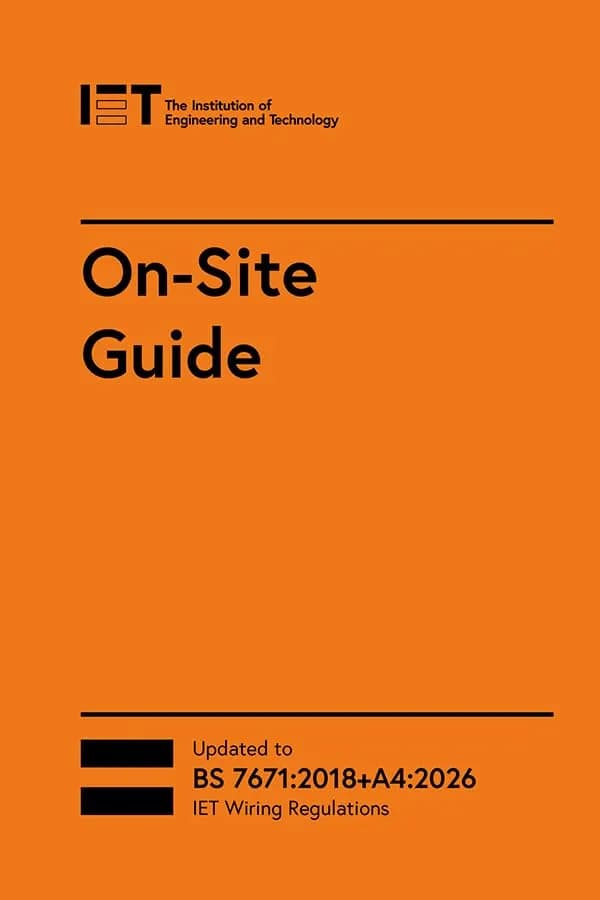
On-Site Guide BS 7671:2018+A4:2026

On-Site Guide BS 7671:2018+A4:2026

BS 7671:2018+A4:2026 On-Site Guide essential reference for electrical installations.

Included

Required Materials

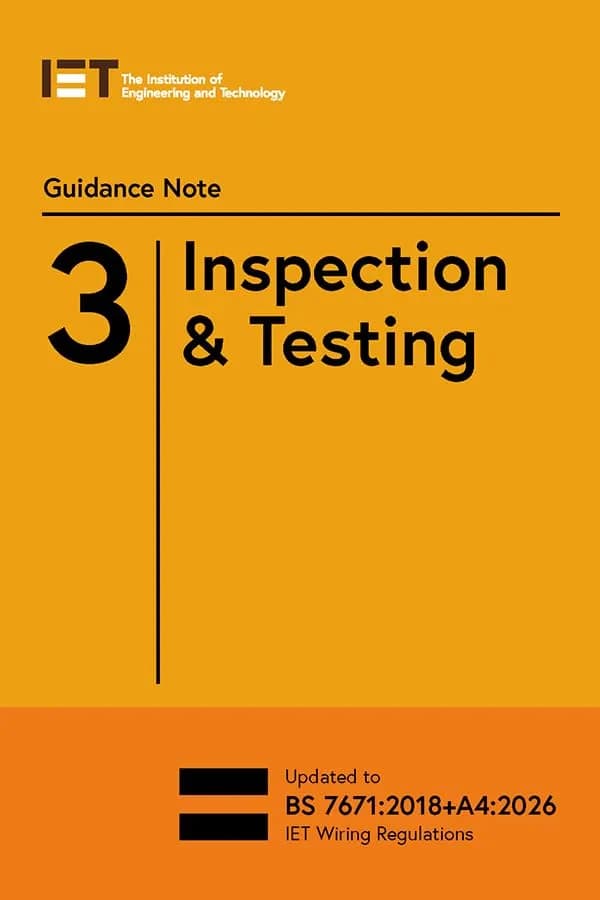
Guidance Note 3: Inspection & Testing BS 7671:2018+A4:2026

Guidance Note 3: Inspection & Testing BS 7671:2018+A4:2026

BS 7671:2018+A4:2026 IET Guidance Note 3 covering Inspection and Testing of electrical installations.

Essential — £42.00
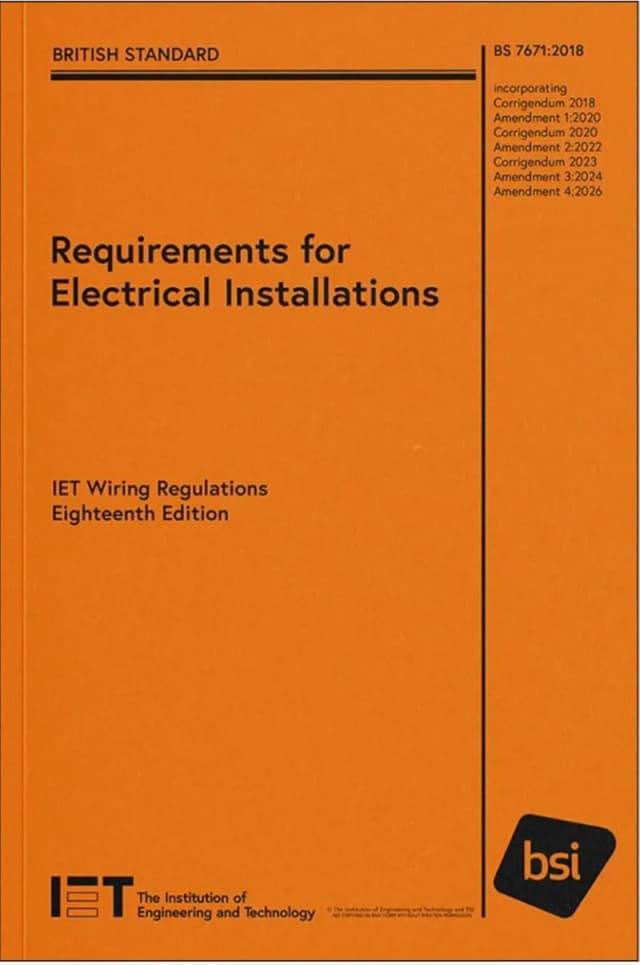
IET Wiring Regulations, Eighteenth Edition, BS 7671:2018+A4:2026

IET Wiring Regulations, Eighteenth Edition, BS 7671:2018+A4:2026

The complete IET Wiring Regulations 18th Edition with Amendment 4.

Essential — £120.00
Casio fx-83GTCW Black Scientific Calculator

Casio fx-83GTCW Black Scientific Calculator

Scientific calculator approved for use in electrical exams.

Essential — £15.00

Recommended

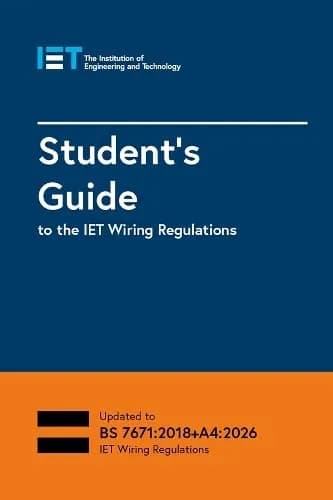
Student's Guide to the IET Wiring Regulations (Electrical Regulations)

Student's Guide to the IET Wiring Regulations (Electrical Regulations)

Recommended — £28.00
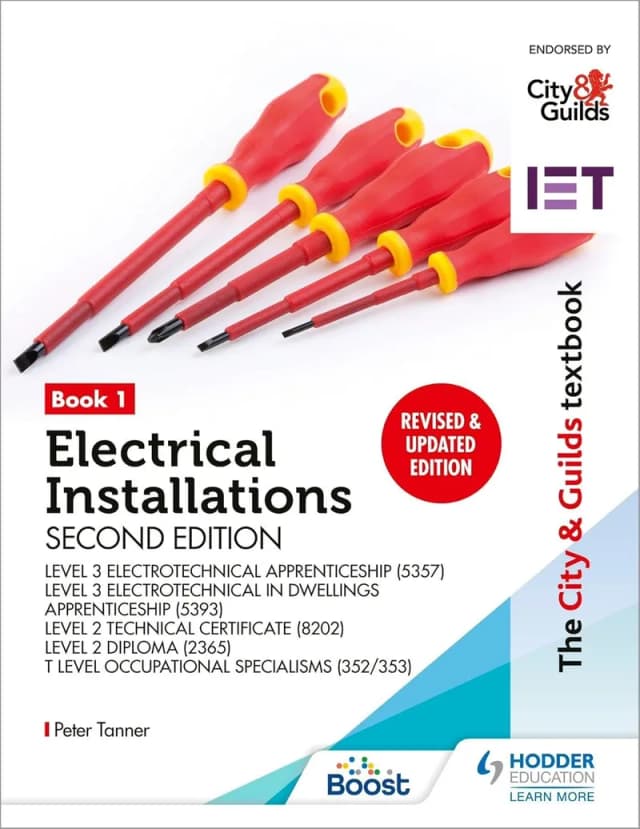
The City & Guilds Textbook: Book 1 Electrical Installations

The City & Guilds Textbook: Book 1 Electrical Installations

Essential textbook for Level 2 Electrical Installations covering fundamental principles and practices.

Recommended — £45.00
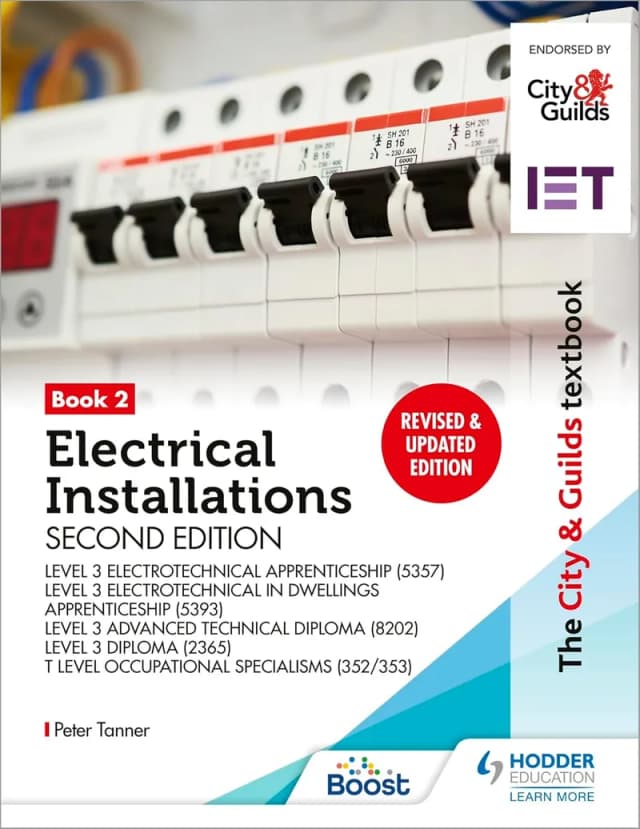
The City & Guilds Textbook: Book 2 Electrical Installations

The City & Guilds Textbook: Book 2 Electrical Installations

Essential textbook for Level 3 Electrical Installations covering advanced principles and practices.

Recommended — £45.00

Frequently Asked Questions

Do the certificates expire?

No. Both City & Guilds 2365 Level 2 and Level 3 Diplomas are lifetime qualifications — they do not expire and do not need resitting. Only the 18th Edition BS 7671 needs updating when amendments are published (currently Amendment 4 / BS 7671:2018+A4:2026, the "Orange Book"). The 2-day Wiring Regulations classroom session included in the package is taught to the current Amendment 4 standard.

Why take the package instead of booking Level 2 and Level 3 separately?

Three reasons: (1) Price — you save over £300 compared to booking each standalone at full price (£1,900 + £2,650 + 18th Ed = £4,940+ vs package £4,650). (2) Continuous momentum — units are unlocked back-to-back with no gap between finishing Level 2 and starting Level 3. (3) Single admin — one enrolment, one payment plan (up to 18 months), one learner record. Best suited to career changers starting from scratch who are committed to the full diploma pathway.

Can I issue Electrical Installation Certificates and EICRs after the package?

No — not from the package alone. Holding Level 2 + Level 3 + the included 18th Edition gives you the technical knowledge base. To legally issue Electrical Installation Certificates (EICs), Minor Works Certificates, or EICRs as the responsible person, you also need the 2391-52 Inspection & Testing qualification, the NVQ Level 3 (2357), and ideally membership of a competent person scheme (NICEIC, NAPIT, ELECSA) via your JIB Gold Card. The package is the knowledge foundation; certification authority comes after the NVQ.

Can I start the NVQ Level 3 during the package?

Yes — you can start the NVQ (2357) once you are well into the Level 3 portion of the package, provided you are actively working in the electrical trade. The NVQ is assessed on evidence of real installations at your workplace, so it runs alongside rather than after the diploma. Many employed learners register for the NVQ around month 5-6 of the package so that by the time they complete Level 3, they are close to finishing the NVQ too. This compresses the full pathway to Gold Card by 6-12 months.

Where are the exams sat — remote or in-centre?

It depends which level. Level 2 online tests can be taken remotely with online invigilation, or in-centre. Level 3 written exams and practical assessments must be sat in person at our Nottingham training centre (this is a City & Guilds requirement for the 2365-03). The 18th Edition exam included in the package can be sat at Nottingham or remotely. Most learners combine exam days with practical training days to minimise travel.

How long does the combined package take?

Most students complete both levels in 6 to 10 months. You need approximately 13 to 16 in-centre practical days across both levels, with unlimited training days included and weekday or weekend sessions available.

What qualifications do I receive?

Two separate City & Guilds certificates: the 2365-02 (Level 2) and 2365-03 (Level 3). These are identical to the standalone courses — same Ofqual-regulated certificates, over 100 RQF credits combined. A 2-day Wiring Regulations session is also included.

What comes after the diploma package?

You will need the 18th Edition (2382), Inspection & Testing (2391), NVQ Level 3 (2357), and AM2 assessment to reach JIB Gold Card status. We help you apply for your ECS Trainee Electrician card from the point of enrolment.

Meet Your Trainers

All our courses are delivered by qualified, practising electricians.

Richard Watkinson

Richard Watkinson

Assessor / Trainer · JIB Gold Card

Richard spent 9 years in the RAF as an Avionics and Electrical Engineer before retraining and starting his own electrical business in 2008 — proof of where a career change into the trade can lead. A JIB Gold Card holder, he'll be with you from your first practical day through to your Level 3, teaching it the way it's done on real jobs.

Kristaps Piesis

Kristaps Piesis

Assessor / Trainer · JIB Gold Card

Kris came up through a 4-year Advanced Apprenticeship with Siemens plus an HNC in Electrical and Electronic Engineering, and now works as a self-employed electrician specialising in inspection and testing. A practising JIB Gold Card holder, he'll be alongside you for the full journey — and he's known for the time he gives every learner.

Only need one level? Check out the Level 2 Diploma or Level 3 Diploma.

Not Sure Which Course Is Right for You?

Take our free quiz to get a personalised recommendation, or use the cost calculator to plan your budget.

Find Out
ECS Trainee Electrician Card (White)

Your ECS Trainee Electrician Card

Once you enrol on this course and attempt your first exam or assessment, you become eligible to apply for the ECS Trainee Electrician card (White). This gives you site access while you complete your qualifications. Total Skills sponsors your application.

The ECS card application is separate from the course fee. Contact us for current pricing. See full ECS card pathway

Free ECS Health & Safety Practice Quiz

Practise all 327 official ECS revision questions for free with our interactive quiz. Timed mock exams and topic-by-topic revision to help you pass the assessment first time.

As a Diploma Package student with Total Skills, you can sit the formal ECS Health, Safety and Environmental Assessment through us and apply for your ECS card upon completion.

Start Practising

After Your Course

1

Credly Digital Badge

Receive your verified digital badge within 24–48 hours of passing, subject to internal verification and full payment clearance

2

Digital Certificate

City & Guilds digital certificate issued to your email

3

Physical Certificate

Official certificate arrives by post (approximately 3 weeks)

£35,000–£50,000+ once fully qualified

Next: 18th Edition → 2391 → NVQ Level 3 → AM2 → Gold Card