
EICR Codes Explained: C1, C2, C3 and FI
What the observation codes on an EICR mean, how they are classified, and what action is required for each.
In this guide
Understanding EICR Observation Codes
When an electrician carries out an Electrical Installation Condition Report (EICR), they record any defects or departures from the current Wiring Regulations using standardised observation codes. These codes tell you how serious each issue is and what action you need to take.
There are four observation codes used on EICRs: C1, C2, C3, and FI. The codes range from the most serious (C1 — danger present) to advisory (C3 — improvement recommended), plus FI which indicates that further investigation is needed before a final assessment can be made.
Understanding these codes is important whether you are a landlord receiving an EICR for a rental property, a homeowner having your installation inspected, or an electrician learning to carry out inspections. For a broader overview of electrical certificates, see our dedicated guide. This guide explains each code in detail with real-world examples.
C1 — Danger Present
A C1 observation code is the most serious classification. It means that danger is present and there is a risk of injury. The defect poses an immediate threat to anyone using the electrical installation or occupying the property. Urgent remedial action is required — in some cases, the electrician will recommend disconnecting the affected circuit or the entire supply until the fault is repaired.
Real-world examples of C1 defects
- ✓Exposed live conductors accessible to touch (e.g., damaged cables, missing covers)
- ✓Missing or disconnected earthing conductor to the main earthing terminal
- ✓A consumer unit with no cover in place, exposing live busbars
- ✓A light switch or socket with broken casing exposing live terminals
- ✓Reversed polarity on a socket outlet (live and neutral swapped)
- ✓An immediate fire risk such as badly scorched wiring or overheating connections
What you must do
C1 defects require immediate action. The electrician will note the defect on the report and may recommend that the affected circuit is isolated until the fault is rectified. For landlords, failure to address C1 defects promptly is a serious breach of the Electrical Safety Standards regulations and could result in enforcement action and fines of up to 30,000 pounds.
Immediate danger
C2 — Potentially Dangerous
A C2 observation code means the defect is potentially dangerous. The installation is not immediately dangerous under normal conditions, but the defect could cause harm under certain circumstances — for example, during a fault, if the installation is overloaded, or if conditions change over time. Remedial action is required, though it is less immediately urgent than a C1.
Real-world examples of C2 defects
- ✓No RCD protection on socket circuits (required since the 17th Edition for most circuits)
- ✓Inadequate earthing arrangements — earth conductor present but undersized or poorly connected
- ✓An overloaded circuit where the cable current-carrying capacity is exceeded
- ✓Missing earth connections on Class I equipment or metallic accessories
- ✓Obsolete or damaged consumer unit that does not provide adequate protection
- ✓Bathroom circuits without the required supplementary bonding or RCD protection
What you must do
C2 defects should be addressed promptly. While there may not be an immediate danger, the conditions for an accident or electrical incident exist. For landlords, C2 defects must be rectified within 28 days (or the period specified in the report), and the work must be followed by a re-inspection to confirm the issue has been resolved.
Homeowners should also take C2 defects seriously. A missing earth connection or lack of RCD protection means that in the event of a fault, the installation cannot protect you as it should. The cost of remedial work is usually modest compared to the risk.
C3 — Improvement Recommended
A C3 observation code means the electrician has identified something that does not comply with the current edition of the Wiring Regulations, but it is not dangerous. The installation was likely compliant when originally installed but does not meet the latest standards. Improvement is recommended but not required.
Real-world examples of C3 observations
- ✓No RCD protection on lighting circuits in a pre-2008 installation (not required when installed)
- ✓Cable colours that pre-date the current harmonised colour code (red/black instead of brown/blue)
- ✓A consumer unit that is functional and safe but not to current specifications
- ✓Lack of surge protection device (SPD) — now recommended by Amendment 2 but not dangerous if absent
- ✓Minor labelling deficiencies on circuit identification
What you should do
C3 codes are advisory. They do not make the EICR unsatisfactory, and there is no legal obligation to carry out the recommended improvements. However, the recommendations are made for good reason — they bring your installation closer to current standards and improve safety margins. Many homeowners and landlords choose to address C3 items when other work is being carried out.
C3 codes and the overall result
FI — Further Investigation Required
An FI code means the electrician found something during the inspection that could not be fully assessed and requires further investigation. This is not a defect code as such — it indicates that more work is needed to determine whether a defect exists and, if so, how serious it is.
When FI codes are used
- ✓Concealed wiring that cannot be accessed without lifting floorboards or removing plaster
- ✓A test reading that is borderline and needs further investigation to determine the cause
- ✓An area of the installation that was inaccessible at the time of inspection (e.g., locked room)
- ✓Signs of potential overheating that could indicate a hidden defect
- ✓A circuit that gave inconsistent test results requiring more detailed assessment
What you must do
FI codes make the EICR unsatisfactory until the investigation is completed. The electrician will explain what further work is needed. Once the investigation is carried out, the findings will either clear the issue (satisfactory) or result in a C1, C2, or C3 observation being recorded.
For landlords, FI codes must be resolved within 28 days, just like C1 and C2 defects. The investigation should be arranged promptly because until it is complete, the overall condition of the installation cannot be confirmed.
What Landlords Must Do
If you are a landlord and your EICR is unsatisfactory (contains C1, C2, or FI codes), you have specific legal obligations under the Electrical Safety Standards in the Private Rented Sector (England) Regulations 2020.
The timeline
- ✓Complete all remedial work within 28 days of receiving the report (or within the period specified by the electrician if shorter)
- ✓Arrange a re-inspection by a qualified electrician to confirm the defects have been rectified
- ✓Provide a copy of the satisfactory report to tenants within 28 days of the inspection
- ✓Provide a copy to the local authority within 7 days if requested
- ✓Retain the EICR for the duration of its validity (typically 5 years)
Failure to comply with these requirements can result in local authority enforcement action, including fines of up to 30,000 pounds per breach and the local authority arranging remedial work at the landlord's expense.
Keep records
Want to Carry Out EICRs Professionally?
If you are an electrician and want to carry out EICR inspections professionally, you need the City & Guilds 2391-52 Inspection and Testing qualification. This teaches you the full inspection and testing sequence, how to identify defects, how to assign the correct observation codes, and how to produce compliant EICR reports. See also our guide on the difference between EIC vs EICR.
EICR work is well-paid and in high demand, particularly since the 2020 regulations made them a legal requirement for landlords. An experienced inspector can carry out 2 to 3 domestic EICRs per day at 150 to 350 pounds each, making it one of the most lucrative areas of electrical work.
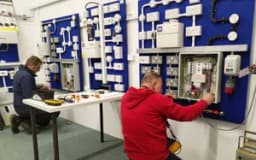
Related Course
Inspection & Testing (2391)
Get qualified to carry out EICRs with the 2391 Inspection & Testing course
Frequently Asked Questions
Does a C3 code make my EICR unsatisfactory?
What is the difference between C1 and C2?
How long do I have to fix C1 and C2 defects?
Can an electrician refuse to reconnect the supply after finding a C1?
What does FI (further investigation) mean in practice?
Who decides the observation codes on an EICR?
Ready to Start Training?
Browse our City & Guilds accredited courses and take the next step in your electrical career.
Related Guides
EICR Explained: Electrical Installation Condition Reports
Everything about EICRs — what they are, when they are required, who can carry them out, costs, and observation codes.
Read guideWhat Is the City & Guilds 2391 Qualification? (2391-52 Explained)
What the City & Guilds 2391-52 inspection and testing qualification covers, who needs it, entry requirements, and how it is assessed — plus where to book the course.
Read guideElectrical Testing Sequence: Dead & Live Tests in Order
The BS 7671 testing sequence in order: dead tests (continuity, ring circuit, insulation resistance, polarity), then live tests (Zs, PFC, RCD trip times).
Read guideEIC vs EICR: What's the Difference?
A clear explanation of the difference between an Electrical Installation Certificate and an Electrical Installation Condition Report.
Read guide