
Electrical Testing Equipment: What You Need & Why
A guide to the test instruments electricians need — multifunction testers, insulation resistance testers, and more.
In this guide
Why Test Equipment Matters
Electrical test instruments are the tools that allow you to verify the safety and compliance of an electrical installation. Without proper testing — following the correct testing procedures — you cannot confirm that the installation meets the requirements of BS 7671, and you cannot issue the certificates that provide legal proof of compliance.
Investing in quality test equipment from a recognised manufacturer is one of the most important decisions an electrician makes. Cheap or unreliable instruments can give inaccurate readings, leading to false passes (which are dangerous) or false failures (which waste time and money). Professional-grade instruments from established manufacturers are more accurate, more reliable, and better supported.
This guide covers the main test instruments that every working electrician needs, what each instrument does, and the calibration requirements that must be maintained.
Multifunction Tester (MFT)
The multifunction tester is the single most important test instrument an electrician owns. It combines multiple testing functions in one portable device, allowing you to carry out all of the electrical tests required by BS 7671.
Functions of a Multifunction Tester
- ✓Continuity testing: measures the resistance of protective conductors, bonding conductors, and ring final circuit conductors
- ✓Insulation resistance testing: checks the insulation between live conductors and earth, and between live conductors, at 250V, 500V, or 1000V DC
- ✓Earth fault loop impedance (Zs): measures the total impedance of the earth fault loop at each point in the circuit
- ✓External earth fault loop impedance (Ze): measures the impedance of the supply earth fault loop at the origin
- ✓Prospective fault current (PFC/PSCC): measures the maximum fault current at the origin and distribution points
- ✓RCD testing: tests RCD operation at various multiples of rated residual operating current (0.5x, 1x, 5x) and ramp test
Leading Manufacturers
The three most widely used multifunction tester brands among UK electricians are:
- ✓Megger: a UK-based manufacturer with a long history in electrical testing. The MFT series (MFT1741, MFT1845) is the most popular choice among UK electricians.
- ✓Fluke: an American manufacturer known for high-quality, robust test instruments. The Fluke 1664 FC is widely used and offers Bluetooth data transfer.
- ✓Metrel: a Slovenian manufacturer with a strong presence in the UK market. The Eurotest series offers excellent features and value.
Typical Cost
A new multifunction tester from one of these manufacturers typically costs between 500 and 1,500 pounds. Entry-level models provide all the essential functions, while higher-end models offer features such as Bluetooth connectivity, data logging, onboard memory for test results, and integration with certification software.
Investment That Pays for Itself
A multifunction tester is an investment that will last many years with proper care. Most instruments have a working life of 10 to 15 years or more. When you consider that every inspection, certification, and installation you carry out requires testing, the cost per test is extremely small.
Voltage Indicator (Two-Pole Tester)
A two-pole voltage indicator is a dedicated instrument for testing whether a circuit is live or dead. It is the essential tool for safe isolation procedures and must comply with HSE Guidance Note GS38.
Key Features
- ✓Two test probes connected to the indicator unit by leads
- ✓Clear visual indication of voltage presence (LEDs or LCD display)
- ✓Audible indication of voltage presence (buzzer)
- ✓Voltage range indication (some models show approximate voltage)
- ✓GS38 compliant probe tips with finger guards and limited exposed metal
- ✓CAT III or CAT IV rated for the voltages being tested
Popular Models
Popular two-pole voltage indicators include the Fluke T series (T90, T110, T150), the Megger TPT series, and the Martindale VT series. All are GS38 compliant and designed specifically for use by electricians.
Not a Multimeter
A two-pole voltage indicator is not the same as a multimeter. While a multimeter can measure voltage, a dedicated voltage indicator is specifically designed for the purpose of proving circuits dead. It is more robust, simpler to use, and provides a definitive live or dead indication. GS38 recommends two-pole voltage detectors for safe isolation.
Proving Unit
A proving unit is a small, portable device that generates a known voltage output. It is used to verify that your voltage indicator is working correctly before and after safe isolation testing.
How a Proving Unit Works
The proving unit contains a battery and a voltage converter circuit that produces a known AC or DC voltage (typically around 50V to 230V depending on the model). When you connect your voltage indicator to the proving unit, it should give a positive indication. This confirms that the voltage indicator is functional and will detect voltage if it is present.
- ✓Portable and battery-powered for use on-site
- ✓Provides a known voltage reference for proving your tester
- ✓More convenient than finding a known live source at each work location
- ✓Typically costs 30 to 80 pounds
- ✓Some voltage indicator manufacturers offer combined indicator and proving unit kits
Insulation Resistance Tester
While the multifunction tester includes insulation resistance testing, some electricians also carry a dedicated insulation resistance tester (sometimes called a Megger, after the brand that popularised the instrument). This is particularly useful for testing at higher voltages (1000V or above) or for testing motors, transformers, and other specialist equipment.
What Insulation Resistance Testing Measures
Insulation resistance testing applies a DC voltage between conductors (or between a conductor and earth) and measures the resistance of the insulation. Good insulation has a very high resistance (typically measured in megohms). Low insulation resistance indicates degraded insulation that could lead to earth faults, short circuits, or fire.
Standard Test Voltages
- ✓250V DC: for testing SELV and PELV circuits (extra-low voltage)
- ✓500V DC: the standard test voltage for 230V circuits in domestic and commercial installations
- ✓1000V DC: for circuits with a nominal voltage above 500V
Minimum Acceptable Values
BS 7671 specifies a minimum insulation resistance of 1.0 megohm for circuits tested at 500V DC. In practice, a healthy circuit should read significantly higher than this — often 200 megohms or more. Low readings (below 2 megohms) warrant investigation even if they are above the minimum.
Earth Fault Loop Impedance Tester
An earth fault loop impedance tester measures the total impedance of the path that fault current would follow in the event of an earth fault. This is critical for confirming that protective devices will operate within the required disconnection time — as explained in our EICR guide.
Why Loop Impedance Matters
When a fault occurs between a live conductor and earth, the magnitude of the fault current depends on the total impedance of the earth fault loop. If the impedance is too high, the fault current will be too low to trip the circuit breaker within the required time (0.4 seconds for final circuits in TN systems). This means the fault could persist, causing overheating, fire, or sustained electric shock.
Types of Loop Impedance Test
- ✓Ze (external earth fault loop impedance): measured at the origin of the installation with the main earthing conductor disconnected. Represents the supply impedance.
- ✓Zs (earth fault loop impedance at each circuit): measured at the furthest point of each circuit. Includes Ze plus the impedance of the circuit cables (R1 + R2).
Most multifunction testers include loop impedance testing capability. Dedicated loop testers are also available and may be preferred for high-impedance or high-current testing.
RCD Tester
An RCD tester is used to verify that residual current devices operate correctly and within the required time limits. RCDs are critical safety devices that protect against electric shock and fire by detecting earth leakage current.
RCD Test Functions
- ✓Trip time at rated residual operating current (1x): the RCD must trip within 300ms for a general type (an S-type time-delayed RCD must trip between 130ms and 500ms)
- ✓Trip time at 5x rated current (5x): the RCD must trip within 40ms
- ✓Half rated current (0.5x): the RCD must NOT trip at half its rated current — this confirms it is not over-sensitive
- ✓Ramp test: the test current gradually increases until the RCD trips, measuring the actual tripping current
RCD testing is included in most multifunction testers. The tester injects a controlled earth leakage current and measures the time taken for the RCD to trip. Results must be recorded on the schedule of test results.
Related Course
Inspection & Testing (2391)
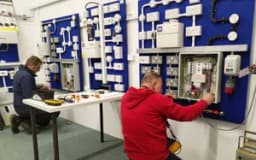
RCD testing procedures are covered in detail in the 2391 Inspection and Testing course.
Calibration Requirements
All electrical test instruments must be calibrated regularly to ensure they give accurate readings. Using uncalibrated instruments means your test results may be unreliable, which could lead to unsafe installations being passed as satisfactory.
Calibration Essentials
- ✓Calibration should be carried out at least every 12 months
- ✓Calibration must be performed by an accredited laboratory (UKAS accredited is the gold standard)
- ✓A calibration certificate is issued showing the instrument serial number, date, and results
- ✓The certificate should be kept with the instrument and available for inspection
- ✓Your competent person scheme assessor will check calibration status at annual assessments
- ✓Out-of-date calibration can invalidate your test results and certificates
Cost of Calibration
Annual calibration for a multifunction tester typically costs between 50 and 120 pounds, depending on the instrument and the calibration provider. Some manufacturers offer calibration services directly, and many independent laboratories provide a postal calibration service with a quick turnaround time.
Plan Ahead
Schedule your instrument calibration well in advance of the due date. Postal calibration services typically take one to two weeks, during which time you will be without your instrument. Having a backup instrument or scheduling calibration during a planned break avoids disruption to your work.
The Complete Test Equipment Kit
Here is a summary of the test equipment every working electrician should have:
Essential (Must Have)
- ✓Multifunction tester (Megger MFT, Fluke 1664, or Metrel Eurotest)
- ✓Two-pole voltage indicator (GS38 compliant)
- ✓Proving unit
- ✓GS38 compliant test leads and probes
- ✓Lock-off devices and padlocks for safe isolation
Recommended (Good to Have)
- ✓Socket tester (quick check for common wiring faults)
- ✓Non-contact voltage detector (as a supplementary check only, never as the primary test)
- ✓Digital clamp meter (for measuring load current without breaking the circuit)
- ✓PAT tester (if you offer portable appliance testing as a service)
- ✓Cable identification tool (tone generator and probe for tracing cables)
Accessories
- ✓Spare test leads in various lengths
- ✓Crocodile clips for hands-free testing
- ✓Extension leads for reaching distant test points
- ✓Carrying case or bag to protect and organise equipment
- ✓Calibration certificates for all instruments
For a complete overview of how these instruments are used in practice, see our 2391 course guide.
Related Course
Inspection & Testing (2391)
The 2391 course provides hands-on experience with all the test instruments covered in this guide.
Frequently Asked Questions
What is a multifunction tester?
How often should test equipment be calibrated?
What is GS38 and what does it say about test equipment?
How much does a multifunction tester cost?
Can I use second-hand test equipment?
What test instruments do I need for the 2391 exam?
Ready to Start Training?
Browse our City & Guilds accredited courses and take the next step in your electrical career.
Related Guides
UK Wiring Colours 2026: Live, Neutral & Earth Colour Codes
UK wiring colours: brown = live, blue = neutral, green/yellow = earth (since 2006). Old colours: red live, black neutral. Three-phase L1/L2/L3.
Read guideSafe Isolation Procedures: Step-by-Step Guide
The correct safe isolation procedure in accordance with GS38 — equipment, steps, and common mistakes.
Read guideApproved Voltage Indicators: GS38 and Choosing an AVI
What an approved voltage indicator is, why GS38 matters, and how to choose one for proving dead during safe isolation.
Read guideEarthing and Bonding Explained
What earthing and bonding are, why they are essential for electrical safety, and how to check they are correct.
Read guide