Skip to content
Total Skills UK

EV Charging Installation

City & Guilds 2921-34 EV charger installation course delivered over 2 intensive days in Nottingham. Qualifies domestic and small commercial EV charge point installers. Taught to the current IET Code of Practice for Electric Vehicle Charging Equipment Installation (5th edition), BS 7671 and the Electric Vehicles (Smart Charge Points) Regulations. Online multiple-choice assessment, 75% pass mark. 95%+ pass rate. Endorsed by TESP with the Electrician Plus kitemark. Recognised by the JIB/ECS as CPD for ECS Gold Card Installation, Maintenance or Domestic Electrician.

5.0(148 reviews)|2 days (intensive classroom)|Nottingham
£400
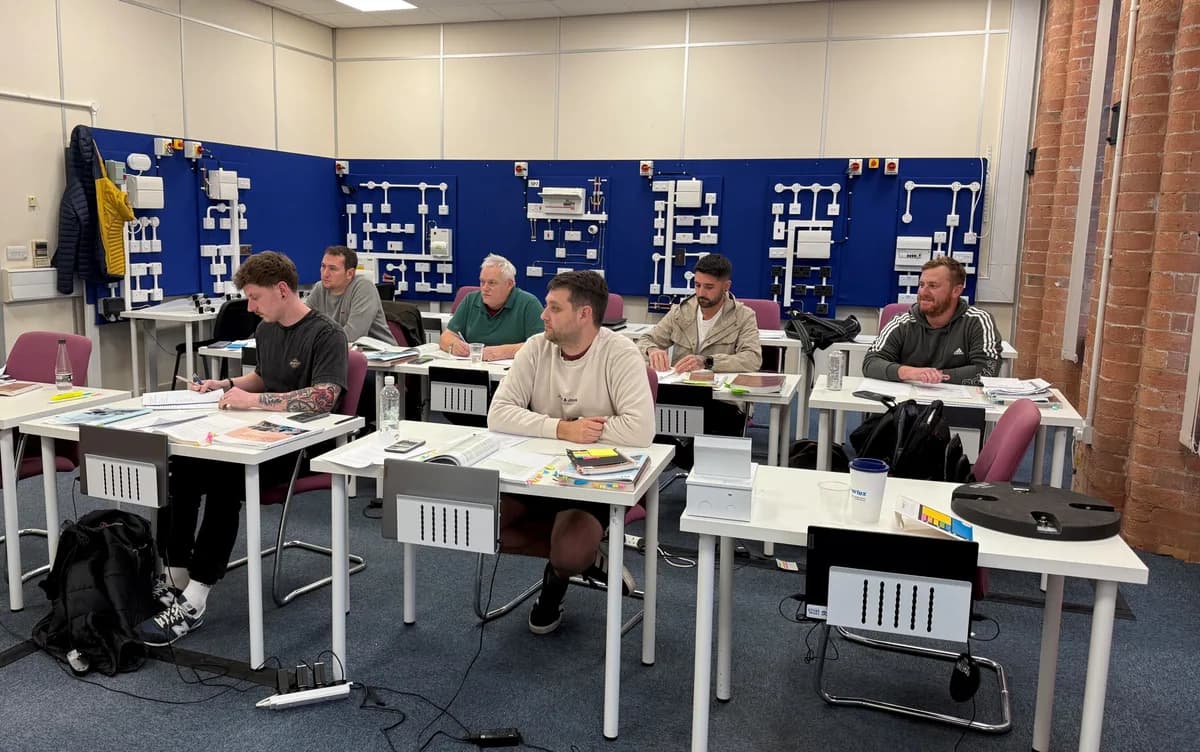
Electrical training students seated at desks in classroom with blue wiring diagram panels displayed on wall behind them.
C&G 2921-34
2 daysMax 9 classQualified electricians
TESP Electrician Plus kitemark

Electrician Plus Offer

£100 off your second Electrician Plus course

Book any EV Charging, Solar PV or Large-Scale EV course and get £100 off your next one — when you book the second within 6 months.

Individual learners only · not valid on company or invoice bookings.

2,800+ students trained95% pass rateCity & Guilds Centre 009512

Professionals from these organisations train with us

AmazonNHSJLRBurberryPepsiCoRBSBalfour BeattyGE VernovaThermo FisherKier GroupDB CargoIMI PrecisionNG BaileyBritish Geological SurveyUniversity Of NottinghamMODAmazonNHSJLRBurberryPepsiCoRBSBalfour BeattyGE VernovaThermo FisherKier GroupDB CargoIMI PrecisionNG BaileyBritish Geological SurveyUniversity Of NottinghamMOD
BabcockBritish ArmyBureau VeritasGalliford TryNottingham City CouncilNottinghamshire County CouncilOpenreachParker HannifinRAFRS ComponentsScottishpowerSertecToyotaWalkersWest Yorkshire PoliceRoyal NavyBabcockBritish ArmyBureau VeritasGalliford TryNottingham City CouncilNottinghamshire County CouncilOpenreachParker HannifinRAFRS ComponentsScottishpowerSertecToyotaWalkersWest Yorkshire PoliceRoyal Navy

Not ready to book? Get the full course details by email.

What's Included

2-day intensive course — qualify in a weekend
City & Guilds certified (2921-34)
Hands-on practical training on real EV equipment
IET Code of Practice 5th Edition
95%+ first-time pass rate
Small class sizes for personalised attention
Free parking

Course Overview

Last updated June 2026

Qualify as a Certified EV Charge Point Installer

The City & Guilds 2921-34 is the industry-standard qualification for designing and installing domestic and small commercial electric vehicle charging equipment. With over 1 million electric vehicles on UK roads and the government’s 2035 ban on new petrol and diesel car sales, demand for qualified EV charger installers is growing faster than the industry can supply them.

This intensive 2-day course at our Nottingham training centre gives you the knowledge, practical skills, and City & Guilds certification to install EV charging equipment confidently and compliantly. Add a high-demand specialism to your existing electrical qualifications and tap into one of the UK’s fastest-growing markets.

Who Is This Course For?

  • Qualified electricians adding EV charging to their services — If you hold the 18th Edition and a Level 3 electrical qualification, this course adds EV installation to your skill set in just 2 days. Many of our graduates start taking on EV installation work within weeks of completing the course.

  • Electricians seeking higher-value work — Domestic EV charger installations typically command £300–£600 per install, with most taking half a day. That’s significantly better than many routine electrical jobs.

  • Contractors building an EV installation division — Electrical companies looking to train their teams to meet growing customer demand for home and workplace charging.

  • Electricians pursuing manufacturer-approved installer status — Most EV charger manufacturers (Easee, Myenergi, Pod Point, Andersen) require installers to hold the 2921 qualification to validate product warranties.

What You’ll Learn

  • EV charging equipment types and specifications — Mode 2, Mode 3, and Mode 4 chargers, tethered vs untethered, smart charging features

  • Design considerations for EVCE installations — Cable sizing, circuit protection, earthing arrangements, and DNO notification requirements

  • Open PEN conductor protection — Understanding TN-C-S earthing risks and the protective measures required for EV installations

  • Smart charging and load management — Dynamic load balancing, scheduled charging, solar integration, and Vehicle-to-Grid (V2G) technology

  • Testing, commissioning, and certification — How to test, commission, and hand over an EV charger installation to the customer

  • IET Code of Practice (5th Edition) — The reference standard for EV charging equipment installation in the UK

How the Course Works

This is a 2-day intensive classroom course with hands-on practical training on real EV charging equipment. You’ll work through design exercises, practise installations on our training rigs, and complete testing and commissioning procedures — building the practical confidence to take on your first installation immediately after the course.

Class sizes are kept small for personalised attention, and our trainers have real-world experience installing EV chargers across domestic and commercial settings.

Assessment

Assessment is by online multiple-choice exam. Our trainers provide comprehensive preparation throughout the course, and we maintain a 95%+ first-time pass rate. Your City & Guilds certificate is typically issued within 2 weeks of passing.

Earning Potential

EV charger installation is one of the highest-earning specialisms for electricians:

  • Domestic installations: £300–£600 per install (typically half a day)

  • Small commercial installations: £500–£1,500+ depending on scope

  • Multiple installations (new builds, car parks): £2,000–£5,000+ per project

With the UK government targeting 300,000 public charge points by 2030 and every new home required to have EV charging from 2022, the market is set to grow for decades.

Want to Install Commercial and Large-Scale Systems Too?

If you want to work on motorway service stations, fleet depots, and commercial rapid charging infrastructure, consider also taking our City & Guilds 2921-32/33 Large-Scale EV Charging course — covering systems from 50kW rapid chargers up to 350kW high-power units.

The City & Guilds 2921-34 Level 3 Award in the Requirements for the Design and Installation of Domestic and Small Commercial Electric Vehicle Charging Installations — Ofqual number 610/4640/1 — is the current EV charging installer qualification (it replaced the older 2921-31 in 2024). It carries the TESP Electrician Plus kitemark and is recognised by the JIB / ECS as Continuing Professional Development for ECS Gold Card Installation, Maintenance and Domestic Electricians. We deliver the qualification as a 2-day intensive course in Nottingham, including the online multiple-choice assessment.

Entry Requirements

The 2921-34 is for practicing electricians. You must hold one of the following: City & Guilds Level 3 NVQ Diploma (2357) in Installing Electrotechnical Systems and Equipment (or the Electrical Maintenance variant); City & Guilds Level 3 Electrotechnical qualification (5357); City & Guilds Level 3 NVQ Electrotechnical Experienced Worker (2356); 2346 EWA; equivalent qualifications from other awarding bodies or historical equivalents per the Electrotechnical Assessment Specification (EAS); or a valid ECS Gold Card (Installation, Maintenance or Domestic Electrician) issued by the JIB or SJIB. Scottish learners can evidence eligibility via SVQ Level 7; Welsh learners via EAL Level 3 Electrotechnical Installation. Currency rule: the prerequisite must have been achieved within the last 5 years, OR you must hold the current 18th Edition (2382-26, Amendment 4 / Orange Book) as evidence of currency. The 2365 Level 2/3 Diploma on its own is not sufficient — a 2357 NVQ, EWA or Gold Card is required. Recognition of Prior Learning (RPL) is not permitted. Age 18+.

Course Content & Reference Materials

The single mandatory unit (Unit 305) covers the full scope of domestic and small commercial EV charging installation: statutory framework (Electricity at Work Regulations, HASAWA, ESQCR, Part S Building Regulations, Electric Vehicles (Smart Charge Points) Regulations, Part P); non-statutory guidance (IET Code of Practice for EV Charging Equipment Installation 5th edition, BS 7671, IET Guidance Notes GN1/3/7/8, RC59 fire safety, manufacturer instructions); EVSE modes of charging (Mode 1/2/3/4) and connector types; design considerations (cable sizing, earthing arrangements including PME/TT and open-PEN protection, load management, smart charging, DNO notification under G98 / G99); testing, commissioning and handover; and vehicles as electrical energy storage systems (V2G / V2H prosumer installations). We issue an IET Code of Practice 5th edition copy for classroom use — you will need your own personal copy of BS 7671 Orange Book.

Assessment

A single online multiple-choice test (City & Guilds Evolve): 30 questions, 60 minutes, ~75% pass mark, open-book with the IET Code of Practice (5th ed) and BS 7671 permitted as reference materials. Up to 3 re-sit attempts if needed (£50 per re-sit). 95%+ first-time pass rate.

Current Grants & Schemes (2026)

Once qualified and scheme-registered, your customers can claim government grants through your installation work. EV chargepoint grant for flats and renters (£500 per socket from 1 April 2026, one socket per applicant). Households with on-street parking (£500 per socket with an approved cross-pavement solution). Residential landlords (£500 per socket, up to 200 sockets). Workplace Charging Scheme (WCS) (£500 per socket, up to 40 sockets per business site). All schemes currently run until 31 March 2027. The older EVHS grant for owner-occupiers was withdrawn in 2022. All schemes are administered by OZEV and require installation by an OZEV-approved installer — the 2921-34 is the technical qualification requirement, and OZEV approval is granted on top once you are scheme-registered (NICEIC / NAPIT) as a competent person.

What This Qualification Unlocks

The 2921-34 is the UK standard qualification for EV charger installation in domestic and small commercial settings. It allows you to join manufacturer installer networks (Zappi / Myenergi, Ohme, Easee, Wallbox, Tesla, Pod Point), access OZEV-scheme work, and tender for the growing flat/rental EV charging market. Combined with the 2391 Inspection & Testing qualification, you can carry out the initial verification required under BS 7671 for each installation. If you want to move into commercial car parks, workplace charging, fleet depots and rapid/ultra-rapid infrastructure (50kW to 350kW), see the Large-Scale EV Charging (2921-32/33) course. Pairs naturally with solar PV & battery storage for home energy integration. Part of our home study electrician course pathway — the Wiring Regulations prerequisite (2382-26) can be taken remotely if needed.

Career and Earning Potential

EV charger installation is one of the fastest-growing specialisms in the electrical trade. Over 1.4 million electric vehicles are now on UK roads (up from 1M in 2023), with the 2030 ban on new pure petrol and diesel car sales driving continued demand. A typical domestic installation takes half a day and charges £800 to £1,500 including the unit. Self-employed EV installers regularly charge £300 to £500 per day. The market is expanding as new housing developments require EV charging infrastructure under Part S of the Building Regulations (2022), and commercial clients install workplace and fleet charging. Electricians who combine EV charging with solar PV and battery storage are particularly well positioned as demand for integrated home energy systems grows. The course is ELCAS eligible for Armed Forces personnel.


See Our Training Centre

Take a look inside our fully equipped electrical training centre in Nottingham.

Learners attend from across the UK. Our training centre is easily accessible — 30 minutes from Derby, 40 minutes from Leicester, under an hour from Sheffield. Free parking on site.

Entry Requirements

You must meet all of the following requirements before enrolling on this course:

  • JIB Gold Card or Electrical NVQ

    Must hold one of: ECS Gold Card, JIB Electrician Card, JIB Approved Electrician Card, or City & Guilds Level 3 NVQ in Electrotechnical Systems

  • Qualification within 5 years or CPD evidence

    Qualification achieved within 5 years OR evidence of CPD such as 2382-22 18th Edition course

Why Choose This Course

2-day intensive course — qualify in a weekend

City & Guilds certified (2921-34)

Hands-on practical training on real EV equipment

IET Code of Practice 5th Edition

95%+ first-time pass rate

Small class sizes for personalised attention

Certificate typically issued within 2 weeks

Earn £300–£600 per domestic installation

Covers smart charging and V2G technology

Learners attend from across the UK — free parking at centre

From Our Training Centre

Learning Outcomes

Understand the requirements for EV charging equipment installation
Design EV charging circuits for domestic and small commercial premises
Understand protection against open PEN conductor faults
Specify appropriate EV charging equipment for different applications
Understand smart charging functions and load management
Understand integration with prosumer installations including V2G
Apply testing and commissioning procedures for EV installations

How It Works

This is an intensive classroom course at our Nottingham training centre. Everything is included — training, materials, and the City & Guilds exam. Small class sizes ensure hands-on attention from experienced tutors.

2-day intensive
Small groups, exam included

Course Structure

Units, learning content, and assessments

UNIT 305

Requirements for the Design and Installation of Domestic and Small Commercial EV Charging Installations

Electrical design — specify your own circuits for real buildings.

  • Earthing (TT · TN-S · TN-C-S)
  • ADS · main & supplementary bonding
  • Fuses · MCBs · RCDs · RCBOs
  • Cable sizing · correction factors
  • Voltage drop · Zs · PFC

Assessments (2)

Online TestPass 75%In-Centre

Required Materials

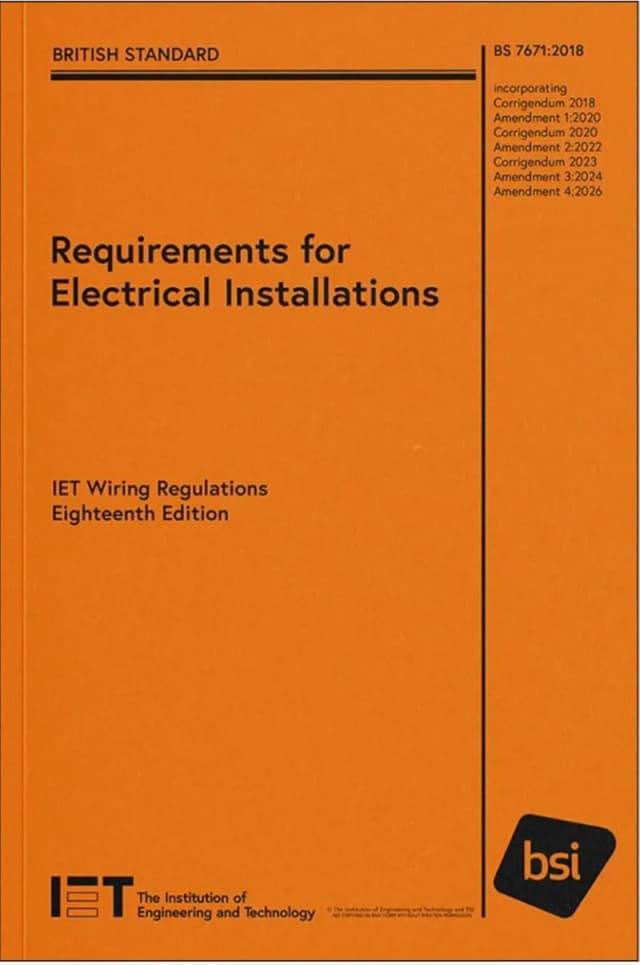
  • IET Wiring Regulations, Eighteenth Edition, BS 7671:2018+A4:2026
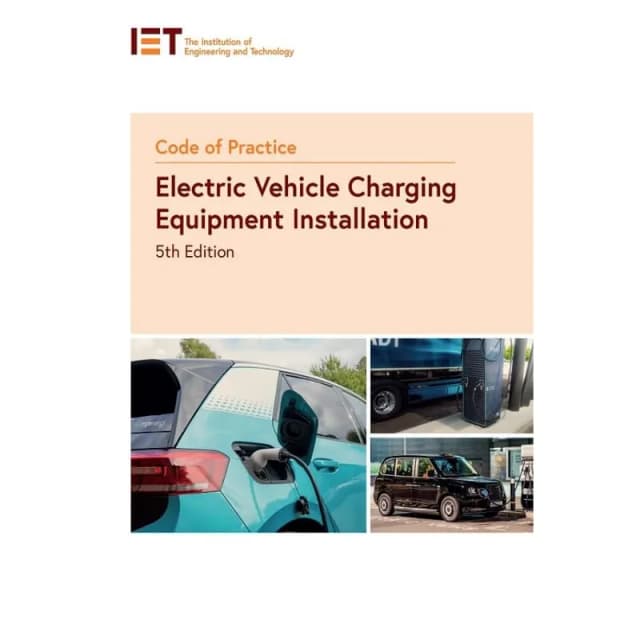
  • Code of Practice for Electric Vehicle Charging Equipment Installation (5th Edition)
Online Test60 minsPass 75%In-Centre

Required Materials

  • IET Wiring Regulations, Eighteenth Edition, BS 7671:2018+A4:2026
  • Code of Practice for Electric Vehicle Charging Equipment Installation (5th Edition)

Meet Your Trainer

All our courses are delivered by qualified, practising electricians.

Richard Watkinson

Richard Watkinson

Assessor / Trainer · JIB Gold Card

Richard spent 9 years in the RAF as an Avionics and Electrical Engineer and has run his own electrical business since 2008. A JIB Gold Card holder with wide domestic and commercial installation experience, he delivers the EV charging course with the practical, on-the-tools approach working electricians need.

Course Materials

Required Materials

Code of Practice for Electric Vehicle Charging Equipment Installation (5th Edition)

Code of Practice for Electric Vehicle Charging Equipment Installation (5th Edition)

Essential — £85.00
IET Wiring Regulations, Eighteenth Edition, BS 7671:2018+A4:2026

IET Wiring Regulations, Eighteenth Edition, BS 7671:2018+A4:2026

18th Edition Wiring Regulations 2nd Amendment

Essential — £120.00
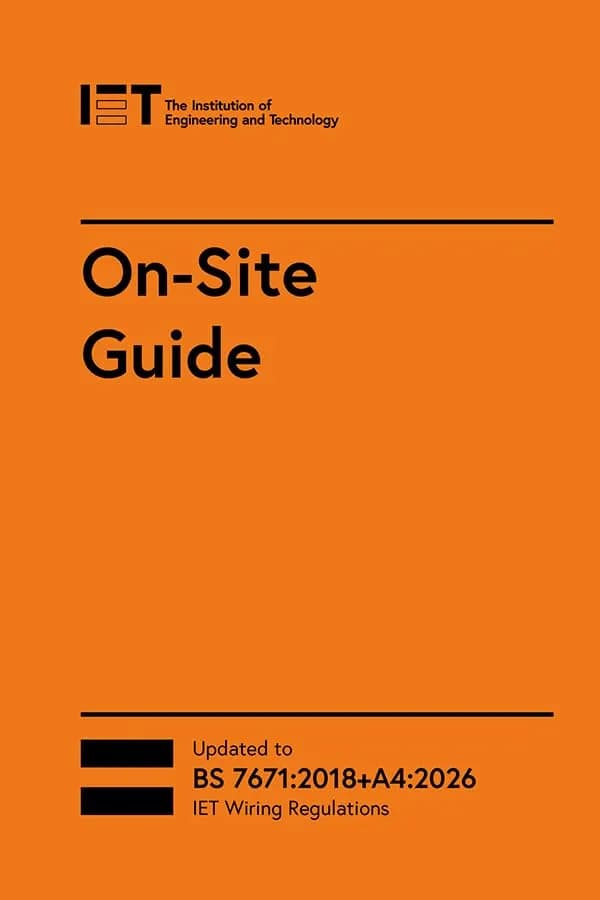
On-Site Guide BS 7671:2018+A4:2026

On-Site Guide BS 7671:2018+A4:2026

On-Site Guide 18th Edition 2nd Amendment

Essential — £38.00

Frequently Asked Questions

What qualifications do I need to enrol on the 2921-34?

The 2921-34 is for <strong>practicing electricians</strong>. Per the City &amp; Guilds handbook, you must hold <strong>one</strong> of the following prerequisites: <ul><li>City &amp; Guilds Level 3 <a href="/courses/2357-nvq-level-3-electrical-installation"><strong>NVQ Diploma (2357)</strong></a> in Installing Electrotechnical Systems and Equipment, or in Electrical Maintenance</li><li>City &amp; Guilds Level 3 Electrotechnical qualification (<strong>5357</strong>)</li><li>City &amp; Guilds Level 3 NVQ Electrotechnical Services Experienced Worker (<strong>2356</strong>)</li><li>City &amp; Guilds Level 3 Electrotechnical Experienced Worker Qualification <a href="/courses/experienced-worker-assessment-2346"><strong>(2346 EWA)</strong></a></li><li>City &amp; Guilds Level 3 Electrotechnical in Dwellings Experienced Worker Qualification (domestic)</li><li>Equivalent qualifications from other awarding organisations, or historical equivalents per the <strong>Electrotechnical Assessment Specification (EAS)</strong></li><li><strong>ECS Gold Card</strong> issued by JIB or SJIB &mdash; Installation, Maintenance or Domestic Electrician</li></ul>Scotland: SVQ Level 7. Wales: EAL Level 3 Electrotechnical Installation. <strong>Currency rule:</strong> your prerequisite must have been achieved within the last 5 years, or you must hold the <strong>latest edition of the Wiring Regulations qualification</strong> (currently <a href="/courses/18th-edition-wiring-regulations-2382">2382-26, Amendment 4</a>) as evidence of currency. Learners must be <strong>18 or over</strong>. This course is not suitable for candidates who hold only a 2365 Level 2/3 Diploma without one of the above, and Recognition of Prior Learning (RPL) is not permitted for this qualification.

What is covered in the course?

The course covers EV charging equipment types, design considerations for domestic and small commercial installations, protection against open PEN faults, smart charging functions, load management, integration with solar PV and battery storage systems, and testing and commissioning procedures.

How is the course assessed?

Assessment is a single <strong>online multiple-choice test</strong> delivered through the City &amp; Guilds Evolve test system. <strong>30 questions, 60 minutes, ~75% pass mark</strong>, graded Pass/Fail. Permitted reference materials during the test: <strong>IET Code of Practice for Electric Vehicle Charging Equipment Installation (5th edition)</strong> and <strong>IET Wiring Regulations BS 7671:2018+A4:2026</strong> (the Orange Book). You can have up to 3 re-sit attempts if needed (£50 per re-sit). Question distribution reflects the unit learning outcomes: 7% documentation and legislation, 27% EVSE types and features, 40% design considerations, 13% testing and commissioning, 13% vehicles as energy storage (V2G / V2H prosumer installations).

What reference material is used?

The course uses the IET Code of Practice for Electric Vehicle Charging Equipment Installation – 5th Edition as its primary reference. You should bring a copy to the course.

Will this qualify me to install EV chargers?

Yes, upon successful completion you will receive the City & Guilds Level 3 Award (2921-34) which demonstrates your competence to design and install EV charging equipment in domestic and small commercial settings.

What's the difference between 2921-31 and 2921-34?

The <strong>2921-34</strong> is the current qualification and supersedes the older <strong>2921-31</strong>. City &amp; Guilds updated the qualification in 2024 to align with the Smart Charge Points Regulations, the IET Code of Practice 5th edition, and new Part S Building Regulations requirements. If you already hold the 2921-31, it is <strong>not automatically invalidated</strong> &mdash; your certificate remains valid. However, new enrolments are only available on the 2921-34, and most scheme registrations (NICEIC, NAPIT, ELECSA) and manufacturer installer networks (Zappi, Easee, Ohme, Wallbox, Tesla) increasingly expect the current 2921-34. Upgrading is the same 2-day course as first-time candidates.

I have an ECS Gold Card but no NVQ certificate on paper. Can I enrol?

Yes. Per the City &amp; Guilds handbook, a valid <strong>ECS Gold Card</strong> (issued by JIB or SJIB, as an Installation Electrician, Maintenance Electrician, or Domestic Electrician) is accepted on its own as evidence of the electrotechnical competence prerequisite. You do not need to produce the underlying NVQ certificate separately, because the Gold Card is only issued once the NVQ has been evidenced. Bring your current Gold Card to enrolment and we will confirm eligibility against the handbook.

I qualified more than 5 years ago. Do I still meet the entry requirements?

Yes &mdash; provided you have stayed current. Per the City &amp; Guilds handbook, learners whose prerequisite qualification (NVQ, EWA etc.) was achieved <strong>more than 5 years ago</strong> must provide evidence that they have remained current by holding the <strong>latest edition of the Wiring Regulations qualification</strong>. In practice that means a current <a href="/courses/18th-edition-wiring-regulations-2382"><strong>18th Edition 2382-26</strong></a> (Amendment 4 / Orange Book) certificate. If your 18th Edition is on an older amendment (2382-18 or 2382-22), you will need to update it before starting the 2921-34. We can schedule both courses together.

What grants can my customers claim once I'm qualified?

As a qualified 2921-34 electrician, your customers may be eligible for the <strong>EV chargepoint grant for flats and renters</strong> (&pound;350 per socket, up to 2 sockets) and the <strong>Workplace Charging Scheme (WCS)</strong> (&pound;350 per socket, up to 40 sockets per business). These schemes are administered by OZEV (Office for Zero Emission Vehicles) and require installation by an OZEV-approved installer &mdash; your 2921-34 qualification is a key step towards that approval alongside competent person scheme membership (NICEIC / NAPIT / ELECSA). From June 2022 the older EVHS (Electric Vehicle Homecharge Scheme) for owner-occupiers was withdrawn, but grants for flats, renters and workplaces remain active.

Why is EV charger installation in demand?

Over 1 million electric vehicles are on UK roads, with new petrol/diesel sales banned from 2035. Most charger manufacturers — including Zappi, Ohme, Easee, Wallbox, and Tesla — require installation by a 2921-qualified electrician to validate product warranties. Part P self-certification for charge point installations also requires the qualification.

Is there a discount for taking more than one Electrician Plus course?

Yes. This is one of our three Electrician Plus courses — EV Charging (2921-34), Large-Scale EV Charging (2921-32/33), and Solar PV & Battery Storage (2922-34/2923-34). Book any one and you get £100 off your second when you book it within 6 months, applied automatically at checkout. The offer is for individual learners booking for themselves, one £100 discount per learner. See our Electrician Plus page (/electrician-plus) for full details.


Not sure which course is right for you? Browse our qualification guides or contact our team for personalised advice.

TESP Electrician Plus kitemark

Complete the set — save £100

You’re viewing an Electrician Plus course. Add a second within 6 months and £100 comes off automatically at checkout.

Not Sure Which Course Is Right for You?

Take our free quiz to get a personalised recommendation, or use the cost calculator to plan your budget.

Find Out

After Your Course

1

Credly Digital Badge

Receive your verified digital badge within 24–48 hours of passing, subject to internal verification and full payment clearance

2

Digital Certificate

City & Guilds digital certificate issued to your email

3

Physical Certificate

Official certificate arrives by post (approximately 3 weeks)

£300–£600 per domestic installation

Register with TrustMark for OZEV grant-funded work