Specialise in Commercial and Rapid EV Charging Infrastructure
The City & Guilds 2921-32 and 2921-33 combined course is the UK’s leading qualification for electricians and engineers working on large-scale electric vehicle charging installations. This intensive 4-day programme covers the design, quality assurance, installation, and maintenance of medium-power rapid charging systems (50–90kW) and high-power charging systems (up to 350kW), including an introduction to Megawatt Charging System technology for heavy goods vehicles.
With the UK government targeting 300,000 public charge points by 2030 and commercial fleet electrification accelerating across every sector, qualified large-scale EV charging installers are in exceptional demand. This course positions you for the highest-value projects in the EV infrastructure market.
Who Is This Course For?
Qualified electricians moving into commercial EV work — If you already hold the 2921-34 (domestic EV) qualification and want to take on higher-value commercial projects, this is your next step.
Electrical engineers designing EV infrastructure — The course covers design principles, load calculations, and quality assurance for large-scale installations — essential knowledge for specification and sign-off.
Contractors bidding for commercial EV contracts — Fleet depots, workplace charging, supermarket car parks, and motorway service areas all require installers with the 2921-32/33 qualification. This is a differentiator when tendering.
Charge Point Operators (CPOs) and their contractors — Companies building and maintaining public rapid charging networks need qualified engineers across their supply chain.
What Sets This Apart from the Domestic Course (2921-34)
The domestic EV course covers Mode 3 chargers up to 22kW for homes and small commercial premises. This large-scale course covers a completely different scope:
Medium-power rapid charging (50–90kW) — DC rapid chargers for public locations, fleet depots, and workplace car parks
High-power charging (150–350kW) — Ultra-rapid chargers for motorway service areas and public charging hubs
Megawatt Charging System (MCS) — Introduction to the emerging standard for heavy goods vehicle and bus charging
Three-phase power systems — Design and installation considerations for commercial electrical supplies
Advanced load management — Dynamic load balancing across multiple high-power charge points
Thermal management — Cooling systems and safety requirements for high-power charging equipment
Course Structure — 4 Days at Our Nottingham Centre
The course combines theoretical knowledge with practical application across four intensive days:
Days 1–2: Design and Quality Assurance (2921-32) — System architecture, design calculations, quality assurance procedures, and compliance requirements
Days 3–4: Installation and Maintenance (2921-33) — Installation procedures, commissioning, maintenance schedules, fault diagnosis, and health and safety
Assessment
Assessment consists of three components, all graded Pass/Fail:
Design and QA written exam (90 minutes, unit 2921-302) — Short-answer and scenario-based questions
Installation and Maintenance written exam (120 minutes, unit 2921-303) — Short-answer and scenario-based questions
Design project (3 hours, unit 2921-304) — A complete design exercise for a large-scale EV charging installation
Two City & Guilds Qualifications
On successful completion, you receive two separate City & Guilds certificates:
Level 3 Award in the Design and Quality Assurance of Large-Scale Electric Vehicle Charging Installations (2921-32)
Level 3 Award in the Installation and Maintenance of Large-Scale Electric Vehicle Charging Installations (2921-33)
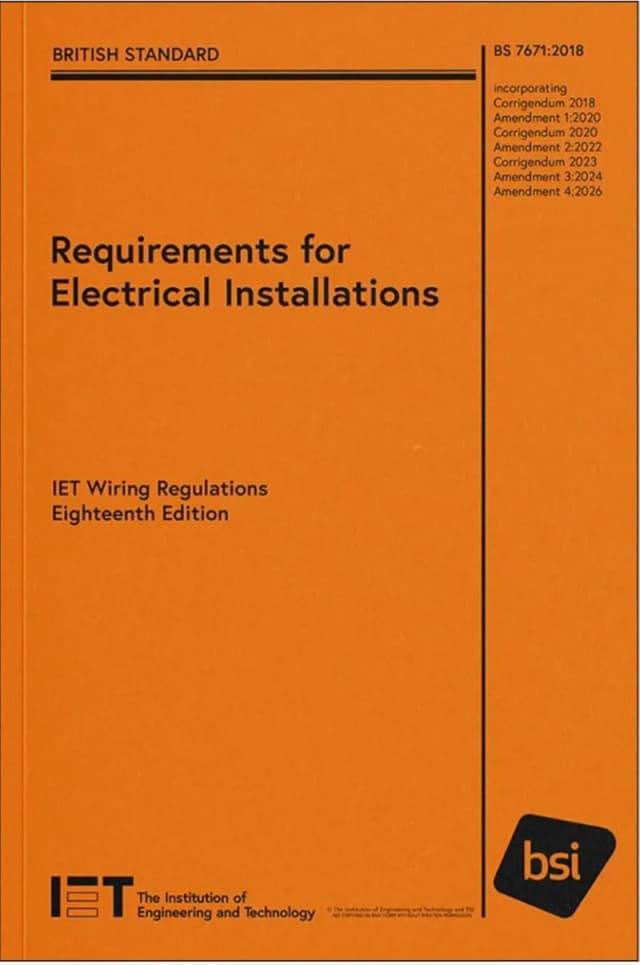
Completing the course awards two separate City & Guilds Level 3 Awards: the 2921-32 Design and Quality Assurance of Largescale Electric Vehicle Charging Installations (Ofqual 610/1497/7) and the 2921-33 Installation and Maintenance of Largescale Electric Vehicle Charging Installations (Ofqual 610/1420/5). Together they cover commercial car parks, workplace charging, fleet depots, and public rapid/ultra-rapid charging from 50kW DC through to 350kW. Both qualifications carry the TESP Electrician Plus kitemark and are taught to BS 7671:2018+A4:2026 (Orange Book) standard.
Entry Requirements
Both qualifications are for practicing electricians. You must hold one of: 2357 NVQ Level 3 (Buildings, Structures & Environment, or Electrical Maintenance); 2356 Electrotechnical Services Experienced Worker; 2346 EWA; 5357 Level 3 Electrotechnical; historical equivalents per the Electrotechnical Assessment Specification (EAS); or an ECS Gold Card / JIB Electrician card / Approved Electrician card. Scottish learners: SVQ Level 7 plus current BS 7671. 5-year currency rule: prerequisite must be within 5 years, OR hold the current 18th Edition (2382-26) as evidence of currency. Age 18+. The domestic 2921-34 is not a prerequisite — 2921-32 and 2921-33 can be taken without it, though most large-scale installers sit all three.
Course Content & Reference Materials
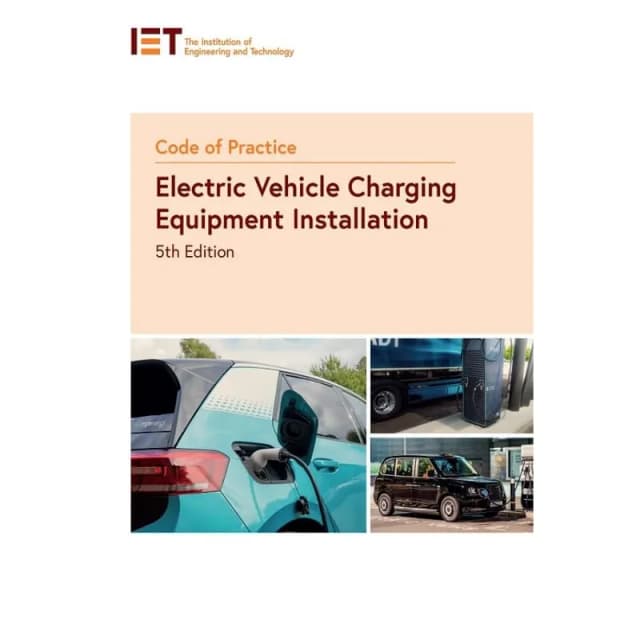
The 2921-32 (Design & Quality Assurance) covers site surveys, load assessments, power supply evaluation and DNO coordination, cable routing and containment design, protection and earthing strategies for three-phase DC fast charging, quality assurance documentation, and Part S Building Regulations infrastructure requirements for new developments. The 2921-33 (Installation & Maintenance) covers commissioning of rapid and ultra-rapid chargers, fault diagnosis, planned maintenance regimes, G99 grid connection applications for DC chargers, and compliance with the relevant regulations. Both units reference the IET Code of Practice for Electric Vehicle Charging Equipment Installation 5th edition, BS 7671 Chapter 722, IET Guidance Notes (GN3 Inspection & Testing, GN8 Earthing & Bonding), and manufacturer-specific documentation for CCS, CHAdeMO and Type 2 connector standards.
What This Qualification Unlocks
Completing the 2921-32 plus 2921-33 qualifies you to tender for commercial EV charging contracts — workplace car parks, fleet depots, retail, motorway services and public charging hubs. You can join installer panels for commercial charge point operators (Osprey, Gridserve, bp pulse, InstaVolt), work on the ChargeUK network operator standards, and access higher-value commercial grant schemes. The qualifications also support route-to-registration with major installer bodies for commercial EV scheme work. Combined with 2921-34 (Domestic) and solar PV & battery storage, you cover the full range from single-home wallbox to multi-MW charging hubs. Pairs naturally with the 2391 Inspection & Testing qualification for commissioning and periodic inspection of rapid chargers.
Career and Earning Potential
Large-scale EV infrastructure is a premium specialism. Commercial rapid-charger installations typically pay £350 to £550 per day, with multi-point car park and fleet depot installs running into tens of thousands per contract. The UK government has committed £950 million to public charging infrastructure and targets 300,000 public charge points by 2030 (up from around 85,000 today) — a tenfold increase in large-scale installer demand over the next 5 years. Part of our home study electrician course pathway. The course is ELCAS eligible for Armed Forces personnel.

 JIB Preferred Provider
 Electrician Plus