PAT Testing Course in Nottingham — City & Guilds 2377-77
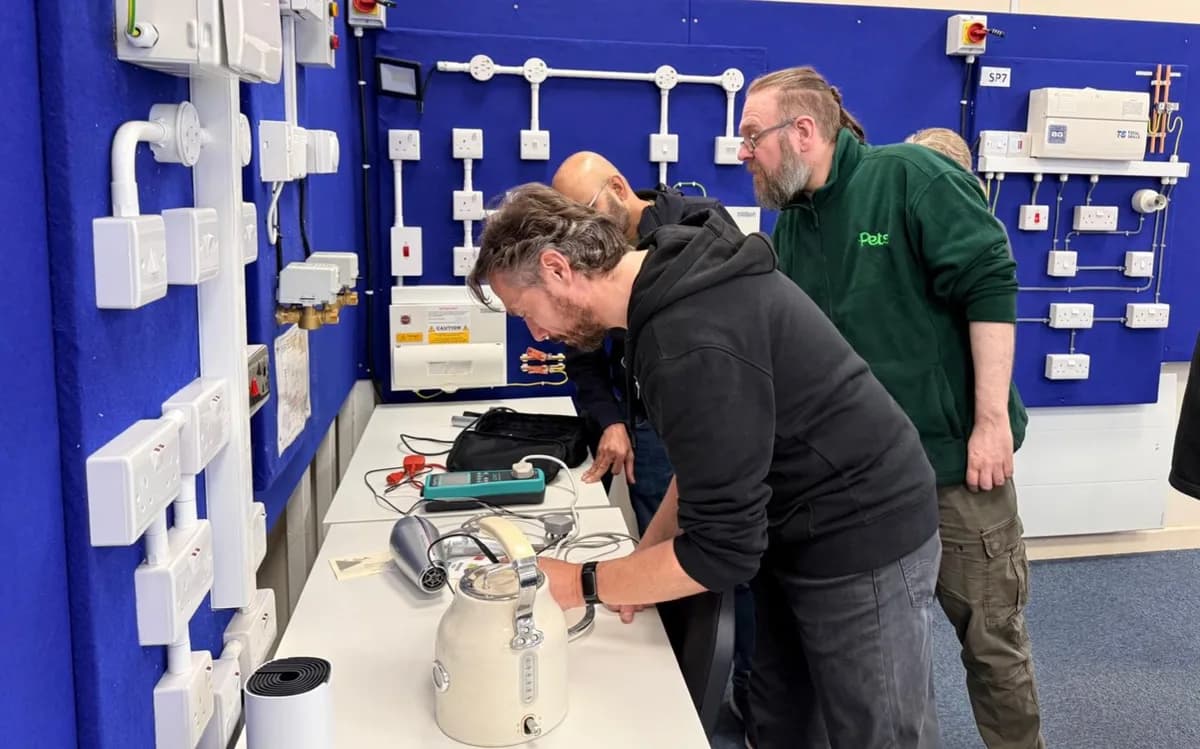
Our PAT testing course gives you the industry-standard City & Guilds 2377-77 qualification for in-service inspection and testing of electrical equipment. Delivered in one day at our Nottingham training centre, this course combines expert-led theory with extensive hands-on practical training using professional PAT testing equipment.
Launched in 2020, the 2377-77 replaces the older 2377-22 and 2377-32 qualifications with a single, unified award that covers a broader range of electrical equipment — including portable, fixed, handheld, and IT devices. Under the Electricity at Work Regulations 1989, employers and landlords have a legal duty to ensure electrical equipment is safe. PAT testing is the recognised way to demonstrate compliance.
What Makes Our PAT Testing Training Different?
At Total Skills, we keep class sizes small — a maximum of 8 learners — so you receive individual attention from our experienced tutor. Your City & Guilds exam fee is included in the course price with no hidden costs. We provide all PAT testing equipment for the practical sessions, and our training centre in Arnold, Nottingham (NG5 7ER) has free on-site parking and is easily accessible from the M1 (Junction 26).
We welcome learners from across the East Midlands and beyond — including Derby, Leicester, Sheffield, Lincoln, and Mansfield. Whether you are an electrician adding a specialism or completely new to electrical testing, our tutor will guide you through every step.
PAT Testing as a Career — Earning Potential
PAT testing is a valuable additional revenue stream for electricians, typically used to fill gaps between larger installation jobs. Many dedicated PAT testers earn £150–£300 per day carrying out testing for offices, schools, commercial premises, and rental properties. With the updated 2377-77 qualification covering a wider range of equipment than ever before, the scope for generating revenue has increased significantly.
The City & Guilds 2377-77 qualification does not expire, giving you a permanent addition to your professional credentials. Electricians registered with the SJIB or JIB can add it to their Grading Card. The qualification is recognised by employers, insurance companies, and regulatory bodies across the UK.
CPD and Professional Development
The City & Guilds 2377-77 is recognised as valid Continuing Professional Development (CPD) by employers, professional bodies, and registration schemes across the UK. Adding PAT testing to your CV demonstrates a commitment to broadening your competence and staying current with industry standards.
Employers actively look for PAT testing qualifications when hiring electricians, facilities managers, and maintenance staff. For electricians, it shows you can offer a wider range of services. For non-electrical professionals, it proves formal competence in an area that many roles now require — particularly in property management, education, healthcare, and hospitality. The qualification is recognised by NICEIC, NAPIT, and the JIB, and can be added to your ECS Grading Card.
The City & Guilds 2377-77 (Ofqual number 603/6790/8) is a Level 3 Award that replaced the older 2377-22 and 2377-32 in November 2020. No prior electrical qualifications are required — the course is open to electricians, landlords, facilities managers, and career changers. The certificate does not expire. For qualified electricians, it also counts as continuing professional development (CPD).
Who Is This Course For?
PAT testing is one of the most accessible entry points into electrical work. The 1-day course requires no prior qualifications, making it suitable for anyone who wants to start a testing business, add a service to an existing trade, or carry out in-house testing for their organisation. Demand is growing — from May 2026, social landlords in England are legally required to carry out in-service inspection and testing of all electrical appliances provided with tenancies, creating significant new work for qualified PAT testers across housing associations and local authorities. Qualified electricians take it to add a profitable recurring service. Landlords and facilities managers take it to test their own properties in-house. Career changers use it as a low-cost first step into the electrical industry before committing to the full diploma pathway.
What This Qualification Unlocks
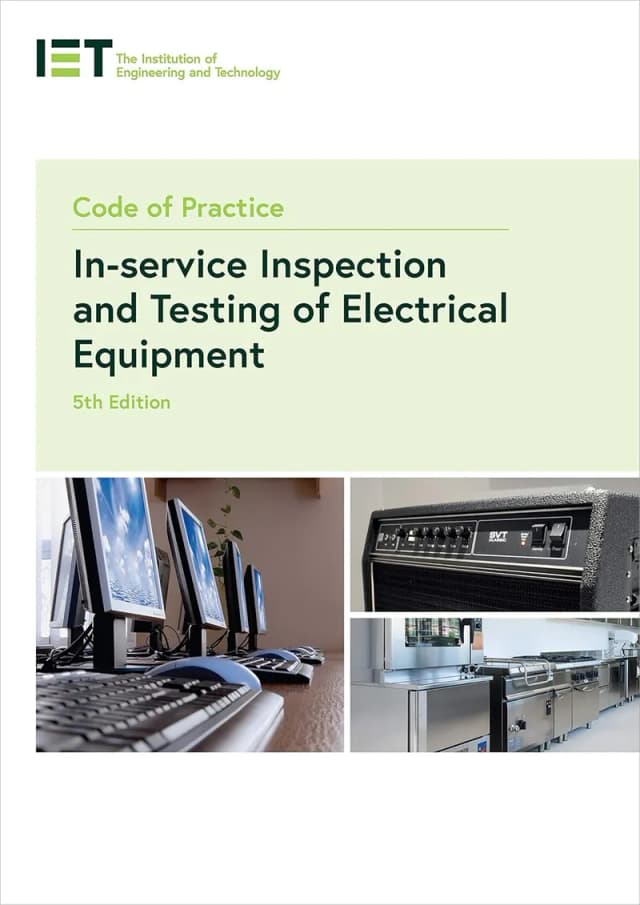
The 2377-77 qualifies you to carry out in-service inspection and testing of electrical equipment in line with the IET Code of Practice (5th Edition). The course covers visual inspection techniques, earth continuity testing, insulation resistance testing, touch current and leakage current measurement, and how to interpret results and apply pass/fail criteria. You learn to use a dedicated PAT tester, record results, apply pass/fail labels, and produce formal test reports. After completing the course, you can test portable appliances in workplaces, rental properties, churches, schools, hotels, construction sites, and any other premises where electrical equipment safety is required.
PAT Testing Course Cost
The City & Guilds 2377-77 course at Total Skills is £300 including VAT. The 1-day course includes the City & Guilds exam and certificate — there are no separate exam fees to pay on top. You will leave with your C&G 2377-77 certificate and everything you need to start testing commercially.
Does the Certificate Expire?
No. The City & Guilds 2377-77 certificate does not expire. Unlike some training certificates that require periodic renewal, the C&G 2377-77 is a regulated Level 3 Award with no expiry date. You earn it once and hold it indefinitely.
Need PAT Testing Carried Out, or Want to Do It Yourself?
We run the City & Guilds 2377-77 PAT testing course — we do not carry out PAT testing as a service. If you or your organisation need appliances tested, there are two routes: hire a qualified PAT tester, or get qualified to do it yourself. For businesses with a significant number of appliances, in-house testing often works out cheaper within a year than paying a contractor for each annual visit. The 2377-77 qualifies you (or a member of your team) to carry out PAT testing in-house — or to start a PAT testing business offering the service to other organisations. If you are looking to hire a PAT tester rather than train, your local Yellow Pages or tradesperson directory is the right place to start.
Replacing an Older 2377 Certificate (2377-22)?
The 2377-77 is the current City & Guilds PAT testing qualification. It replaced the older 2377-22 (and 2377-32). If you hold a 2377-22 certificate, it will not be actively cancelled, but if you want to demonstrate current competence — to employers, insurers, or clients — sitting the current 2377-77 course and exam is the recognised route to update. The course content has evolved alongside the IET Code of Practice and current best practice, so the 1-day 2377-77 is a genuine update rather than simply a rebranding.
Career and Earning Potential
PAT testing has one of the lowest start-up costs of any trade — a dedicated PAT tester costs £200 to £800, and with the 1-day course fee you can be operational for under £1,200 total. Self-employed PAT testers typically charge £1 to £3 per item or £150 to £300 per day, with experienced testers earning £30,000 to £50,000 per year through a mix of annual retesting contracts and one-off jobs. The real value is in recurring work — businesses and landlords need appliances retested regularly, which builds a reliable client base over time. Many PAT testers later progress to the 2391 Inspection and Testing qualification to offer EICRs (Electrical Installation Condition Reports) at higher rates. If you are new to electrical work and want to understand the broader regulatory context, our landlord electrical safety guide explains what PAT testing and EICRs each cover and when each is required.

 JIB Preferred Provider