
Essential Electrician Tools: Complete Kit List
Every tool an electrician needs — from basic hand tools to specialist test equipment, with buying guidance.
In this guide
Building Your Electrician Toolkit
Every electrician needs a well-stocked toolkit to do their job safely and efficiently. The right tools make the difference between a job that takes an hour and one that takes half a day. They also affect the quality of your work and, most importantly, your safety.
This guide covers every tool a working electrician needs, from basic hand tools through to specialist test equipment. Whether you are just starting out or looking to upgrade your existing kit, this is a comprehensive reference to help you invest wisely.
Just starting your Level 2? Our starter kit guide covers what to buy first and what to leave until a job pays for it.
The total initial outlay for a complete professional toolkit is typically 2,000 to 5,000 pounds, depending on the quality of test equipment you choose. Most electricians build their kit gradually, starting with essentials and adding specialist tools as they need them. For advice on storing and organising everything, see our van setup guide.
Essential Hand Tools
Hand tools are the foundation of your toolkit. Invest in quality here — cheap tools break, slow you down, and can be dangerous. All tools used on or near electrical installations should be VDE 1000V rated and insulated.
Screwdrivers
You need a comprehensive set of VDE insulated screwdrivers. A good set covers flat-blade, Phillips, and Pozidrive tips in multiple sizes. Wera, Wiha, and Knipex are the most popular brands among professional electricians.
- ✓VDE flat-blade screwdrivers: 2.5mm, 4mm, 5.5mm, 6.5mm
- ✓VDE Phillips screwdrivers: PH1, PH2
- ✓VDE Pozidrive screwdrivers: PZ1, PZ2
- ✓Terminal screwdriver (small flat-blade for tightening terminal screws)
- ✓Stubby screwdriver for tight spaces
- ✓Budget: 40 to 80 pounds for a quality VDE set
Cutting and Stripping Tools
- ✓VDE side cutters (diagonal cutting pliers): 25 to 50 pounds
- ✓VDE long-nose pliers: 20 to 40 pounds
- ✓VDE combination pliers: 20 to 40 pounds
- ✓Cable strippers (automatic or manual): 15 to 40 pounds
- ✓Cable knife (hooked blade for safe sheathing removal): 10 to 25 pounds
- ✓Junior hacksaw for conduit and trunking: 5 to 15 pounds
- ✓Stanley knife with retractable blade: 5 to 10 pounds
Measuring and Marking
- ✓Tape measure (5m minimum, 8m preferred): 10 to 25 pounds
- ✓Spirit level (torpedo and 600mm): 15 to 40 pounds
- ✓Pencils and marker pens: 5 pounds
- ✓Cable detector (for safe drilling into walls): 30 to 80 pounds
Buy quality once
It is tempting to save money with budget tools, but professional-grade hand tools from brands like Knipex, Wera, and Wiha last for years and make your work faster and easier. A quality VDE screwdriver set and Knipex pliers are investments that pay for themselves quickly.
Power Tools
Power tools save enormous amounts of time on installation work. The two essential power tools for an electrician are a cordless combi drill and an SDS hammer drill. Most electricians also add a jigsaw and an oscillating multi-tool over time.
Cordless Combi Drill (18V)
Your most-used power tool. Used for drilling holes in wood, plastic, and light masonry, as well as driving screws. An 18V brushless model from Makita, DeWalt, or Milwaukee will handle everything you need. Budget 100 to 200 pounds for the drill with two batteries and a charger.
SDS Hammer Drill
Essential for drilling into brick, concrete, and block. Used for mounting back boxes, cable clips, and running cables through masonry. An SDS-Plus model is sufficient for most electrical work. Budget 150 to 300 pounds for a quality corded or cordless model.
Additional Power Tools
- ✓Jigsaw: for cutting holes in plasterboard and wood (80 to 150 pounds)
- ✓Oscillating multi-tool: for flush cutting and detailed work (80 to 150 pounds)
- ✓Cordless impact driver: faster screw driving than a combi drill (80 to 150 pounds)
- ✓Angle grinder: for cutting metal trunking and conduit (40 to 100 pounds)
Most electricians standardise on one battery platform (Makita, DeWalt, or Milwaukee) so that batteries and chargers are interchangeable across all their cordless tools. This saves money and keeps your van tidy.
Test Equipment
Test equipment is the most expensive part of your toolkit but also the most critical. Without proper test instruments, you cannot verify that installations are safe, and you cannot sign off your work. All test equipment must be regularly calibrated — at least annually — and calibration certificates must be kept for your competent person scheme.
Multifunction Tester
The multifunction tester (MFT) is the single most important piece of test equipment. It performs all the tests required for electrical certification: continuity, insulation resistance, earth fault loop impedance, RCD testing, and prospective fault current.
- ✓Megger MFT1741 or MFT1835: 600 to 900 pounds (excellent value)
- ✓Fluke 1664FC: 1,000 to 1,500 pounds (premium, Bluetooth enabled)
- ✓Metrel MI 3152: 700 to 1,000 pounds (good mid-range option)
- ✓Annual calibration: 60 to 120 pounds
Voltage Indicator (Two-Pole Tester)
A GS38 approved two-pole voltage indicator is essential for safe isolation procedures. It must have fused test leads with finger guards, clear voltage indication, and be suitable for the voltage range you work with. Never rely on a neon screwdriver or non-contact voltage detector as your primary means of proving dead.
- ✓Fluke T150 or T6: 100 to 150 pounds
- ✓Megger TPT420: 60 to 100 pounds
- ✓Kewtech KT1780: 50 to 80 pounds
Proving Unit
A proving unit is used to verify that your voltage indicator is working correctly before and after testing for the absence of voltage. This prove-test-prove step is required by HSE guidance note GS38 and standard safe isolation procedure. Budget 30 to 50 pounds for a reliable proving unit.
Calibration is not optional
All test equipment must be calibrated at least annually by an accredited laboratory. Using uncalibrated equipment invalidates your test results, your certificates, and potentially your competent person scheme membership. Keep calibration certificates safe and set reminders for renewal dates.
Related Course
Level 2 Diploma (2365)
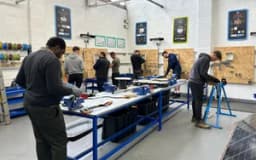
During your diploma training, all test equipment is provided — you learn how to use it before you need to buy it.
Personal Protective Equipment
Personal protective equipment is essential for working safely on construction sites and in domestic properties. The requirements depend on the type of work and environment, but every electrician should have the following as a minimum.
- ✓Safety boots with steel or composite toe caps: 40 to 100 pounds
- ✓Hard hat (required on all construction sites): 10 to 30 pounds
- ✓Hi-vis vest or jacket: 5 to 20 pounds
- ✓Safety glasses or goggles: 5 to 20 pounds
- ✓Work gloves (general purpose and insulated): 10 to 30 pounds
- ✓Ear defenders or ear plugs (for drilling and cutting): 5 to 20 pounds
- ✓Dust mask or half-face respirator (for chasing and drilling): 10 to 40 pounds
- ✓Knee pads: 10 to 30 pounds
On commercial construction sites, PPE requirements are strictly enforced. You will not be allowed on site without the correct safety equipment. For domestic work, the requirements are less formal, but you should still wear appropriate protection. Safety boots and safety glasses are the bare minimum for any electrical work.
Consumables and Accessories
Beyond the main tools, you will use a range of consumables and small accessories on every job. Keeping these stocked in your van or tool bag saves trips to the wholesaler and keeps you productive.
Electrical Consumables
- ✓Wago connectors (221 series, assorted sizes): essential for modern wiring
- ✓Terminal connector strips (chocolate blocks): still widely used
- ✓Cable clips (various sizes for different cable types)
- ✓Insulation tape (multiple colours for phase identification)
- ✓Earth sleeving (green and yellow)
- ✓Heat shrink tubing (assorted sizes)
- ✓Cable ties (various lengths)
- ✓Grommet strips and grommets
General Accessories
- ✓Head torch (rechargeable LED, essential for loft and under-floor work)
- ✓Inspection torch
- ✓Penknife or utility knife
- ✓Chalk line for marking straight runs
- ✓Fish tape or draw wire for pulling cables through conduit
- ✓Labelling machine for circuit identification
Stock your van wisely
Keep a running list of consumables you use frequently and restock regularly. Running out of Wago connectors or cable clips mid-job means a wasted trip to the wholesaler. Many electricians open a trade account at their local electrical wholesaler for discounted prices and convenient ordering.
Total Budget Breakdown
Here is a realistic budget breakdown for building a complete electrician's toolkit from scratch. Prices reflect 2026 retail costs for professional-grade equipment.
Starter Kit (Enough to Begin Working)
- ✓VDE hand tools (screwdrivers, pliers, cutters, strippers): 150 to 300 pounds
- ✓Measuring and marking tools: 30 to 60 pounds
- ✓Cordless combi drill with batteries: 100 to 200 pounds
- ✓Voltage indicator and proving unit: 80 to 150 pounds
- ✓Basic PPE: 80 to 150 pounds
- ✓Tool bag or backpack: 30 to 80 pounds
- ✓Starter kit total: approximately 500 to 800 pounds
Full Professional Kit
- ✓Starter kit: 500 to 800 pounds
- ✓SDS hammer drill: 150 to 300 pounds
- ✓Multifunction tester: 600 to 1,500 pounds
- ✓Additional power tools (jigsaw, impact driver): 160 to 300 pounds
- ✓Cable detector: 30 to 80 pounds
- ✓Consumables and accessories: 100 to 200 pounds
- ✓Full professional kit total: approximately 2,000 to 5,000 pounds
Remember that tools are a tax-deductible business expense if you are self-employed — see our day rates guide for how to factor costs into your pricing. You can also build your kit gradually — start with the essentials and add specialist tools as your work requires them.
Related Course
Level 2 Diploma (2365)
All tools and equipment are provided during your training — you only need to invest in your own kit when you start working.
Frequently Asked Questions
How much does a full electrician toolkit cost?
What multifunction tester should I buy?
Do I need VDE insulated tools?
What is a GS38 approved voltage indicator?
Can I buy second-hand test equipment?
What tools do I need during training?
Ready to Start Training?
Browse our City & Guilds accredited courses and take the next step in your electrical career.
Related Guides
How to Go Self-Employed as an Electrician UK (2026 Step-by-Step)
Step-by-step guide to going self-employed as an electrician — HMRC registration, insurance, Part P scheme, pricing, VAT (£90,000), and finding customers.
Read guideElectrician Day Rates UK 2026: JIB Rates & Hourly Rates
UK electricians charge £250–£500 a day in 2026. JIB rates: £18.38/hr Electrician, £20.08/hr Approved Electrician. Day, hourly and fixed prices compared.
Read guideElectrician Starter Kit: What to Buy and What to Wait On
What learners need to buy before starting a Level 2 electrical course, what to add in your first year on the job, and what to leave until later.
Read guideGifts for Electricians: Ideas They Will Actually Use
Practical gift ideas for electricians and apprentices, what to avoid, and how to buy for someone starting out in the trade.
Read guide