
Highest Paying Electrical Specialisms in 2026
The electrical specialisms commanding the highest day rates and salaries — from EV charging to data centres.
In this guide
The Highest Earning Electrical Specialisms
Not all electrical work pays the same. While a fully qualified electrician can expect to earn 33,000 to 38,000 pounds as a generalist (see our electrician salary guide for full breakdowns), specialising in high-demand areas can push your earnings to 45,000 to 65,000 pounds employed or 300 to 500 pounds per day self-employed.
This guide ranks the highest-paying electrical specialisms in the UK, with realistic earning figures, the qualifications needed, and how to break into each area.
1. Data Centre Electrician — £45,000 to £65,000
Data centre electrical work consistently commands the highest employed salaries in the trade. The UK's 20 billion pound data centre investment pipeline means demand for qualified electricians in this sector is intense and growing.
What the work involves
- ✓High-voltage power distribution and UPS systems
- ✓Three-phase installations with N+1 or 2N redundancy
- ✓Backup generator systems and automatic transfer switches
- ✓Structured cabling and cable management to strict standards
- ✓Working in climate-controlled, clean environments
Qualifications needed
Full electrician qualifications (2365 L2/L3, 18th Edition, 2391) plus NVQ Level 3 and JIB Gold Card. HV awareness training is highly valued. Most work is based in the Slough-London corridor, Manchester, and Edinburgh.
2. Industrial Controls & Automation — £40,000 to £55,000
Industrial automation and controls electricians work with programmable logic controllers (PLCs), motor control centres, variable speed drives, and automated production systems. Manufacturing, food processing, and pharmaceutical facilities all require these specialists.
- ✓PLC programming and commissioning
- ✓Motor control centres and variable speed drives
- ✓SCADA systems and industrial networking
- ✓Automated production line electrical systems
- ✓Typically factory-based with regular hours
This specialism requires the core electrician qualifications plus additional training in industrial controls, often gained through employer-provided courses from manufacturers such as Siemens, Allen-Bradley, or Schneider Electric. Self-taught PLC programming skills are also valued.
3. EV Charging Specialist — £300 to £500/day
EV charging installation is one of the fastest routes to premium day rates. The combination of growing demand, relatively low supply of qualified installers, and customers' willingness to pay creates excellent earning conditions.
- ✓Domestic 7kW wallbox installations: 800 to 1,500 pounds per job
- ✓Commercial three-phase installations: higher project values
- ✓One to two domestic installations per day possible
- ✓Self-employed day rate: 300 to 500 pounds
- ✓Manufacturer referral networks provide steady work
The additional qualification required is the City & Guilds 2921-34, which is a short course building on your existing electrician qualifications. The return on investment is exceptional — the course fee is typically recouped within the first few installations.
4. Solar PV Installer — £250 to £450/day
Solar PV installation is booming as energy prices remain high and the government pushes towards its 70GW solar target. Electricians with solar qualifications are in high demand, particularly those who can handle both the DC solar side and the AC electrical connection.
- ✓Domestic systems: 4,000 to 8,000 pounds per installation to the customer
- ✓Battery storage adds further value per project
- ✓MCS certification opens access to government incentive schemes
- ✓Self-employed day rate: 250 to 450 pounds
- ✓Work is seasonal (busier spring through autumn) but growing year-round
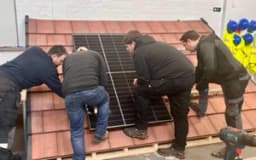
The solar PV course builds on your electrical qualifications and covers panel mounting, DC system design, inverter installation, and battery storage integration. Combined with MCS certification, this opens a lucrative specialism.
Related Course
Solar PV & Battery Storage
Add solar PV to your skill set and tap into the renewables market
5. Testing & Inspection Contractor — £300 to £450/day
Testing and inspection work — carrying out EICRs, issuing certificates, and reporting on electrical installations — is a premium specialism that requires relatively little physical effort compared to installation work.
- ✓EICR (Electrical Installation Condition Report) work for landlords and businesses
- ✓Day rate: 300 to 450 pounds for self-employed inspectors
- ✓Landlord regulations drive consistent, year-round demand
- ✓Less physically demanding than installation work
- ✓Requires 2391 qualification plus practical experience
- ✓Can complete 2-3 domestic EICRs per day once experienced
The 2391 Inspection and Testing qualification is essential, and you need genuine practical experience before working independently. However, once established, testing and inspection provides steady, well-paid work with strong demand from landlords, letting agents, and commercial property managers. For current day rate benchmarks across all specialisms, see our dedicated guide.

Related Course
Inspection & Testing (2391)
The 2391 is your gateway to testing and inspection work
6. Fire Alarm Systems — £35,000 to £45,000
Fire alarm installation, commissioning, and maintenance is a specialist area that commands steady earnings. Every commercial building, school, hospital, and many residential properties require fire detection systems that must be installed and maintained by qualified engineers.
- ✓Installation and commissioning of fire detection systems
- ✓Annual maintenance and testing contracts provide recurring revenue
- ✓Working to BS 5839 standards
- ✓Employed salary: 35,000 to 45,000 pounds
- ✓Additional manufacturer-specific training often provided by employers
- ✓Stable, year-round work driven by legal requirements
7. Building Management Systems — £40,000 to £50,000
Building Management Systems (BMS) control heating, ventilation, air conditioning, lighting, and other building services in commercial properties. As buildings become smarter and energy efficiency requirements tighten, BMS skills are increasingly valuable.
- ✓Programming and commissioning of building controls
- ✓Integration of HVAC, lighting, and energy monitoring systems
- ✓Working with protocols like BACnet, Modbus, and KNX
- ✓Employed salary: 40,000 to 50,000 pounds
- ✓Growing demand driven by energy efficiency regulations
- ✓Combines electrical skills with IT and controls knowledge
BMS work appeals to electricians who enjoy the technical and programming side of the trade. The combination of electrical and IT skills makes these professionals rare and well-compensated.
8. Marine & Offshore — £50,000 to £70,000
Marine and offshore electrical work covers ships, oil and gas platforms, and offshore wind farms. The working conditions are demanding — extended time away from home, physically challenging environments — but the compensation reflects this.
- ✓Offshore wind farm installation and maintenance: rapidly growing
- ✓Oil and gas platform electrical systems
- ✓Ship and marine vessel electrical systems
- ✓Employed salary: 50,000 to 70,000 pounds
- ✓Rotational working patterns (typically 2 weeks on, 2 weeks off)
- ✓Additional qualifications: CompEx, offshore survival, working at height
Offshore wind opportunity
The UK has the largest offshore wind capacity in Europe and is investing heavily in expansion. Offshore wind electricians are in extremely high demand, with opportunities for career changers who are willing to gain the additional offshore certifications.
How to Specialise
The path to any electrical specialism starts with the same foundation: solid core qualifications and practical experience. Here is the recommended approach.
Step 1: Build your foundation
Complete the Level 2 and Level 3 Diplomas, 18th Edition, and 2391 Inspection and Testing. These are required for virtually every specialism and give you the technical base to build on.
Step 2: Gain general experience
Work as a general electrician for at least one to two years. This builds the practical skills, confidence, and industry knowledge you need before specialising.
Step 3: Choose your specialism
Consider which areas align with your interests, local market demand, and earning goals. Research the additional qualifications or training needed and invest in the specific courses.
Step 4: Build your reputation
Once you have the qualifications, focus on building experience and reputation in your chosen area. Manufacturer networks, industry accreditations, and a strong portfolio of completed work all help establish you as a specialist.

Related Course
EV Charging (2921)
EV charging — one of the fastest-growing specialist areas
Related Course
Solar PV & Battery Storage
Solar PV — strong demand driven by government targets
Related Course
Inspection & Testing (2391)
Testing and inspection — steady, well-paid specialist work
Frequently Asked Questions
What is the highest paid electrical specialism?
How do I choose an electrical specialism?
Can I specialise in more than one area?
How long does it take to specialise?
Do I need to work as a general electrician before specialising?
Which specialisms are growing fastest?
Ready to Start Training?
Browse our City & Guilds accredited courses and take the next step in your electrical career.
Related Guides
Electrician vs Plumber UK: Which Pays More? (2026 Comparison)
Electricians earn £33,500 vs plumbers at £31,900 on average. 2026 comparison of training costs, salaries, demand, daily work, and career growth.
Read guideWhy Electricians Will Always Be in Demand
The economic, technological, and regulatory factors that make electrical work one of the most secure trade careers.
Read guideElectrician vs Gas Engineer: Which Career Is Better?
A comparison of electrician and gas engineer careers — training, earnings, the gas boiler ban, and future demand.
Read guideData Centre Electrician: A Growing Career Path
How the UK data centre boom is creating high-paying opportunities for qualified electricians.
Read guide