
Is Being an Electrician a Good Career? Honest Pros & Cons (2026)
Yes — electricians earn £33,000–£55,000+, the UK needs 250,000+ construction workers by 2028. Honest pros, cons, salary, demand, and how to start.
In this guide
The Short Answer: Yes, But Here's Why
Electricians are among the highest-paid trades in the UK, with strong job security and growing demand driven by the green energy revolution. The average qualified electrician earns significantly more than the UK national average, and self-employed specialists can earn over 70,000 pounds a year.
But it is not for everyone. The training requires commitment, the early months can be financially tight, and the work has physical demands that other careers do not. This guide gives you the full, honest picture — the genuine advantages and the real downsides — so you can decide whether becoming an electrician is the right move for you.
10 Reasons Electricians Have One of the Best Trade Careers
1. Excellent salary
The average UK electrician earns 38,000 to 42,000 pounds employed and 50,000 to 70,000 pounds self-employed. The top 10% earn over 80,000 pounds. Compare that to the UK average salary of 34,000 pounds. For a career that does not require a university degree, the earning potential is exceptional. See our full salary breakdown for detailed figures.
2. Recession-proof demand
Every building needs electrics. Rewires, new builds, commercial fit-outs, industrial maintenance — work does not stop during economic downturns. The UK Trade Skills Index estimates a shortage of 104,000 additional electricians needed by 2032, and the gap is widening every year as more electricians retire than enter the trade. When demand exceeds supply, wages rise and work is plentiful.
3. Green skills revolution
EV charging infrastructure, solar PV installations, battery storage systems, and heat pump connections all require qualified electricians. These green specialisms command premium rates — EV charging installers earn 300 to 500 pounds per day, and solar PV specialists earn 250 to 450 pounds per day. The government's legally binding net zero targets guarantee decades of growing demand.
4. Self-employment freedom
Over 50% of electricians are self-employed. You set your own hours, choose your clients, decide your rates, and have no commute to an office. Many self-employed electricians work four-day weeks while earning more than their employed counterparts. The skills shortage means you can afford to be selective about the work you take on.
5. No university debt
Fast-track electrician training costs a fraction of a university degree and you start earning sooner. A three-year degree costs 30,000 to 45,000 pounds in tuition alone plus living costs, with no guarantee of a well-paid job afterwards. Electrician training costs 5,000 to 10,000 pounds total, and you can be earning 30,000 pounds within 18 months of starting. See our electrician vs university comparison.
6. Variety of work
No two days are the same. Domestic rewires, commercial fit-outs, industrial installations, data centres, renewable energy systems, smart home technology — electricians work across every sector of the economy. If you get bored of one type of work, you can move to another without retraining.
7. Physical but not back-breaking
Electrical work is more technical than physical. Unlike bricklaying or roofing, it is skilled work that relies on knowledge and precision rather than brute strength. Most electricians work sustainably into their 50s and 60s, particularly those who move into testing and inspection work, which is less physically demanding than installation.
8. Clear career progression
The career path is well defined: qualified electrician, then specialist, then contractor or business owner. Or you can move into design engineering, project management, building control, electrical teaching, or health and safety roles. The qualifications you earn open doors in multiple directions.
9. Respected profession
Electricians are trusted professionals in a regulated industry. Registration with bodies like NICEIC, NAPIT, and ECS provides professional credibility. Customers trust electricians with access to their homes and businesses, and the regulatory framework ensures standards are maintained. The days of trades being seen as 'lesser' than professions are long gone.
10. Transferable worldwide
Electrical skills translate globally. Many UK electricians work abroad on premium contracts — Australia, the Middle East, Europe, and North America all have electrician shortages. UK qualifications are well respected internationally, and the core principles of electrical installation are universal. Some overseas contracts pay two to three times UK rates.
The Honest Downsides (What Nobody Tells You)
No career is perfect, and being an electrician has real downsides that you should consider before committing. Here is what recruitment adverts and social media influencers do not tell you.
- ✓Early starts and occasional long hours — commercial sites often require 7am starts, and urgent jobs can extend your day
- ✓Working in dusty, tight, or uncomfortable spaces — loft spaces in summer heat, under floors in winter, and newly built properties with no heating
- ✓Responsibility for safety — electrical work can kill or cause fires if done incorrectly, so you carry genuine responsibility for every job
- ✓Initial training costs of 5,000 to 10,000 pounds — not insignificant if you are already stretched financially
- ✓First 12 to 18 months as a trainee can be financially tight, especially if you have left a full-time salary
- ✓Self-employed means no sick pay, no holiday pay, and chasing invoices from customers who are slow to pay
- ✓Keeping up with regulation changes — the 18th Edition amendments require ongoing CPD and awareness
- ✓Physical demands increase with age — knees and back suffer from years of kneeling, crawling, and working overhead
Perspective matters
Most of these downsides are manageable and common to many trades. The financial rewards more than compensate for the early starts, and the variety keeps the work interesting long after office workers are battling burnout. Ask any experienced electrician whether they would swap for an office job — most would not.
Electrician Salary Breakdown (2026 Data)
One of the strongest arguments for becoming an electrician is the earning potential at every stage of your career. Here are realistic figures based on current UK market data.
Employed salaries by experience
- ✓Trainee or apprentice: 18,000 to 25,000 pounds
- ✓Newly qualified (1 to 2 years experience): 30,000 to 38,000 pounds
- ✓Experienced employed electrician (3 to 5 years): 38,000 to 45,000 pounds
- ✓Specialist electrician (testing, EV, solar): 45,000 to 55,000 pounds employed
Self-employed earnings
- ✓Domestic electrician: 50,000 to 70,000 pounds
- ✓Specialist (testing, EV, solar): 55,000 to 80,000 pounds
- ✓Contractor or business owner: 80,000 to 120,000 pounds and above
Day rates
- ✓Employed day rate: 200 to 350 pounds
- ✓Self-employed day rate: 300 to 500 pounds
- ✓Specialist day rates (data centres, testing): 350 to 500 pounds
For a detailed breakdown including regional variations, see our UK electrician salary guide and electrician day rates guide.
Electrician vs Other Careers
How does being an electrician compare to the alternatives? Here is an honest look at the most common comparisons.
vs Plumber
Both are excellent trades with strong demand. Electricians typically earn slightly more, particularly at the specialist level. Electricians also benefit from more diverse specialisation options (EV, solar, data centres, testing). Plumbers have steadier emergency call-out income. See our full electrician vs plumber comparison.
vs Gas engineer
Gas work is more dangerous (working with combustible gases) and the long-term outlook is less certain as the UK moves away from gas boilers towards heat pumps. Electricians have more variety, more specialisation routes, and stronger long-term demand. See our electrician vs gas engineer comparison.
vs University degree
You earn sooner, avoid 30,000 to 45,000 pounds of student debt, and have a higher earnings ceiling if self-employed. Many graduates earn less than experienced electricians, particularly in non-STEM subjects. The trade-off is less time in education, but the training is practical and immediately applicable. See our electrician vs university comparison.
vs Office job
More autonomy, better pay for equivalent experience levels, tangible results every day, and no office politics. The trade-off is physical work, early starts, and less predictable hours. However, many career changers from office jobs report significantly higher job satisfaction as electricians.
The Growing Demand for Electricians
The demand for electricians is not just strong — it is actively accelerating. Multiple converging trends are creating more work than the current workforce can handle.
- ✓UK construction industry worth 110 billion pounds with electricians needed on every project
- ✓Government net zero targets legally require massive electrical workforce expansion
- ✓EV charging infrastructure needs 300,000 public chargepoints by 2030, each installed by a qualified electrician
- ✓Solar panel installations growing over 30% year on year, with a 70GW capacity target by 2035
- ✓Smart home technology creating new domestic electrical work
- ✓Data centre boom — over 20 billion pounds of investment pipeline in the UK
- ✓Ageing workforce — 25% of electricians will retire within the next decade with too few replacements
For the full picture, see our electrician demand statistics guide.
What this means for you
A structural skills shortage combined with growing demand means one thing: qualified electricians will have abundant, well-paid work for decades to come. This is not a short-term trend — the demand drivers are long-term and growing.
How to Get Started
If you have decided that becoming an electrician is the right career move, here is the practical pathway. The fast-track diploma route is the most popular option for adult career changers.
The qualification pathway
- ✓Level 2 Diploma in Electrical Installation (2365) — the entry point, no prior experience needed
- ✓Level 3 Diploma in Electrical Installation (2365) — builds on Level 2 with advanced theory and practice
- ✓18th Edition Wiring Regulations (2382) — the regulatory qualification every electrician needs
- ✓Inspection and Testing (2391) — allows you to test, inspect, and certify installations
- ✓NVQ Level 3 (2357) — workplace competence assessment, completed alongside paid work
- ✓AM2 Assessment — the final practical test for full JIB registration
- ✓ECS Gold Card — your proof of full qualification and industry registration
Total timeline: 18 to 24 months via the fast-track route. The Level 2 and 3 Diplomas can be taken as a combined package for better value and a streamlined learning experience. View our full career pathway for detailed course progression.

Related Course
Level 2 & 3 Package
The most popular route — Level 2 and 3 combined for career changers

Related Course
Level 2 Diploma (2365)
The entry point — no prior electrical experience required
Specialist Paths That Pay Even More
Once qualified, specialist qualifications unlock premium earning potential. These are short courses that build on your core qualifications and open doors to the highest-paying work in the trade.
EV charging installation
One of the fastest-growing specialisms with day rates of 300 to 500 pounds. The UK needs 300,000 public chargepoints by 2030, and every one needs a qualified installer. Domestic wallbox installations can earn 800 to 1,500 pounds per job.

Related Course
EV Charging (2921)
Unlock EV charging premium rates with a short specialist course
Solar PV and battery storage
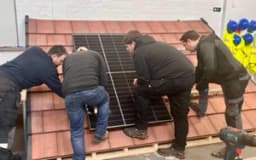
Solar installations have tripled since 2020 and continue to grow. Qualified solar PV electricians earn 250 to 450 pounds per day, with domestic system installations worth 4,000 to 8,000 pounds each. Battery storage adds further value per project.
Inspection and testing (2391)
The 2391 qualification allows you to carry out EICRs (Electrical Installation Condition Reports), which are legally required for landlords and increasingly demanded by insurers. Day rates of 300 to 450 pounds with less physical demand than installation work. This is one of the most consistently lucrative specialisms in the trade.
Other high-paying specialisms
- ✓Fire alarm installation and maintenance — steady, regulation-driven demand
- ✓Data centre electrician — the highest employed salaries at 45,000 to 65,000 pounds
- ✓Industrial controls and automation — PLCs, motor control centres, variable speed drives
- ✓Building management systems — combining electrical and IT skills
See our highest paying electrical specialisms guide for the complete ranking with salary data.
Frequently Asked Questions
Is being an electrician stressful?
Is it worth becoming an electrician at 30, 40, or 50?
Do electricians earn more than plumbers?
How long until I earn good money as an electrician?
Is electrical work dangerous?
Can women be electricians?
What is the hardest part of being an electrician?
Is the electrical industry oversaturated?
Do I need to be good at maths to be an electrician?
Can I become an electrician without an apprenticeship?
Ready to Start Training?
Browse our City & Guilds accredited courses and take the next step in your electrical career.
Related Guides
Electrician vs Plumber UK: Which Pays More? (2026 Comparison)
Electricians earn £33,500 vs plumbers at £31,900 on average. 2026 comparison of training costs, salaries, demand, daily work, and career growth.
Read guideWhy Electricians Will Always Be in Demand
The economic, technological, and regulatory factors that make electrical work one of the most secure trade careers.
Read guideElectrician vs Gas Engineer: Which Career Is Better?
A comparison of electrician and gas engineer careers — training, earnings, the gas boiler ban, and future demand.
Read guideData Centre Electrician: A Growing Career Path
How the UK data centre boom is creating high-paying opportunities for qualified electricians.
Read guide