
Commercial EV Charger Installation vs Domestic: Key Differences
Commercial EV charger installation vs domestic — three-phase supply, load management, DNO applications, and qualifications beyond the 2921-34 explained.
In this guide
Two Markets, Different Opportunities
The EV charging installation market splits broadly into two categories: domestic and commercial. While both involve installing equipment that charges electric vehicles, the scale, complexity, qualifications, and earning potential differ significantly. Understanding these differences will help you decide where to focus your business and what qualifications you need.
Domestic work is high volume, relatively straightforward, and provides a steady income stream. Commercial work is lower volume but higher value per project, involving more complex installations and larger infrastructure. Many electricians start with domestic and progress to commercial as their experience and qualifications grow. For the full regulatory picture, see our EV charger installation regulations guide.
Quick answer
Domestic EV Charging
Domestic EV charging installations account for the vast majority of the UK market by volume. Approximately 80% of EV charging happens at home, and every EV owner with a driveway or dedicated parking space is a potential customer. This is the bread-and-butter work that most EV charger installers build their business on.
Typical domestic installation
- ✓Single-phase supply (standard UK domestic supply)
- ✓Up to 7kW charging power (32A on a single-phase 230V circuit)
- ✓Mode 3 AC charging — dedicated wallbox charger
- ✓Popular units: Zappi, Wallbox Pulsar, Easee One, Pod Point Solo, Tesla Wall Connector
- ✓Dedicated circuit from the consumer unit to the charger location
- ✓Typical installation time: 3 to 5 hours
What is involved
A standard domestic installation involves mounting the charger on an external wall or in a garage, running a dedicated cable from the consumer unit (often with a new way or a small sub-distribution board), installing appropriate RCD protection, and addressing the earthing requirements (typically installing an earth electrode for PME supplies). The charger is then commissioned, tested, and handed over to the customer.
Qualification required
The City & Guilds 2921-34 covers domestic and small commercial EV charging installation. This is the standard entry-level qualification for the EV charging market — see our EV charging course guide for full details. Combined with a current 18th Edition and membership of a competent person scheme, it qualifies you for the majority of domestic installations.
Typical pricing
- ✓Supply and fit: 800 to 1,500 pounds (includes charger unit and installation)
- ✓Installation only (customer supplies unit): 400 to 800 pounds
- ✓Additional costs for longer cable runs, earth electrode installation, or supply upgrades
- ✓Grant-funded installations for landlords and tenants may have different pricing structures
Volume is key
Commercial EV Charging
Commercial EV charging encompasses everything from workplace chargers to fleet depots, public charging hubs, and rapid charging stations. The work is more complex, requires additional qualifications, and involves larger projects — but the revenue per project is significantly higher.
Typical commercial installation
- ✓Three-phase supply (most commercial premises have three-phase)
- ✓22kW AC chargers (three-phase Mode 3) for workplace and destination charging
- ✓50kW to 150kW+ DC rapid chargers (Mode 4) for public and fleet charging
- ✓Multiple chargers per site — typically 4 to 20 for workplace, more for public hubs
- ✓Load management systems coordinating across all chargers on site
- ✓Back-office systems for payment, user management, and energy monitoring
What is involved
Commercial installations are more complex than domestic. They often require three-phase distribution boards, CT-rated metering, load management hardware and software, civil works (ground trenching, bollard installation), signage, and DNO applications for supply upgrades. The design, installation, and commissioning process is correspondingly more involved.
Qualifications required
For commercial and large-scale EV charging installations, you need the City & Guilds 2921-32 and/or 2921-33 qualifications in addition to the 2921-34. These cover three-phase installations, load management across multiple chargers, rapid charging infrastructure, and the additional regulations that apply to larger installations. Our large-scale EV charging infrastructure course (2921) covers exactly this scope of work.
If you are training a team for workplace, fleet, or public charging contracts, our commercial EV charging course for teams guide explains the qualification routes, group booking options, and what each award covers in practice.
Typical project values
- ✓Workplace (4 to 10 chargers): 8,000 to 25,000 pounds
- ✓Fleet depot (10 to 50 chargers): 25,000 to 100,000 pounds
- ✓Public charging hub: 50,000 to 500,000 pounds
- ✓Residential development (new build): varies by scale, often recurring contract work
Qualifications Compared
The City & Guilds 2921 qualification suite includes three awards that map to different segments of the EV charging market. Understanding which you need depends on the type of work you want to do.
C&G 2921-34: Domestic and small commercial
- ✓Covers single-phase installations up to 7kW
- ✓Home wallbox chargers and small workplace installations
- ✓Duration: typically 3 to 5 days
- ✓Prerequisites: 18th Edition, ideally Level 2/3 and 2391
- ✓The starting point for most electricians entering the EV market
C&G 2921-32: Design and installation of EV charging
- ✓Covers larger installations including three-phase
- ✓Design calculations for commercial charging infrastructure
- ✓Load management and energy management systems
- ✓Prerequisites: 2921-34 recommended, plus strong commercial installation experience
C&G 2921-33: Inspection and maintenance of EV charging
- ✓Covers inspection, testing, and maintenance of commercial charging installations
- ✓Periodic inspection requirements specific to EV infrastructure
- ✓Fault diagnosis and repair of charging equipment
- ✓Prerequisites: 2921-32 or equivalent knowledge and experience
Progression pathway
Earning Potential Compared
Both domestic and commercial EV charging work offer strong earning potential, but the income profiles are different. Understanding these differences helps you plan your business model.
Domestic earnings
- ✓Revenue per installation: 800 to 1,500 pounds
- ✓Installations per day: typically 2 for an experienced installer
- ✓Daily gross revenue: 1,600 to 3,000 pounds
- ✓After materials: 1,000 to 2,000 pounds per day net
- ✓Annual potential (220 working days, 1.5 installs/day average): 150,000 to 250,000 pounds gross
Commercial earnings
- ✓Revenue per project: 5,000 to 50,000+ pounds (varies enormously by scale)
- ✓Projects per month: typically 1 to 4 depending on size
- ✓Higher margins on design and project management fees
- ✓Potential for ongoing maintenance contracts (500 to 2,000 pounds per site per year)
- ✓Larger projects may require subcontractors (reducing margin but increasing capacity)
Many successful EV installers combine both: domestic work provides a steady, predictable income, while commercial projects deliver occasional larger paydays and build the business's reputation for larger-scale work. See our EV charging business opportunity guide for a detailed revenue analysis.
Which Should You Start With?
For most electricians, the answer is clear: start with domestic installations. The 2921-34 qualification is quicker and cheaper to obtain, the work is more straightforward, the volume of available work is much higher, and you can build experience and a reputation before moving into more complex commercial projects.
Start domestic if you
- ✓Are new to EV charging and want to build experience
- ✓Want to start earning from EV installations as quickly as possible
- ✓Prefer high-volume, predictable work
- ✓Are a sole trader or small team without the capacity for large projects yet
- ✓Want to add EV charging to your existing general electrical business
Consider going straight to commercial if you
- ✓Already have extensive commercial electrical installation experience
- ✓Run an electrical contracting business with a team of electricians
- ✓Have existing relationships with commercial property owners or developers
- ✓Are comfortable with larger project management and logistics
- ✓Have the capital to invest in the additional qualifications and equipment
Whichever route you choose, the EV charging market is growing rapidly and there is plenty of work for qualified installers in both segments. The key is to get qualified and start building your track record.
Related Course
Large-Scale EV (2921)
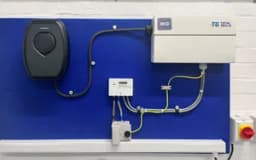
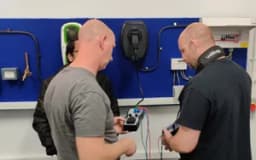
Ready for commercial? The large-scale EV charging qualification
Frequently Asked Questions
Can I install commercial EV chargers with just the 2921-34?
What is the difference between Mode 3 and Mode 4 charging?
Do I need a three-phase supply to install commercial chargers?
How much more can I earn doing commercial vs domestic installations?
Do I need to apply to the DNO for domestic installations?
Should I start with domestic or commercial EV charging work?
Ready to Start Training?
Browse our City & Guilds accredited courses and take the next step in your electrical career.
Related Guides
How to Become an EV Charger Installer
The qualifications, training, and steps needed to install electric vehicle charging points in the UK.
Read guideEV Charging Courses Explained: 2921-34 & What You Need
Which EV charging course do you need? C&G 2921-34 covers domestic and small commercial installs — prerequisites, content, and comparisons.
Read guideEV Charger Installation Regulations UK
The regulations, standards, and codes of practice that govern EV charger installation in the UK.
Read guideStarting an EV Charging Installation Business
The business case for EV charger installation — market size, earning potential, and how to get started.
Read guide