
EV Charging Courses Explained: 2921-34 & What You Need
Which EV charging course do you need? C&G 2921-34 covers domestic and small commercial installs — prerequisites, content, and comparisons.
In this guide
What Is the C&G 2921-34 EV Charging Course?
The City & Guilds 2921-34 is the UK's recognised qualification for electric vehicle charging equipment installation. Its full title is Requirements for Electric Vehicle Charging Equipment Installation (2921-34), and it is designed for qualified electricians who want to add EV charger installation to their skill set.
The course covers the design, installation, and commissioning of EV charging equipment in domestic and small commercial settings. It is aligned with BS 7671 (the 18th Edition Wiring Regulations), specifically Section 722, and the IET Code of Practice for Electric Vehicle Charging Equipment Installation.
With over one million electric vehicles already on UK roads and the ban on new petrol and diesel car sales set for 2030, the demand for qualified EV charger installers is growing rapidly. This EV charging course is the quickest way for a qualified electrician to enter this market.
Who Is This Course For?
The 2921-34 is aimed at electricians who already hold their core qualifications and want to specialise in EV charging. It is not an entry-level course — you need a solid foundation in electrical installation before you can understand the specific requirements of EV charger installation.
Ideal candidates
- ✓Qualified electricians looking to expand into EV charging work
- ✓Electricians registered with NICEIC, NAPIT, or other competent person schemes
- ✓Self-employed electricians wanting to offer EV installation as an additional service
- ✓Electricians working for companies that install EV chargers or plan to
- ✓Experienced electricians looking to future-proof their career with green skills
Prerequisites
What You Will Learn
The course is comprehensive despite its relatively short duration. It covers everything from the basic principles of EV charging through to the specific regulatory requirements and practical installation considerations.
EV charging fundamentals
- ✓How electric vehicles charge: battery technology, charging curves, and power requirements
- ✓Charging modes: Mode 1 (domestic socket), Mode 2 (portable EVSE), Mode 3 (dedicated wallbox), Mode 4 (DC rapid)
- ✓Connector types: Type 1, Type 2, CCS, CHAdeMO
- ✓Single-phase vs three-phase charging and when each applies
Regulations and standards
- ✓BS 7671 Section 722: the specific wiring regulation requirements for EV installations
- ✓IET Code of Practice for EV Charging Equipment Installation
- ✓Approved Document S: building regulations for new buildings
- ✓OZEV Minimum Technical Specification for grant-funded installations
- ✓Part P of the Building Regulations and notification requirements
Design and installation
- ✓Site survey and assessment procedures
- ✓Circuit design: cable selection, protective devices, and circuit calculations
- ✓Earthing arrangements: TN-S, TN-C-S (PME), and TT systems
- ✓PME concerns and protective measures (PEN fault detection, earth electrodes)
- ✓Load management: ensuring the charger does not exceed the available supply capacity
- ✓Smart charging and demand-side response
Commissioning and documentation
- ✓Testing procedures specific to EV charging circuits
- ✓Commissioning the charger and verifying correct operation
- ✓Documentation: Electrical Installation Certificates, user handover
- ✓Ongoing maintenance requirements and inspection intervals
Course Structure and Duration
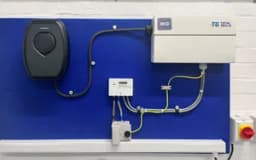
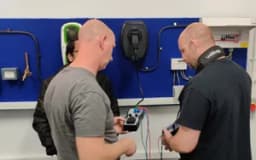
The C&G 2921-34 course is delivered as a 2-day intensive. At Total Skills, we combine classroom theory with hands-on practical work to ensure you leave the course confident and competent.
Typical course schedule
- ✓Day 1: EV technology fundamentals, charging modes and connectors, BS 7671 Section 722, IET Code of Practice, earthing requirements, PME concerns, circuit design, cable selection, and load management
- ✓Day 2: Practical installation workshop, commissioning procedures, testing, documentation, revision, and the online examination
The two days are packed but focused, covering everything you need to install domestic EV chargers safely and competently. Check the course page for current dates.
Assessment: What to Expect
The 2921-34 is assessed through an online multiple-choice examination. The exam is open-book, meaning you can refer to BS 7671 and the IET Code of Practice during the test. This is intentional — the regulations are reference documents that electricians use daily, and the exam tests your ability to find and apply the relevant requirements rather than memorise them.
Exam details
- ✓Format: online multiple-choice questions
- ✓Duration: typically 60 to 90 minutes
- ✓Open-book: you can use BS 7671 and the IET Code of Practice
- ✓Topics: EV charging modes, BS 7671 Section 722, earthing, load management, installation requirements
- ✓Pass mark: set by City & Guilds (typically around 60 to 65%)
Exam preparation tip
Career Opportunities After the Course
Completing the 2921-34 opens up a range of career opportunities in the rapidly growing EV charging market. For the full step-by-step pathway, see our guide to becoming an EV charger installer. The qualification is recognised across the industry and is increasingly expected by employers, manufacturers, and scheme providers.
What you can do with the 2921-34
- ✓Install domestic EV chargers (up to 7kW single-phase wallbox units)
- ✓Carry out workplace charging installations (small-scale)
- ✓Register as an approved installer with EV charger manufacturers
- ✓Apply for OZEV-approved installer status for grant-funded work
- ✓Add EV charging as a service line to your existing electrical business
- ✓Work for EV charging installation companies and charge point operators
Earning potential
EV charger installers typically earn between 300 and 500 pounds per day. A standard domestic installation takes 3 to 5 hours and is charged at 800 to 1,500 pounds to the customer. Experienced installers who build relationships with manufacturers and property developers can secure a steady pipeline of well-paid work.
Progression to commercial installations
The 2921-34 is focused on domestic and small commercial installations. If you want to progress to larger commercial and rapid charging installations (22kW to 150kW+), you can take the C&G 2921-32 and 2921-33 qualifications, which cover three-phase systems, load balancing across multiple chargers, and large-scale infrastructure design.
Related Course
Large-Scale EV (2921)
Progress to commercial EV charging with the large-scale qualification
2921-34 vs 2921-32/33: Which Do You Need?
The City & Guilds 2921 suite includes three qualifications. Understanding the differences helps you choose the right course for your intended market:
C&G 2921-34: Domestic and small commercial
- ✓Single-phase installations up to 7kW
- ✓Home wallbox chargers (Zappi, Wallbox, Easee, Pod Point, etc.)
- ✓Most common type of EV charging work
- ✓Shorter course duration (2 days)
- ✓Lower barrier to entry for qualified electricians
C&G 2921-32/33: Commercial and large-scale
- ✓Three-phase installations from 22kW to 150kW and above
- ✓Workplace, fleet depot, and public rapid charging
- ✓Multiple charger coordination and load management systems
- ✓Network communication and back-office systems
- ✓Higher complexity, higher earning potential per project
Most electricians start with the 2921-34 to build experience with domestic installations, then progress to the 2921-32/33 once they have a track record of successful EV charger work.
Working on Commercial or Large-Scale EV Charging?
The 2921-34 qualifies you for domestic and small commercial single-phase work only. If you are a business or electrical contractor tendering for workplace, fleet depot, or public charging projects, you need the C&G 2921-32/33 route instead. Our commercial EV charging course guide explains the differences in full, or you can go straight to the Large-Scale EV Charging Infrastructure (2921-32/33) course for dates and pricing.
Training a whole team? We offer group bookings for teams of five or more, with ad-hoc dates arranged around your schedule. Contact us to discuss group pricing and availability.
Ready to Get Qualified?
The EV charging market is growing rapidly, and qualified installers are in high demand. The C&G 2921-34 is the fastest way to enter this market if you are already a qualified electrician. At Total Skills, we run this course regularly at our Nottingham training centre with small class sizes and experienced tutors.
Related Course
18th Edition (2382)
Need to update your 18th Edition first? We can help
Frequently Asked Questions
What does the C&G 2921-34 EV charging course cover?
How long is the EV charging course?
What are the prerequisites for the EV charging course?
How is the EV charging course assessed?
Can I install EV chargers after completing just this course?
Is the 2921-34 the same as the 2921-32 and 2921-33?
Ready to Start Training?
Browse our City & Guilds accredited courses and take the next step in your electrical career.
Related Guides
How to Become an EV Charger Installer
The qualifications, training, and steps needed to install electric vehicle charging points in the UK.
Read guideEV Charger Installation Regulations UK
The regulations, standards, and codes of practice that govern EV charger installation in the UK.
Read guideStarting an EV Charging Installation Business
The business case for EV charger installation — market size, earning potential, and how to get started.
Read guideCommercial EV Charger Installation vs Domestic: Key Differences
Commercial EV charger installation vs domestic — three-phase supply, load management, DNO applications, and qualifications beyond the 2921-34 explained.
Read guide