
How to Become an Energy Assessor (EPC Assessor) in the UK
The DEA route — ABBE Level 3 qualification, £1,000–£1,500 cost, accreditation schemes, and why pairing EPC work with electrical qualifications earns more.
In this guide
What Does an Energy Assessor Do?
A domestic energy assessor (DEA) surveys homes and produces Energy Performance Certificates (EPCs) — the rating that shows how energy-efficient a property is, on a scale from A to G. An EPC is legally required whenever a property is sold or rented, which gives the role a steady baseline of demand. Government retrofit programmes, which fund energy-efficiency upgrades to existing housing stock, add further assessment work on top of that baseline.
This guide covers how to become an energy assessor via an EPC course or domestic energy assessor course, what it costs, what you can expect to earn, and — because Total Skills is an electrical training provider, not a DEA training provider — where the role genuinely overlaps with electrical work, and where it does not.
What this guide is (and isn't)
Total Skills trains electricians — we do not offer domestic energy assessor or EPC training. This guide explains the DEA route honestly for anyone researching an energy assessor course, then covers where the role connects to electrical qualifications such as inspection and testing, which we do teach.
Entry Requirements and the ABBE Level 3
One reason the domestic energy assessor course attracts a lot of career-changers is that there are no industry-specific entry requirements. You do not need a background in construction, surveying, or engineering to start. What you do need is straightforward:
- ✓You must be 18 or over
- ✓Good spoken and written English
- ✓Comfortable using a computer, since EPC lodgement and reporting is done digitally
The qualification: ABBE Level 3
The recognised qualification is the ABBE Level 3 Certificate in Domestic Energy Assessment. It is portfolio-based rather than a single written exam — you build up evidence of your competence, typically including practice assessments, as you go. Most people qualify within a few weeks.
Costs and How Long It Takes
An EPC assessor course typically costs around £1,000 to £1,500 plus VAT. As a reference point, one large training provider charges £1,150 plus VAT for a package that bundles the training, ABBE registration, and assessment together — worth checking exactly what is and isn't included when you compare providers, since some quote the training fee alone.
Because the ABBE Level 3 is portfolio-based, the time to qualify depends on how quickly you can complete and submit your evidence, but most learners get there within a few weeks rather than months. This is one of the fastest routes into any energy-efficiency career.
Joining an Accreditation Scheme
Passing the ABBE Level 3 is not the final step. Before you can produce and lodge EPCs professionally, you must join a government-approved accreditation scheme. Elmhurst Energy is the UK's largest such scheme. Accreditation schemes are what allow your completed EPCs to be lodged on the official register, so factor the scheme membership into your overall cost and timeline when planning your route in.
Realistic Earnings for Energy Assessors
Earnings for domestic energy assessors vary by experience, location and how much work you take on — many DEAs are self-employed and paid per assessment rather than a salary, so income tracks workload closely.
- ✓Newly qualified: around £25,000
- ✓Average: around £29,000
- ✓Experienced: £40,000 or more, with some sources reporting top earners above £45,000
- ✓Many assessors are self-employed and paid per assessment rather than a fixed salary
The honest picture is that the DEA route is one of the lowest-barrier green careers available — a few weeks of study and around £1,000 gets you qualified — but earnings typically plateau lower than a skilled trade such as electrical installation, where more upfront training translates into a higher earning ceiling.
Energy Assessor or Electrician? Choosing the Right Route
If you're weighing up an energy assessor course against training as an electrician, it helps to be clear about what each route actually gets you.
The DEA route: quick and low-cost, but it plateaus
Becoming a domestic energy assessor is genuinely one of the fastest, cheapest ways into a green-economy career — no entry requirements beyond being 18 with good English, a portfolio-based qualification you can complete in a few weeks, and a typical cost of around £1,000 to £1,500 plus VAT. The trade-off is that earnings tend to plateau lower than a skilled trade, even for experienced assessors.
The electrical route: longer, but a licensed trade with more ceiling
Training as an electrician takes longer and costs more upfront, but it leads to a recognised, licensed trade with a higher earning ceiling — and it opens the door to adding the DEA qualification later, rather than the other way round. That combination matters directly for landlord compliance work.
Landlords need both an EICR (electrical installation condition report) and an EPC. An EICR can only be produced by a qualified electrician holding an inspection and testing qualification such as City & Guilds 2391. An electrician who also holds the DEA qualification can offer an EICR and an EPC in one visit — a genuinely useful combination for landlord and rental-market work. The reverse does not work: a domestic energy assessor cannot produce an EICR without training as an electrician first.

Related Course
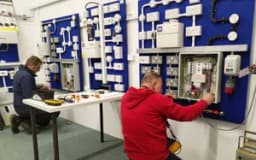
Level 2 Diploma (2365)
The Level 2 Diploma is the recognised starting point for training as an electrician, the route that leads to a licensed trade rather than a lower-ceiling assessor role
Related Course
Inspection & Testing (2391)
Inspection and testing (2391) qualifies you to produce EICRs, which pair with EPCs to cover both legal requirements landlords need in a single visit
If you're weighing up energy-efficiency career options more broadly, our retrofit careers guide covers the PAS 2035 assessor and coordinator roles, which sit alongside the DEA route as another green-economy option worth comparing before you commit.
Frequently Asked Questions
What qualification do I need to become an energy assessor?
How much does an EPC assessor course cost?
How long does it take to qualify as a domestic energy assessor?
How much do energy assessors earn?
Is there ongoing demand for energy assessors?
Can an electrician become an energy assessor?
Ready to Start Training?
Browse our City & Guilds accredited courses and take the next step in your electrical career.
Related Guides
F-Gas Certification UK: Courses, Costs & Who Needs It
What F-Gas certification is, C&G 2079 categories, course costs (£400–£900), who legally needs it, and how it compares with an electrical qualification.
Read guideHow to Become a Heat Pump Engineer in the UK (2026 Guide)
Routes into heat pump work — heating/plumbing vs electrical — plus MCS certification, the Heat Training Grant, salaries, and long-term demand.
Read guideHow to Become an Air Conditioning Engineer in the UK
Apprenticeship and fast-track routes into air conditioning, the F-Gas qualification you legally need, ~£41,000 salaries, and the electrical crossover.
Read guideHow to Become a Wind Turbine Technician in the UK
GWO training, entry routes and salaries for wind turbine technicians — and why electrical qualifications are a strong route into onshore and offshore wind.
Read guide