
Electrician Qualification Pathway: Step-by-Step
A visual step-by-step map of how electrical qualifications fit together — from your first course to your ECS gold card.
In this guide
Your Complete Qualification Map
Becoming a fully qualified electrician is not a single course — it is a sequence of qualifications that build on each other. Each step adds to your knowledge and competence until you hold everything needed for your JIB ECS Gold Card and can work independently as a recognised electrician.
This guide walks you through each step in order, explains what it covers, how long it takes, and how it connects to the next stage. For a deeper look at the classroom-based qualifications, see our diploma route guide and 2365 course guide. Whether you are just starting out or partway through the pathway, this map will help you see the full picture.
Step 1: Level 2 Diploma in Electrical Installation (C&G 2365)
Duration: 14 to 16 weeks (full-time)
This is where everyone starts. The Level 2 Diploma covers the fundamentals of electrical science, health and safety, installation principles, and basic domestic wiring. No prior qualifications or experience are required.
- ✓Electrical science: voltage, current, resistance, power calculations
- ✓Health and safety: safe isolation, risk assessment, PPE
- ✓Wiring systems: cable types, containment, installation methods
- ✓Circuit protection: fuses, MCBs, RCDs
- ✓Domestic circuits: ring finals, radials, lighting

Step 2: Level 3 Diploma in Electrical Installation (C&G 2365)
Duration: 16 to 20 weeks (full-time)
Level 3 builds on your Level 2 knowledge with advanced topics including electrical design, fault diagnosis, inspection principles, and three-phase systems. This is where you develop the deeper understanding needed for professional-level work.
- ✓Electrical design: cable sizing, voltage drop, fault current calculations
- ✓Fault diagnosis: systematic approaches to finding and rectifying faults
- ✓Three-phase systems: commercial and industrial power supplies
- ✓Inspection and testing principles
- ✓Complex circuit design and distribution boards
Step 3: 18th Edition Wiring Regulations (C&G 2382-26)
Duration: 2 days (intensive course) or self-study
The 18th Edition is the current version of BS 7671, the IET Wiring Regulations. Every practising electrician must hold this qualification — it is mandatory knowledge for anyone working in the electrical trade. The course teaches you to navigate and apply the regulation book.
- ✓Structure and use of BS 7671
- ✓Protection against electric shock (Chapter 41)
- ✓Cable selection and current-carrying capacity
- ✓Special locations: bathrooms, swimming pools, construction sites
- ✓Earthing arrangements and protective conductors
Related Course
18th Edition (2382)
Step 3 — mandatory for all practising electricians
Step 4: Inspection and Testing (C&G 2391-52)
Duration: 5 days (intensive course)
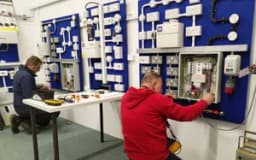
The 2391-52 qualification covers the initial verification of new installations and the periodic inspection and testing of existing installations. It is essential for anyone who needs to sign off electrical work and issue certificates.
- ✓Initial verification: testing new installations before energising
- ✓Periodic inspection: condition reports (EICRs) on existing installations
- ✓Test procedures: continuity, insulation resistance, earth fault loop impedance, RCD testing
- ✓Certification: EICs, EICRs, and minor works certificates
- ✓Safe isolation procedures and test instrument use
Related Course
Inspection & Testing (2391)
Step 4 — learn to inspect, test, and certify electrical installations
Practical assessment
Step 5: NVQ Level 3 in Electrotechnical Services (C&G 2357)
Duration: 6 to 12 months (workplace-based)
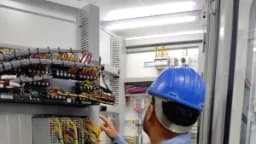
The NVQ Level 3 is the workplace-based qualification that proves you can apply your knowledge on real jobs. Unlike the other steps, the NVQ is not a course — it is an assessment of your on-the-job competence through portfolio evidence, assessor visits, and professional discussion.
- ✓Portfolio of evidence: photographs, certificates, test results from real work
- ✓Assessor observations: workplace visits to watch you work
- ✓Professional discussion: explaining your approach and decisions
- ✓Covers installation, testing, fault diagnosis, and safe working practices
Step 6: ECS Gold Card Application
Timeline: application takes 2 to 4 weeks
Once you hold all five qualifications — Level 2 Diploma, Level 3 Diploma, 18th Edition, 2391, and NVQ Level 3 — you can apply for your JIB ECS Gold Card (Installation Electrician). This is the industry-standard card that proves you are a fully qualified electrician.
- ✓Apply through the JIB/ECS website — see our ECS Gold Card requirements guide for full details
- ✓The Gold Card is valid for 3 years
- ✓Required for most construction sites and many employers
- ✓Renewing requires evidence of continued professional development (CPD)
The Gold Card is your goal
Optional Specialisms: EV, Solar PV, and Beyond
Once you have your core qualifications in place, you can add specialist qualifications to expand your skills and earning potential. You will also need to pass the AM2 practical assessment before applying for your Gold Card. These specialist add-ons are optional but increasingly valuable as the industry evolves.
Popular specialist qualifications
- ✓EV Charging Installation (C&G 2921-34): 2 days — install domestic and small commercial EV chargers
- ✓Large-Scale EV Infrastructure (C&G 2921-32/33): commercial rapid charger installations
- ✓Solar PV and Battery Storage: design and install solar panel systems
- ✓Fire alarm systems: design, install, and maintain fire detection and alarm systems
- ✓Data and structured cabling: network infrastructure for offices and data centres
Specialist qualifications can significantly increase your earning potential. Electricians with EV or solar certifications typically command higher day rates because demand for these skills outstrips supply.
Total Timeline: How Long Does It All Take?
The total time from starting Level 2 to holding your Gold Card depends on which route you take and how quickly you can complete the NVQ.
Diploma route (fastest)
- ✓Level 2: 14 to 16 weeks
- ✓Level 3: 16 to 20 weeks
- ✓18th Edition: 2 days
- ✓2391 Inspection and Testing: 5 days
- ✓Classroom-based total: approximately 8 to 9 months
- ✓NVQ Level 3: 6 to 12 months, built alongside Level 3 via the current 2357 route (until 31 October 2026); a minimum of two years, sequentially after your diplomas, under the new 5357 reform after that date
- ✓Total to Gold Card: approximately 18 to 24 months via the current 2357 route (until 31 October 2026) if on-site work starts during training; approximately 3 years under the new 5357 reform after that date (diplomas plus a minimum two-year on-site competence stage before AM2)
Apprenticeship route
- ✓All qualifications completed during the apprenticeship: 3 to 4 years
- ✓Gold Card application: at the end of the apprenticeship
- ✓Total: approximately 3 to 4 years
The diploma route is significantly faster
Frequently Asked Questions
What is the fastest route through the qualification pathway?
Do I have to complete the steps in this exact order?
How much does the full pathway cost?
What is the ECS Gold Card and why does it matter?
Can I skip any steps on the pathway?
When should I add specialist qualifications like EV or Solar PV?
Ready to Start Training?
Browse our City & Guilds accredited courses and take the next step in your electrical career.
Related Guides
Become an Electrician Without an Apprenticeship: Diploma Route
Yes — become an electrician without an apprenticeship via the C&G 2365 diploma route. Full-time training, no employer needed, qualified in 8–12 months.
Read guideNVQ Level 3 Electrical: Everything You Need to Know
A complete guide to the City & Guilds 2357 NVQ Level 3 — who it is for, how it works, evidence requirements, and how it leads to your gold card.
Read guideCity & Guilds 5357: New Level 3 Electrotechnical Qualification
What City & Guilds 5357 (5357-95 and 5393-43) means — the qualification replacing the 2357 NVQ from 31 October 2026, and the new ECS Gold Card route.
Read guideNVQ Level 2 Electrical: Why It Doesn’t Exist & What You Need
There is no NVQ Level 2 in Electrical Installation. The qualification you need is the C&G 2365-02 Level 2 Diploma — we explain the difference.
Read guide