
City & Guilds 2365 Course: Complete Guide
Everything about the C&G 2365 qualification — what it covers, how the course is structured, assessments, and what comes after.
In this guide
What Is the City & Guilds 2365?
The City & Guilds 2365 Diploma in Electrical Installation is the UK's most widely recognised classroom-based qualification for aspiring electricians. It is the qualification that most adults and career changers take when entering the electrical trade through the adult diploma route.
Available at Level 2 (foundation) and Level 3 (advanced), the 2365 covers everything from basic electrical science to complex circuit design and fault diagnosis. Delivered through a combination of classroom theory sessions and hands-on practical workshops, it provides the technical knowledge foundation for a career in electrical installation.
The 2365 replaced the older 2330 and 2360 qualifications (see our Level 2 vs Level 3 comparison) and is the current standard diploma for the trade. Whether you are a complete beginner or someone with related experience looking to formalise your skills, this guide gives you a complete overview — the course structure, what you will learn at each level, how Total Skills delivers it, how you are assessed, and the full pathway to becoming a qualified electrician.
Who Is the 2365 For?
The 2365 is designed for anyone who wants to become an electrician through the diploma route rather than a traditional apprenticeship. It is the primary qualification for adult learners and career changers — people who cannot or do not want to spend 3 to 4 years in an apprenticeship.
Typical 2365 learners
- ✓Career changers in their 20s, 30s, 40s, or 50s looking for a more rewarding trade
- ✓Adults who missed the apprenticeship window and want to retrain
- ✓People in related trades (plumbing, gas, carpentry) adding electrical skills
- ✓Armed forces leavers transitioning to civilian careers (ELCAS funding may apply)
- ✓Anyone seeking a profession with genuine job security and strong earning potential
There is no upper age limit for the 2365. We regularly train people of all ages. There are no formal academic entry requirements for Level 2 — you do not need GCSEs, A-levels, or a degree. A basic understanding of maths (fractions, percentages, and simple algebra) is helpful, but the course teaches the electrical calculations you need in context.
Diploma route vs apprenticeship

Related Course
Level 2 Diploma (2365)
No prior experience needed — start your electrical career with Level 2
Course Structure and Units
The 2365 is divided into structured units at each level. Each unit covers a specific area of knowledge or practical skill, and you must pass all units to achieve the full diploma.
Level 2 units
- ✓Health and safety in building services engineering: legislation, risk assessment, PPE
- ✓Principles of electrical science: voltage, current, resistance, magnetism, AC theory
- ✓Electrical installations technology: wiring systems, containment, tools, and materials
- ✓Installation of wiring systems and enclosures: practical cable installation techniques
- ✓Understand how to communicate with others within building services engineering
Level 3 units
- ✓Electrical principles for design, installation, and maintenance: advanced circuit theory
- ✓Practices and procedures for the design of electrical installations: cable sizing, protection
- ✓Fault diagnosis and rectification: systematic fault-finding methodology
- ✓Inspection, testing, and commissioning: understanding test procedures and certification
- ✓Understanding the principles of planning and selection for electrical systems
- ✓Electrical systems design: distribution, diversity, and discrimination
For a detailed comparison of what each level involves, see our Level 2 vs Level 3 comparison guide.
How Total Skills Delivers the 2365
At Total Skills, we deliver the 2365 through a hybrid learning model that combines online theory study with practical workshops at our training centre. This approach is designed for adult learners who need flexibility — you can study theory around your existing commitments and attend workshops on scheduled days.
Online theory
The theory component is delivered through our online learning platform. You work through structured modules covering electrical science, regulations, and installation theory at your own pace. The content includes video tutorials, reading materials, practice questions, and regular progress checks. You can study in evenings, weekends, or whenever suits your schedule.
Practical workshops
Practical skills are taught in hands-on workshops at our Nottingham training centre (Arnold, NG5 7ER). These sessions are where you learn to wire circuits, bend conduit, install containment systems, and work in realistic training bays. Workshops are scheduled on specific days so you can plan around work or other commitments. Weekend options are available.
Why hybrid works for career changers
- ✓Study theory online around your current job — no need to quit work immediately
- ✓Attend practical workshops on scheduled days, including weekend options
- ✓Progress at a pace that works for your circumstances
- ✓Access tutor support throughout your studies, not just during workshop days
- ✓Reduce travel time and costs compared to full-time, centre-based courses
Practical work cannot be done remotely
Level 2 in Detail
The Level 2 Diploma is designed for complete beginners. It starts from first principles and builds your understanding progressively across 14 to 16 weeks of study.
What you will learn
Level 2 covers the fundamentals that every electrician needs. You will learn what electricity is, how circuits work, the principles of AC and DC power, and the safety legislation that governs the industry. By the end, you will be able to install basic wiring systems, work safely on electrical circuits, and understand the theory behind what you are doing.
Typical weekly breakdown
The Level 2 is structured around a mix of online theory study and practical workshop sessions. The balance shifts towards more practical work as the course progresses and you begin applying the theory you have learned.
What the practical workshops involve
- ✓Working in dedicated training bays that simulate real installation environments
- ✓Running cables through conduit, trunking, and cable tray
- ✓Wiring ring final circuits, radial circuits, and lighting circuits
- ✓Connecting accessories: sockets, switches, light fittings, consumer units
- ✓Bending conduit and working with different containment systems
- ✓Timed practical assessments under exam conditions
Related Course
Level 2 Diploma (2365)
Enrol on the Level 2 Diploma — no prior experience needed
Level 3 in Detail
The Level 3 Diploma takes approximately 16 to 20 weeks and assumes you already understand the fundamentals covered at Level 2. The pace is faster and the content is significantly more demanding.
Key areas of increased difficulty
- ✓Cable sizing calculations using BS 7671 tabulated data and correction factors
- ✓Voltage drop calculations for long cable runs
- ✓Fault current calculations and protective device coordination
- ✓Three-phase power systems: star and delta configurations, phase voltages
- ✓Complex distribution board design with diversity calculations
- ✓Systematic fault diagnosis using half-split and other techniques
The maths at Level 3 is considerably more challenging than Level 2. You will need to be comfortable with algebra, using formulas, and working with tables from BS 7671. If maths is not your strongest area, extra revision time will be needed. See our electrical exam tips guide for revision strategies.

Related Course
Level 3 Diploma (2365)
Progress to Level 3 for advanced design and fault-finding skills
Level 2 vs Level 3: What Is the Difference?
This is one of the most common questions we get asked. The short answer: Level 2 teaches you how to install electrical systems. Level 3 teaches you how to design, diagnose, and manage them. You need both to become a qualified electrician.
Scope
Level 2 focuses on the practical skills of installation — wiring circuits, running cables, connecting accessories, and understanding basic electrical science. Level 3 moves into design principles, fault diagnosis, three-phase systems, and the more complex calculations needed for commercial and industrial work.
Difficulty
Level 2 is achievable for anyone willing to study consistently, even with no prior electrical knowledge. National pass rates sit at approximately 80 to 90 percent. Level 3 is a significant step up. The maths is harder, the concepts are more abstract, and the practical assessments are more complex. Pass rates are around 70 to 85 percent.
Duration
Level 2 takes approximately 14 to 16 weeks. Level 3 takes 16 to 20 weeks. If you enrol on the combined Level 2 and 3 package, you can complete both back-to-back in approximately 30 to 36 weeks.
Career value
Level 2 alone qualifies you to work as an electrical mate or trainee installer. To become a fully qualified electrician and progress towards your ECS Gold Card, you must complete Level 3. Most employers require both Level 2 and Level 3 for installation roles.
For a more detailed breakdown, see our full Level 2 vs Level 3 comparison guide.
Related Course
Level 2 & 3 Package
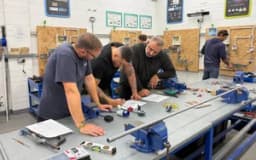
Save by enrolling on the combined Level 2 & 3 Diploma package
How You Are Assessed
The 2365 uses a blend of written examinations and practical assessments at both levels. All assessments are set by City & Guilds and delivered at your training centre under controlled conditions.
Written examinations
- ✓Online, multiple-choice format
- ✓Taken at your training centre under exam conditions
- ✓Timed — typically 60 to 90 minutes per paper
- ✓Cover the full range of theory content for each unit
- ✓You need to achieve the City & Guilds pass mark (typically 60 to 65 percent)
Practical assessments
- ✓Carried out in the workshop under timed, observed conditions
- ✓Level 2: wire a domestic circuit (e.g. ring final, lighting) to specification
- ✓Level 3: more complex tasks including distribution board wiring and fault diagnosis
- ✓Assessed on safety, accuracy, compliance with wiring regulations, and completion within time
- ✓Your work must be correct, safe, and properly labelled
Resits are available
ECS Card Connection
The Electrotechnical Certification Scheme (ECS) issues the identification cards that prove your qualifications to employers, clients, and site managers. Your ECS card is your professional passport in the electrical trade — you need one to work on most construction sites and with most employers.
Trainee Electrician ECS card (White with Red Stripe)
Once you enrol on the 2365 and attempt your first exam or assessment, you become eligible to apply for a Trainee Electrician ECS card. This is your first step to site access and proves you are actively training towards your electrical qualifications. Many employers and sites require at minimum this card before allowing you to work, even as a trainee. Total Skills sponsors your application.
ECS card application is a separate cost
Your ECS card progression
- ✓Trainee Electrician (White with Red Stripe) — available once enrolled on a recognised course like the 2365 and you have attempted your first exam or assessment
- ✓Registered Electrician (Blue) — requires Level 2, Level 3, 18th Edition, and 2391
- ✓Installation Electrician Gold Card — add the NVQ Level 3 to your Blue card qualifications
Every step on this ladder is achievable. The 2365 is the foundation that starts you on the path. For the full progression including requirements and timelines, see our ECS Gold Card requirements guide.
Costs and Payment Plans
The cost of the 2365 depends on whether you enrol on Level 2 alone, Level 3 alone, or the combined Level 2 and 3 package. The combined package typically offers the best value if you know you want to complete both levels — which most career changers do.
What is included in your course fee
- ✓Full access to online theory learning materials
- ✓All practical workshop sessions at our Nottingham training centre
- ✓City & Guilds registration and examination fees
- ✓Tutor support throughout your studies
- ✓At least one resit attempt per exam if needed
What is not included
- ✓ECS card application fee (paid directly to the JIB)
- ✓Personal tools and PPE (centres provide tools but you may prefer your own)
- ✓Travel and accommodation costs for workshop attendance
- ✓Subsequent qualifications (18th Edition, 2391, NVQ) — these are separate courses
- ✓IET On-Site Guide (optional, £38)
Total Skills offers flexible payment plans so you do not need the full amount upfront. Visit our course pages for current pricing and payment options.
For a full breakdown of costs across the entire qualification pathway, see our cost to become an electrician guide.
Related Course
Level 2 & 3 Package
Get the best value with our combined Level 2 & 3 Diploma package
Tools You Need for the Course
Most training centres provide tools for use during the course, but having your own toolkit helps you become familiar with the tools you will use throughout your career. Here is what you should consider bringing:
Essential tools
- ✓Side cutters and long-nose pliers
- ✓Wire strippers (automatic or manual)
- ✓Flat and Phillips screwdriver set (insulated to VDE standard)
- ✓Voltage indicator (e.g. Fluke T150 or T110) — essential for safe isolation
- ✓Tape measure (at least 5 metres)
- ✓Spirit level (small torpedo level)
- ✓Cable knife or utility knife
PPE requirements
- ✓Safety boots with steel or composite toe cap
- ✓Safety glasses or goggles
- ✓Work trousers (not shorts or jeans with rips)
- ✓High-visibility vest (some centres require this)
Invest in quality
Tips for Success on the 2365
The 2365 is demanding but achievable with the right approach. Here are practical tips from learners who have completed it successfully:
- ✓Attend every session — the course moves fast and gaps in attendance create gaps in knowledge
- ✓Practise calculations daily — Ohm's law, power formulas, and cable sizing become second nature with repetition
- ✓Use the workshop time well — wiring speed and accuracy improve dramatically with practice
- ✓Form a study group — discussing concepts with classmates helps everyone understand better
- ✓Ask questions in class — if something is unclear, ask immediately rather than falling behind
- ✓Start a formula sheet — write down every formula as you encounter it and revise it regularly
- ✓Do past papers — practice with previous exam questions if your provider makes them available
- ✓Do not cram — consistent daily study of 1 to 2 hours is far more effective than marathon sessions before exams
For more detailed revision strategies, including techniques specifically for electrical exams, see our electrical exam tips guide.
Common Questions from Career Changers
If you are considering the 2365 as a career change, you are not alone. The majority of our learners are adults retraining from other careers. Here are the questions they ask most often.
Is there an age limit?
No. There is no upper age limit for the 2365 or for working as an electrician. We train people from their early 20s to their late 50s. The adult diploma route exists specifically for people who are past the traditional apprenticeship age. Your maturity and life experience are genuinely valued by employers.
What maths do I actually need?
You need to be comfortable with basic arithmetic, fractions, percentages, and simple algebra. At Level 2, the maths is straightforward — Ohm's law (V = I x R) and basic power calculations. At Level 3, it gets harder with cable sizing, voltage drop, and fault current calculations, but the course teaches you these formulas in context. You do not need A-level maths. If you can calculate a percentage and rearrange a simple formula, you will manage.
Do I need to be physically fit?
Reasonably fit, yes. Electrical work involves standing for extended periods, lifting tools and materials, working in roof spaces and under floors, and sometimes working at height or in confined spaces. It is less physically demanding than trades like bricklaying or roofing, but you need to be mobile and able to do manual work.
Can I keep my current job while studying?
Yes, and many career changers do exactly this. With hybrid delivery, you study theory online around your existing schedule and attend practical workshops on specific days. Some learners reduce to part-time work during training, while others manage the course entirely around full-time employment. It requires commitment, but it is designed to be achievable.
Will employers take me seriously without an apprenticeship?
Yes. The diploma route produces the same City & Guilds qualifications and the same ECS card as an apprenticeship. Employers and the JIB recognise both routes equally. In fact, many employers prefer hiring career changers because of the transferable skills they bring — reliability, communication, problem-solving, and professionalism.
For a complete guide to making the switch, see our career change to electrician guide.
What Comes After the 2365?
The 2365 Level 2 and Level 3 diplomas give you the technical knowledge, but they are not the end of the journey. To become a fully qualified electrician and obtain your ECS Gold Card, you need additional qualifications. Here is the full pathway with realistic timelines.
Step 1: 18th Edition Wiring Regulations (2 days)
The 18th Edition (C&G 2382-26) is mandatory knowledge of BS 7671, the wiring regulations that govern all electrical work in the UK. Many learners take this during or immediately after their Level 3 Diploma, while the knowledge is fresh.
Related Course
18th Edition (2382)
Complete the 18th Edition — often taken alongside Level 3
Step 2: 2391 Inspection and Testing (5 days)
The 2391-52 Inspection and Testing qualification proves you can inspect, test, and certify electrical installations. It is essential for signing off your own work, carrying out EICRs, and joining a competent person scheme. This is where you gain the ability to work independently.
Related Course
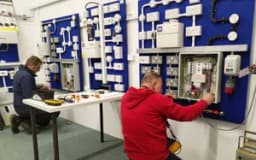
Inspection & Testing (2391)
Add inspection and testing to your qualifications
Step 3: ECS Blue Card (Registered Electrician)
Once you hold the Level 2 and 3 Diplomas, 18th Edition, and 2391, you can apply for the Registered Electrician (Blue) ECS card. At this point you are recognised as a qualified electrician and can work on most sites and projects.
Step 4: 5357 Level 3 Electrotechnical and Gold Card (minimum 24 months)
The 5357 Level 3 Electrotechnical Qualification is an on-site competence assessment completed after your diplomas, while you are working. An assessor visits you on site, reviews your evidence portfolio, and conducts professional discussions. After completing the NVQ, pass the AM2 assessment and apply for your ECS Gold Card. This is the highest level of qualification for an installation electrician.
Related Course
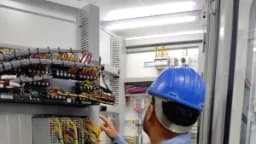
5357 Level 3 Electrotechnical
Complete the 5357 Level 3 Electrotechnical on-site to achieve your Gold Card
Realistic timeline
From starting Level 2 to holding your Gold Card, expect approximately 3 years — the diplomas come first, followed by a minimum 24-month on-site portfolio. You can start earning as an electrical worker after completing Level 2 (within 4 months of starting). You do not need to wait until you are fully qualified to begin working in the trade. For the full pathway overview, see our electrician qualifications explained guide.
Specialisations After Qualifying
Once you hold your core qualifications, you can add specialist skills that increase your earning potential and open up new market sectors. The 2365 is the foundation that makes all of these accessible.
- ✓EV charger installation (C&G 2921) — the fastest-growing specialism in the trade
- ✓Solar PV and battery storage — renewable energy installations
- ✓Fire alarm systems — commercial and domestic fire safety
- ✓Data and structured cabling — offices, data centres, smart buildings
- ✓Industrial and commercial installation — higher complexity, higher rates
Related Course
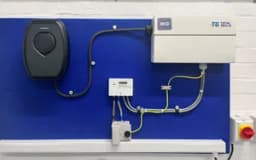
EV Charging (2921)
Add EV charger installation to your qualifications after the 2365
Related Course
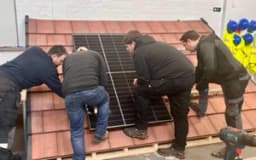
Solar PV & Battery Storage
Specialise in solar PV and battery storage installations
Frequently Asked Questions
What is the City & Guilds 2365?
Do I need GCSEs to enrol on the 2365?
What is the pass rate for the 2365?
Can I do the 2365 online?
What tools do I need for the course?
Is the 2365 the same as the old 2330 or 2360?
Am I too old for the 2365?
How much does the 2365 cost?
Can I study the 2365 while working full-time?
What is the difference between the 2365 and an apprenticeship?
Ready to Start Training?
Browse our City & Guilds accredited courses and take the next step in your electrical career.
Related Guides
Become an Electrician Without an Apprenticeship: Diploma Route
Yes — become an electrician without an apprenticeship via the C&G 2365 diploma route. Full-time training, no employer needed, qualified in 8–12 months.
Read guideNVQ Level 3 Electrical: Everything You Need to Know
A complete guide to the City & Guilds 2357 NVQ Level 3 — who it is for, how it works, evidence requirements, and how it leads to your gold card.
Read guideCity & Guilds 5357: New Level 3 Electrotechnical Qualification
What City & Guilds 5357 (5357-95 and 5393-43) means — the qualification replacing the 2357 NVQ from 31 October 2026, and the new ECS Gold Card route.
Read guideNVQ Level 2 Electrical: Why It Doesn’t Exist & What You Need
There is no NVQ Level 2 in Electrical Installation. The qualification you need is the C&G 2365-02 Level 2 Diploma — we explain the difference.
Read guide