
How to Become a Smart Home Installer (Electrician's Guide)
Smart home installer career guide for electricians — skills, brands, qualifications, and adding smart lighting, heating and automation to your services.
In this guide
How to Become a Smart Home Installer
Qualified electricians are ideally placed to become smart home installers — your wiring knowledge, control system understanding, and Part P registration put you ahead of pure-tech installers. The UK smart home market is growing at approximately 15% annually, valued at over 5.3 billion pounds in 2024, and the best-paid work goes to electricians who can design and install complete smart systems.
For electricians, this represents a significant commercial opportunity — one of the highest-paying electrical specialisms available. Smart home installations sit squarely within the electrician's skill set — they require electrical knowledge, wiring expertise, and an understanding of control systems that general technology installers lack. Electricians who add smart home skills to their offering can increase the value of every job and attract a new, higher-spending customer base.
Why Electricians Are Essential
Despite the marketing around DIY smart home devices, the reality is that most serious smart home installations need professional electrical work.
Hardwired systems require electrical competence
Smart lighting systems like Lutron, Rako, and Loxone use hardwired dimmers and relay modules that connect directly to the electrical supply. Installing them requires knowledge of circuit design, load calculations, and compliance with BS 7671 wiring regulations.
Consumer unit upgrades
Many smart home projects require additional circuits — dedicated feeds for home automation hubs, structured cabling panels, outdoor lighting, or motorised blinds. Adding circuits means work at the consumer unit, which is notifiable under Part P.
Integration with EV charging and solar PV
Smart homes increasingly integrate with EV chargers and solar PV systems to manage energy intelligently. A smart energy management system might divert excess solar generation to charge an EV, heat water, or store energy in a battery. Electricians with qualifications in EV charging and solar PV are uniquely positioned to deliver these integrated solutions.
Competitive advantage
The smart home installation market includes many IT-focused installers who lack electrical qualifications. As a qualified electrician, you can offer what they cannot: running new circuits, installing consumer units, and certifying the electrical work. This gives you a significant competitive advantage.
Key Smart Home Technologies
Understanding the main categories of smart home technology helps you identify where your skills are needed and where the commercial opportunities lie.
Smart lighting
The most common entry point for electricians. Professional systems from Lutron, C-Bus, and KNX offer reliability and sophistication that consumer products cannot match.
- ✓Hardwired smart switches and dimmers (Lutron Caseta, RA2 Select, RA3)
- ✓Whole-house lighting control with programmable scenes
- ✓Motion-activated and daylight-responsive lighting
- ✓Integration with voice assistants (Alexa, Google Home, Apple HomeKit)
- ✓Typical project value: 2,000 to 10,000 pounds
Smart heating
Smart thermostats and zoned heating controls are increasingly popular. Products like Hive, Nest, Tado, and Drayton Wiser can reduce heating bills by up to 26 per cent. As heat pumps become more common, smart heating controls will become even more important for efficient operation.
Smart security
Video doorbells, CCTV systems, smart locks, and alarm systems all require electrical installation. Higher-end systems like Ajax and Texecom offer professional-grade security with remote monitoring that homeowners increasingly demand.
Energy management systems
Home energy management systems monitor and control energy consumption across the whole house. Products like the Givenergy all-in-one, Tesla Powerwall, and Myenergi ecosystem allow homeowners to optimise solar self-consumption and manage EV charging. These systems require competent electrical installation and commissioning.
Related Course
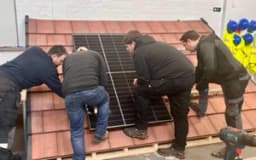
Solar PV & Battery Storage
Solar PV and battery storage complement smart home energy management work
The Market Opportunity
The UK smart home market presents a growing commercial opportunity for electricians at every scale.
Market drivers
- ✓UK smart home market growing at approximately 15% annually
- ✓Over 50% of UK households now own at least one smart speaker
- ✓New-build developers increasingly offering smart home packages as standard
- ✓Future Homes Standard driving smart energy management in new builds
- ✓Rising energy costs pushing demand for smart controls
Typical project values
- ✓Smart lighting retrofit (single room): 200 to 800 pounds
- ✓Whole-house smart lighting: 2,000 to 10,000 pounds
- ✓Structured wiring for new build: 1,500 to 5,000 pounds
- ✓Whole-house automation (lighting, heating, security, AV): 5,000 to 50,000 pounds
- ✓Premium automated home (high-end systems): 20,000 to 100,000+ pounds
The sweet spot for most electricians is the 2,000 to 10,000 pound project range — smart lighting installations that add significant value to your standard domestic work without requiring massive investment in new skills or equipment.
Partnerships with Property Developers
New-build housing developments offer one of the most efficient routes into smart home work. Developers increasingly include smart home technology as a selling point, and they need electricians who can deliver it at scale.
- ✓Smart home wiring can be integrated into first fix — much easier than retrofit
- ✓Developers value electricians who can offer complete smart home packages
- ✓Structured cabling for data, TV, and audio runs alongside electrical wiring
- ✓Pre-wiring for motorised blinds and outdoor lighting adds upsell value
- ✓Repeat business: developers need consistent quality across multiple plots
First fix is key
The biggest smart home opportunity in new builds is during first fix, when cables can be run before walls are closed up. Structured wiring, motorised blind power supplies, and smart switch wiring are all most efficiently installed at this stage.
How to Get Started
Adding smart home services to your electrical business does not require a massive investment. Here is a practical approach.
Step 1: Ensure your core qualifications are current
All smart home electrical work must comply with BS 7671. Make sure your 18th Edition qualification is current and you hold the 2391 Inspection and Testing qualification.
Step 2: Learn the ecosystems
Familiarise yourself with the major platforms: Apple HomeKit, Google Home, Amazon Alexa. For premium installations, investigate Lutron, Control4, Loxone, or Crestron training programmes.
Step 3: Start with upsells
When carrying out domestic electrical work, offer smart lighting or smart heating upgrades as add-ons. This introduces you to the work without the risk of going all-in on a new specialism.
Step 4: Build your portfolio
Document every smart home installation with photos and customer testimonials. A strong portfolio is the most effective marketing tool for attracting higher-value customers.
- ✓Complete your 18th Edition and 2391 if not already held
- ✓Join a competent person scheme (NICEIC or NAPIT)
- ✓Add smart lighting and heating as upsells on existing jobs
- ✓Take manufacturer training for premium brands
- ✓Consider EV charging and solar PV for integrated offerings
- ✓Network with architects, interior designers, and home builders
The Future of Smart Homes
Smart home technology is still in its early stages. Several trends will drive continued growth and create new opportunities for electricians.
- ✓Matter protocol: a new universal smart home standard simplifying integration
- ✓Future Homes Standard: smart energy management required in all new homes
- ✓Time-of-use tariffs driving demand for automated energy management
- ✓Vehicle-to-grid (V2G): electric vehicles as home energy storage
- ✓AI-driven automation: systems that learn occupant preferences automatically
The convergence of smart home technology, EV charging, solar PV, and battery storage is creating a new category of work: the home energy management system. Electricians who understand all of these technologies — part of the net-zero electrician movement — will be uniquely positioned to offer complete solutions that no other trade can deliver. See our electrician salary guide for how specialisms affect earning potential.
Related Course
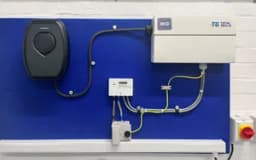
EV Charging (2921)
EV charging pairs naturally with smart home energy management
Related Course
Solar PV & Battery Storage
Solar PV and battery storage complete the smart home energy offering
Frequently Asked Questions
Do I need a special qualification for smart home installation?
How much can I earn from smart home installations?
Is the smart home market growing?
What brands should I learn to work with?
Can I offer smart home services alongside general electrical work?
Ready to Start Training?
Browse our City & Guilds accredited courses and take the next step in your electrical career.
Related Guides
Heat Pumps and Electricians: What You Need to Know
How the gas boiler phase-out is driving demand for electricians and what qualifications are relevant.
Read guideUK Construction Boom: Why Electricians Are Needed More Than Ever
How major infrastructure projects, housing targets, and data centres are driving unprecedented demand for electricians.
Read guideWill AI Replace Electricians? Why the Trade Is Robot-Proof
Why physical trades like electrical work are among the safest careers from automation and AI disruption.
Read guideRenewable Energy Electrician: Net Zero Career Guide
Green energy is reshaping electrical careers. Solar PV, EV charging, and heat pump roles driving demand for renewable energy electricians in the UK.
Read guide