
Heat Pumps and Electricians: What You Need to Know
How the gas boiler phase-out is driving demand for electricians and what qualifications are relevant.
In this guide
Heat Pumps and the Opportunity for Electricians
The UK government has set a target of 450,000 heat pump installations per year by 2030, set out in the Warm Homes Plan published in January 2026. The UK installed a record 57,918 heat pumps in 2024, taking the cumulative total past 250,000 — meaning the market needs to grow roughly seven to eight times to hit the target. The Future Homes Standard, which brings in tough performance targets for new-build homes from 24 March 2027, is a key driver: its targets are modelled on a heat pump-heated home, which a gas boiler cannot meet.
Every heat pump installation requires electrical work. This is not work that can be done by the heat pump installer alone — it requires a qualified electrician. As part of the broader green skills revolution, the heat pump transition represents one of the largest new sources of work in a generation.
Why Heat Pumps Need Electricians
Heat pumps are fundamentally electrical devices. Unlike a gas boiler, which burns gas, a heat pump uses electricity to extract heat from the outside air or ground. Every installation requires substantial electrical work that only a qualified electrician can carry out.
Electrical supply upgrades
Most UK homes have a 60A or 80A single-phase supply. A typical air source heat pump draws 3 to 12 kW. When combined with existing household loads — cooking, hot water, EV charging — many properties need a supply upgrade to 100A or higher. This requires liaison with the DNO, new cabling, and potentially a new meter and consumer unit.
Dedicated circuits
Heat pumps require a dedicated radial circuit from the consumer unit, typically protected by an appropriate MCB and RCD. The outdoor unit needs a local isolator switch. Indoor components may each require separate circuits. Cable sizing must account for compressor starting current.
Consumer unit modifications
Adding multiple new circuits often requires modifications to the existing consumer unit or, in many cases, a complete consumer unit upgrade. Older properties with rewirable fuse boards will need a new consumer unit. This is notifiable work under Part P.
Compliance and certification
All electrical work must comply with BS 7671. The electrician must issue an Electrical Installation Certificate (EIC). For MCS certification — which is required for the Boiler Upgrade Scheme grant — the electrical installation must be fully certified and compliant.
Related Course
18th Edition (2382)
The 18th Edition is essential for heat pump circuit design and compliance
The Boiler Upgrade Scheme
The government's Boiler Upgrade Scheme (BUS) provides grants to homeowners replacing fossil fuel heating with heat pumps. Understanding this scheme matters because it drives installation volumes and has specific requirements.
BUS grant details
- ✓Grant value: 7,500 pounds per air source or ground source heat pump installation, rising to 9,000 pounds for oil or LPG-heated homes from 21 July 2026 until 31 March 2027
- ✓Available to homeowners in England and Wales
- ✓Property must have an EPC (Energy Performance Certificate)
- ✓Installation must be carried out by an MCS-certified installer
- ✓Metering must be installed to monitor heat pump performance
- ✓Scheme extended to at least March 2028
The grant significantly reduces the cost to the homeowner, driving adoption. The metering requirement means additional electrical work — installing energy meters and connecting them to monitoring systems.
Metering requirement
The BUS grant requires a heat metering device and electricity meter to monitor performance. This metering installation is electrical work that the heat pump installer cannot do. Ensure you understand the metering requirements when quoting.
The Scale of Opportunity
The numbers behind the heat pump transition are striking, and they translate directly into work for electricians.
- ✓24 million gas boilers in UK homes need replacing
- ✓450,000 heat pumps per year target by 2030
- ✓7,500 pound government grant reducing homeowner costs
- ✓Electrical work worth 1,500 to 3,000 pounds per installation
- ✓Over 50,000 trained installers needed by 2030
- ✓Every installation requires qualified electrician involvement
At 450,000 installations per year, the electrical work alone represents a market worth hundreds of millions of pounds annually. Even with a slower ramp-up than targeted, the trajectory points to hundreds of thousands of annual installations within the next decade.
Building Partnerships with Heat Pump Installers
The most effective way to secure regular heat pump electrical work is to build partnerships with MCS-certified heat pump installation companies. They need reliable electricians and will provide a steady stream of work.
How to find partners
- ✓Search the MCS Installer Register for heat pump companies in your area
- ✓Contact renewable energy installers directly and offer your electrical services
- ✓Join local trade associations and networking groups
- ✓Attend renewable energy trade shows and exhibitions
- ✓Ask your existing contacts in the building trade for introductions
What heat pump installers need from you
- ✓Reliable availability — they book installations weeks in advance
- ✓Quick turnaround — their installation cannot be completed without the electrics
- ✓Understanding of heat pump electrical requirements
- ✓Proper certification (EIC) for every installation
- ✓Knowledge of BUS metering requirements
- ✓Professional communication with homeowners
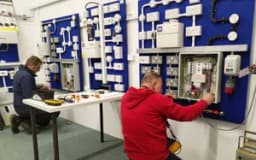
Related Course
Inspection & Testing (2391)
The 2391 allows you to sign off electrical installation certificates for heat pump work
Challenges and Practical Considerations
Older properties
Many older homes have inadequate electrical supplies for heat pump installation. Properties with 60A or lower supplies, old wiring, or outdated consumer units will need significant electrical upgrades. This increases the scope and value of the work but requires careful assessment and planning.
DNO applications
Where a supply upgrade is needed, the electrician must apply to the local Distribution Network Operator. This can take several weeks to several months. Experience with DNO applications is a valuable skill.
Three-phase considerations
Larger properties or those with very high electrical demand may need a three-phase supply to accommodate a heat pump alongside EV charging and other loads. Upskilling in three-phase systems can open up higher-value work.
Coordination is essential
Heat pump installations involve close coordination between the heat pump installer and the electrician. The electrical work often needs to be completed before the heat pump can be commissioned. Clear communication and scheduling between trades is essential.
The Long-Term Outlook
The heat pump transition is not a short-term trend — it is a structural shift driven by the UK's net zero commitments in how the UK heats its homes. Gas currently provides heating for approximately 85 per cent of UK homes. Transitioning these to heat pumps will take decades and require a sustained, large-scale workforce.
- ✓Climate Change Act 2008 legally commits UK to net zero by 2050
- ✓Future Homes Standard: performance targets from 24 March 2027 that new-build gas boilers cannot meet
- ✓£15 billion Warm Homes Plan (2026): grants and incentives driving the switch, rather than a boiler ban
- ✓Cross-party political support for heat pump transition
- ✓Government funding extended and increased
- ✓Electricians who position now will benefit from decades of demand
The electricians who secure the right qualifications, build partnerships with heat pump installers, and develop experience in supply upgrades and energy system integration will be best placed to benefit from this generational shift. Heat pump work also pairs well with other high-paying specialisms.

Related Course
Solar PV & Battery Storage
Solar PV pairs naturally with heat pumps — offer both services
Related Course
18th Edition (2382)
Stay current with the 18th Edition for heat pump circuit requirements
Frequently Asked Questions
Do I need a heat pump qualification to do the electrical work?
What electrical work does a heat pump installation require?
How much do electricians earn from heat pump installations?
How many heat pumps will the UK install per year?
Will consumer units need upgrading for heat pumps?
Can I install the heat pump itself or just the electrics?
Ready to Start Training?
Browse our City & Guilds accredited courses and take the next step in your electrical career.
Related Guides
How to Become a Smart Home Installer (Electrician's Guide)
Smart home installer career guide for electricians — skills, brands, qualifications, and adding smart lighting, heating and automation to your services.
Read guideUK Construction Boom: Why Electricians Are Needed More Than Ever
How major infrastructure projects, housing targets, and data centres are driving unprecedented demand for electricians.
Read guideWill AI Replace Electricians? Why the Trade Is Robot-Proof
Why physical trades like electrical work are among the safest careers from automation and AI disruption.
Read guideRenewable Energy Electrician: Net Zero Career Guide
Green energy is reshaping electrical careers. Solar PV, EV charging, and heat pump roles driving demand for renewable energy electricians in the UK.
Read guide