
Green Energy Training: Renewable Courses for Electricians
Renewable energy courses for electricians — solar PV, EV charging, and battery storage training to future-proof your career in the green energy transition.
In this guide
The Green Skills Revolution in the Electrical Trade
The UK is in the middle of the most significant transformation in energy infrastructure since the electrification of homes in the mid-20th century. The transition to net zero by 2050, the electrification of transport, and the decarbonisation of heating are creating unprecedented demand for electricians with green skills.
For electricians, this is not a distant future — it is happening now. The EV charger market is running at record levels. Solar PV installations doubled in 2023. Heat pump installations are growing as the gas boiler phase-out approaches. Battery storage is becoming mainstream. Smart grid technologies are being deployed across the country.
This guide explains the key green technologies, the qualifications needed, the earning potential, and why building green skills now is the best career decision an electrician can make.
Why Green Skills Matter Now
Several converging forces are creating a structural shift in the type of work available to electricians. Understanding these forces helps you appreciate why green skills are not a fad but a permanent change in the trade.
Government policy
- ✓Net Zero 2050: the UK is legally committed to net zero greenhouse gas emissions by 2050
- ✓Ban on new petrol and diesel cars from 2030: driving massive EV charger demand
- ✓Gas boiler phase-out: the Future Homes Standard effectively rules out gas boilers in new builds from 2027
- ✓70GW solar target by 2035: requiring a massive increase in installation rates
- ✓Energy Performance Certificate (EPC) requirements: driving energy efficiency improvements in buildings
- ✓Building Regulations changes: Approved Document S (EV chargepoints), Part L (energy efficiency)
Market demand
- ✓Over 1 million EVs on UK roads, growing 30%+ year on year
- ✓Over 200,000 solar PV installations per year and rising
- ✓Battery storage installations doubling year on year
- ✓Heat pump installations growing as the Boiler Upgrade Scheme provides 7,500 pound grants
- ✓Smart meter rollout creating demand for metering work
- ✓Energy retrofit programmes for social housing and fuel-poor households
Skills shortage
The Green Jobs Taskforce, established by the UK government, identified a critical shortage of workers with green skills. The National Grid estimates that 400,000 additional workers will be needed in the energy sector by 2050. Electricians are at the heart of this — almost every green technology requires electrical installation and commissioning.
Green Skill 1: EV Charger Installation
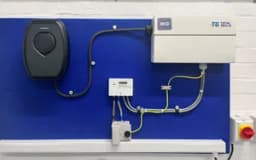
EV charger installation is the most accessible green skill for electricians. The qualification (C&G 2921-34) takes just 2 days, and the market is large and growing rapidly.
The opportunity
- ✓Over 1 million EVs on UK roads, each needing a charger
- ✓New build regulations require EV chargepoints in all new homes from June 2022
- ✓Workplace Charging Scheme incentivises businesses to install chargers
- ✓Average domestic installation: 800 to 1,500 pounds to the customer
- ✓Day rate: 300 to 500 pounds for EV-qualified electricians
Qualifications needed
- ✓C&G 2921-34 for domestic and small commercial (2 days)
- ✓C&G 2921-32/33 for large-scale commercial (additional course)
- ✓Must have 18th Edition and ideally 2391 as prerequisites
Green Skill 2: Solar PV and Battery Storage
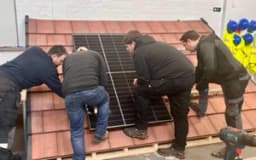
Solar PV is one of the most established green technologies, and battery storage is the fastest-growing. Together, they represent a huge market for qualified electricians.
The opportunity
- ✓Over 200,000 solar PV installations per year in the UK
- ✓Government target: 70GW of solar capacity by 2035
- ✓Over 50% of new solar installations now include a battery
- ✓Standalone battery storage is a growing market (time-of-use tariff arbitrage)
- ✓Average domestic solar installation: 5,000 to 8,000 pounds
- ✓With battery storage: 8,000 to 15,000 pounds
Qualifications needed
- ✓Solar PV and battery storage installation course (approximately 5 days)
- ✓Must have 18th Edition and ideally 2391 as prerequisites
- ✓MCS certification (company-level) for SEG-eligible installations
Green Skill 3: Heat Pump Electrical Connections
Heat pumps are at the centre of the UK's strategy to decarbonise home heating. While heat pump installation is primarily a refrigeration and plumbing discipline, the electrical connection work is carried out by electricians — and it is a growing stream of work.
Why electricians are needed
- ✓Air source heat pumps require a dedicated electrical supply, typically 32A to 63A single-phase or three-phase
- ✓The electrical connection must comply with BS 7671 and manufacturer requirements
- ✓Consumer unit upgrades are often needed to accommodate the additional load
- ✓Electrical testing and certification (EIC) is required for the installation
- ✓Smart controls and integration with home energy management systems involve electrical work
The market
- ✓The Boiler Upgrade Scheme provides 7,500 pound grants for heat pump installation
- ✓The Future Homes Standard (coming into force in 2027) will effectively mandate heat pumps in new builds
- ✓The government target is 600,000 heat pump installations per year by 2028
- ✓Current installation rates are around 55,000 per year — massive growth is expected
Not just a plumbing job
Green Skill 4: Smart Meters and Smart Home Energy
The smart meter rollout, combined with the growth of home energy management systems, creates additional opportunities for electricians with the right knowledge.
Smart meters
The UK government mandated that energy suppliers offer smart meters to all households by the end of 2025. While smart meter installation is typically carried out by energy company engineers, electricians are needed for associated work: consumer unit upgrades, wiring modifications, and fault finding when smart meters interact with existing installations.
Home energy management
- ✓Systems that coordinate solar PV, battery storage, EV charging, and heat pumps
- ✓Time-of-use tariff optimisation: scheduling loads to minimise electricity costs
- ✓Demand-side response: allowing grid operators to manage domestic battery and EV charging loads
- ✓Home automation integration: connecting energy systems to smart home platforms
- ✓Energy monitoring and display: helping homeowners understand and reduce their energy usage
Government Support for Green Skills
The UK government recognises that the net zero transition requires a massive expansion of the skilled workforce. Several initiatives support green skills development:
Key government programmes
- ✓Green Jobs Taskforce: established to identify the skills needed for net zero and recommend policy actions
- ✓Green Jobs Delivery Group: the successor body working with industry to deliver green skills training
- ✓Skills Bootcamps: short, intensive training courses funded by the government, including some green technology courses
- ✓Apprenticeship levy: some green technology training can be funded through the apprenticeship levy
- ✓ELCAS: Enhanced Learning Credits for armed forces personnel can fund green skills training
- ✓Advanced Learner Loans: available for some qualifications at Level 3 and above
The government has also committed to ensuring that building regulations and policy frameworks create demand for green skills — through measures like Approved Document S (EV chargepoints in new builds), the Future Homes Standard, and the EPC framework.
How to Build Your Green Skills Portfolio
You do not need to learn everything at once. The best approach is to add green skills incrementally, starting with the most accessible and building from there.
Recommended pathway
- ✓Step 1: Ensure your 18th Edition is current — this is the foundation for all green technology work
- ✓Step 2: Add EV charging (C&G 2921-34) — quickest to qualify, largest immediate market
- ✓Step 3: Add solar PV and battery storage — higher project values, growing rapidly
- ✓Step 4: Gain experience and build reputation in green technologies
- ✓Step 5: Consider MCS certification for your solar PV business
- ✓Step 6: Stay current with heat pump, smart grid, and emerging technologies through CPD
Each additional green skill increases your earning potential and makes you more resilient to market changes. An electrician who can offer EV charging, solar PV, battery storage, and traditional electrical work has a diverse, future-proof skill set that will be in demand for decades.
Frequently Asked Questions
What are green skills for electricians?
Which green skills should I learn first?
Do green skills really pay more?
Is the government supporting green skills training?
Will green technologies replace traditional electrical work?
Ready to Start Training?
Browse our City & Guilds accredited courses and take the next step in your electrical career.
Related Guides
How to Become a Solar Panel Installer: Salary & Training
How to become a solar panel installer in the UK — qualifications, training pathway, and earning potential: £35,000–£50,000/yr employed or £300–£500/day.
Read guideSolar Panel Installation Courses UK: Which Do You Need?
Solar panel installation courses for UK electricians compared — what each covers, prerequisites, and which qualification suits your experience level.
Read guideMCS Certification Explained: Installers & What to Look For
How MCS certification works for solar PV and battery installers — costs from around £1,500, requirements, and which accreditations customers should check.
Read guideBattery Storage Systems: A Guide for Electricians
How battery storage works, the growing market, qualifications needed, and opportunities for electricians.
Read guide