
How to Become a Solar Panel Installer: Salary & Training
How to become a solar panel installer in the UK — qualifications, training pathway, and earning potential: £35,000–£50,000/yr employed or £300–£500/day.
In this guide
Why Solar PV Is a Booming Career for Electricians
The UK solar PV market has experienced remarkable growth over the past decade. By 2024, the UK had over 1.4 million solar installations, and the rate of new installations is accelerating as energy costs rise and the government pushes towards its net zero 2050 target. For qualified electricians, solar panel installation represents one of the most lucrative and future-proof specialisms available.
Unlike some green technologies that require entirely new skill sets, solar PV installation builds directly on your existing electrical knowledge. The core work involves designing and installing electrical systems — something you already understand. The additional training covers the specific requirements of DC systems, inverter technology, battery storage integration, and the standards that govern renewable energy installations.
This guide covers the complete pathway from qualified electrician to solar panel installer: the prerequisites you need, the training involved, MCS certification, and the career prospects in this rapidly expanding market. If you are not yet a qualified electrician, we also explain the full pathway to becoming an electrician that you need to complete first.
Prerequisites: You Must Be a Qualified Electrician
Important: This Is Not an Entry-Level Career
Solar PV installation is a specialism for qualified electricians. You cannot take a solar course and start installing solar panels without first being a fully qualified electrician. This is a legal requirement under Part P of the Building Regulations and a safety necessity. If you are not yet qualified, you must complete the full electrician training pathway first — there are no shortcuts.
Solar PV installation is not an entry-level specialism. You must be a competent, qualified electrician before you can take a solar panel installation course. This is because solar installations involve working with your customer's electrical supply, consumer unit, earthing arrangements, and the grid connection — all of which require a thorough understanding of BS 7671 and safe working practices.
Course entry requirements (both required)
- ✓BS7671 18th Edition Wiring Regulations (C&G 2382) or later
- ✓JIB Gold Card (Installation, Maintenance, or Domestic Electrician) or an Electrical Installation/Maintenance NVQ — NICEIC or NAPIT membership alone is not acceptable
Strongly recommended for independent practice
- ✓City & Guilds 2391-52 Inspection and Testing — required for testing and certifying solar PV installations
- ✓Registration with a competent person scheme such as NICEIC or NAPIT — required for Part P self-certification
If you are a career changer who does not yet hold these qualifications, you will need to complete the full electrician training pathway first. The Level 2 and Level 3 Diplomas, 18th Edition, and Inspection and Testing collectively take around 18 to 24 months through the adult diploma route, plus 6 to 12 months for the NVQ Level 3. Only then should you consider adding the solar PV specialism.
Related Course
18th Edition (2382)
Essential prerequisite — you need a current 18th Edition before taking the solar PV course
Why You Cannot Skip the Electrical Qualifications
Some people assume they can take a short solar panel course and start installing straight away. This is a dangerous misconception. Here is why the full electrical qualification pathway is non-negotiable.
DC electricity is dangerous
Solar panels generate DC (direct current) electricity, which behaves very differently from the AC (alternating current) systems in homes and businesses. DC arcs do not self-extinguish the way AC arcs do — when a DC circuit arcs, the arc sustains itself and can reach temperatures exceeding 3,000 degrees Celsius. Without understanding DC safety, fault conditions become genuinely life-threatening. A qualified electrician understands electrical principles well enough to work safely with both AC and DC systems.
Grid connection requires competence
Every solar PV installation connects to the national grid through the customer's existing electrical supply. This involves modifying the consumer unit, installing appropriate circuit protection, and ensuring the system complies with G98 or G99 grid connection requirements. Getting this wrong can endanger the homeowner, damage the grid, or create a fire risk. Only a person who understands BS 7671 (the wiring regulations) can safely perform this work.
Part P Building Regulations
Solar PV installation constitutes notifiable electrical work under Part P of the Building Regulations in England and Wales. The work must either be carried out by a registered competent person (a qualified electrician registered with NICEIC, NAPIT, or similar) or notified to building control. A non-electrician cannot self-certify this work, and paying for building control notification on every job is impractical and expensive.
Inspection and testing
Every solar installation must be inspected and tested before handover. This requires the knowledge covered in the 2391 Inspection and Testing qualification. You need to verify earth fault loop impedance, insulation resistance, polarity, and continuity — plus solar-specific tests like open circuit voltage, short circuit current, and irradiance-corrected performance checks. Without the 2391, you cannot competently sign off an installation.
There Is No Shortcut
Beware of any training provider that claims you can become a solar panel installer without being a qualified electrician. This is misleading at best and dangerous at worst. The only legitimate pathway to independent solar PV installation is through full electrical training first, then the solar PV specialism on top.
The Full Qualification Pathway to Solar Installation
If you are starting from scratch with no electrical qualifications, here is the complete step-by-step pathway to becoming a solar panel installer. The total timeline is typically 2 to 3 years, though motivated learners can compress this with intensive study.
Step 1: Level 2 Diploma in Electrical Installations (14-16 weeks)
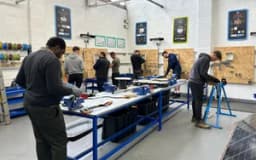
Your entry point into the electrical trade. The C&G 2365 Level 2 covers electrical science fundamentals, health and safety, wiring systems, and basic installation techniques. No prior qualifications are required. This is delivered through a combination of online theory and practical workshop sessions.
Related Course
Level 2 Diploma (2365)
Your starting point — covers electrical science, wiring systems, and installation fundamentals
Step 2: Level 3 Diploma in Electrical Installations (16-20 weeks)
The Level 3 builds on your Level 2 with advanced theory including fault diagnosis, electrical design and calculations, three-phase systems, and complex installation techniques. This is where you develop the deeper technical knowledge that solar PV installation demands.

Related Course
Level 3 Diploma (2365)
Advanced knowledge — fault diagnosis, design calculations, and three-phase systems
Step 3: 18th Edition Wiring Regulations (2 days)
The C&G 2382-26 qualification proves you can interpret and apply BS 7671, the UK standard that every practising electrician must follow. This is a strict prerequisite for the solar PV course — you cannot enrol without a current 18th Edition.
Related Course
18th Edition (2382)
The UK wiring standard — required by every practising electrician
Related Course
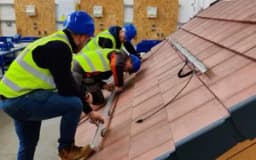
Solar PV CPD (2-Day Practical)
Not ready for the full electrical route? Get hands-on solar roof installation experience in 2 days — open to anyone, no qualifications needed
Step 4: Inspection and Testing (5 days)
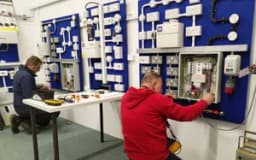
The C&G 2391-52 qualification is essential for signing off your own solar installations. Without it, you cannot independently verify and certify that a solar PV system meets the required standards. Read our 2391 Inspection and Testing guide for full details.
Related Course
Inspection & Testing (2391)
Essential for signing off solar PV installations to the required standard
Step 5: NVQ Level 3 (6-12 months alongside employment)
The NVQ is an on-site competence assessment, not a taught course. An assessor visits your workplace to observe your work and review evidence. This leads to your ECS Gold Card, the industry-standard proof of competence. Read our NVQ Level 3 guide for more details.
Related Course
5357 Level 3 Electrotechnical
The final step to your Gold Card — on-site competence assessment
Step 6: Solar PV and Battery Storage Course (5 days)
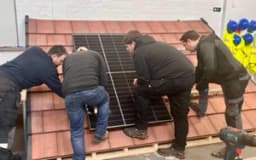
With your core qualifications in place, you are now ready for the solar PV specialism. This course covers system design, DC wiring, inverter technology, battery storage integration, grid connection requirements, and MCS standards. See our detailed Solar PV Course Guide for full course content.
Related Course
Solar PV & Battery Storage
The solar PV specialism — 5 days of hands-on training covering solar and battery storage
Save with a Package Course
If you are committed to the full pathway, the Level 2 and Level 3 Diploma Package offers a discounted price and guaranteed progression. This is the most popular option for career changers aiming for solar PV installation.
Related Course
Level 2 & 3 Package
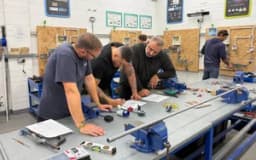
Level 2 and Level 3 together at a discounted package price
For Qualified Electricians: The Direct Route
If you are already a qualified electrician with a current 18th Edition, the pathway to becoming a solar panel installer is much shorter. You may only need the solar PV course itself — around 5 days of training.
Check your existing qualifications
Before booking the solar PV course, confirm you have the following in place:
- ✓A current 18th Edition qualification (not expired or from an older edition)
- ✓Level 2 and Level 3 diplomas or equivalent qualifications
- ✓Ideally the 2391 Inspection and Testing — essential if you plan to sign off your own installations
- ✓Your NVQ Level 3 and ECS Gold Card (for credibility and competent person scheme registration)
If your 18th Edition has expired, renew it before proceeding — this is a strict prerequisite for the solar PV course. If you do not yet have the 2391, consider completing it alongside or before the solar course, as you will need it to independently certify solar installations.
Complete the solar PV course
The course typically takes around 5 days and combines classroom theory with practical hands-on sessions. You will work with real solar panels, inverters, and battery storage systems. On completion, you are qualified to design, install, and commission domestic and small commercial solar PV systems.
Gain practical experience
After completing your course, build experience by working alongside established solar installers or by starting with smaller domestic installations. Practical experience with different roof types, mounting systems, and inverter configurations is invaluable before taking on larger or more complex projects.
Related Course
Solar PV & Battery Storage
Our solar PV and battery storage course — typically 5 days of hands-on training
What the Solar PV Course Covers
A comprehensive solar PV course covers the full range of knowledge and skills needed to design, install, and commission domestic and small commercial solar PV systems. For a detailed breakdown, see our Solar PV Course Guide. Here is an overview of what you can expect:
- ✓Solar PV system components: panels, inverters, optimisers, mounting systems, and cabling
- ✓System design and sizing: calculating energy yield, panel orientation, shading analysis
- ✓Roof assessment: structural considerations, waterproofing, and safe access
- ✓DC wiring and cable routing: string sizing, connector types, and arc flash prevention
- ✓Inverter types: string inverters, microinverters, and hybrid inverters
- ✓Battery storage integration: AC-coupled and DC-coupled systems
- ✓Grid connection: G98 (up to 16A per phase) and G99 (larger systems) requirements
- ✓MCS standards and documentation requirements
- ✓Commissioning, testing, and customer handover procedures
Battery Storage Is Now Standard
Most modern solar PV courses include battery storage as an integral part of the curriculum. With battery prices falling and time-of-use tariffs becoming more common, the majority of new domestic solar installations now include a battery. Being competent in both technologies is essential. Read our Battery Storage Guide for more on this growing area.
A Day in the Life of a Solar Installer
Understanding what the actual work looks like helps you decide whether solar PV installation is right for you. Here is a typical day on a standard domestic installation.
Morning: site setup and roof work
You arrive at the customer's property, typically between 7:30 and 8:00am. The first task is a final site survey to confirm the roof layout matches your design, checking for any issues not visible from ground level. You set up scaffolding or access equipment (many companies use specialist scaffolding teams who arrive the day before), then begin installing the mounting rails on the roof — this involves fixing brackets to the rafters through the roof tiles, with careful weatherproofing at each fixing point.
Mid-morning: panel installation
With the mounting system in place, you fit the solar panels onto the rails. A typical domestic system has 10 to 16 panels, each weighing around 20 to 25kg. You work in pairs for safety, passing panels up and securing them to the rail system. Cable management on the roof is critical — MC4 connectors must be properly crimped and cables routed to avoid damage, UV degradation, or wind movement.
Afternoon: electrical work
This is where your electrical qualifications come into their own. You route the DC cabling from the roof down to the inverter location (usually a garage, utility room, or loft space), install the inverter and any battery storage system, connect the DC input from the panels, run the AC output to the consumer unit, install the required circuit protection, and connect the generation meter. If the customer has a battery, you configure the charge and discharge settings and set up the monitoring app.
Late afternoon: commissioning and handover
With everything connected, you commission the system — checking string voltages, verifying inverter operation, testing earth continuity, and confirming the system is generating as expected. You complete the MCS documentation (if applicable), the electrical installation certificate, and the G98 notification to the DNO (Distribution Network Operator). Finally, you walk the customer through their new system, explain the monitoring app, and answer any questions.
Physical Demands
Solar installation is physically demanding work. You will spend significant time working at height on roofs in all weather conditions. You need to be comfortable on ladders and scaffolding, able to lift panels weighing 20-25kg, and fit enough for a full day of physical labour. Good general fitness is important.
The UK Solar PV Market
The UK solar PV market is experiencing a sustained period of growth driven by multiple factors. Understanding the market dynamics helps you appreciate the scale of the opportunity and plan your career accordingly.
Key market statistics
- ✓Over 1.4 million solar PV systems installed in the UK by 2024
- ✓Domestic installations doubled in 2023 compared to 2022
- ✓The UK government targets 70GW of solar capacity by 2035
- ✓Average domestic system size has grown from 3kW to 4-5kW as panel efficiency improves
- ✓Battery storage installations are growing even faster, doubling year on year
- ✓Energy price rises have cut typical payback periods from 10-12 years to 6-8 years
The combination of high energy prices, falling equipment costs, government net zero commitments, and growing consumer awareness means the solar PV market is expected to continue expanding rapidly through the rest of this decade and beyond. For electricians who qualify now, the timing is excellent — see our green skills guide for the full picture. Alongside solar, other green specialisms like EV charger installation offer further opportunities to diversify your services.
Earning Potential
Solar PV installation is well-paid work with strong and growing demand. The combination of technical complexity, the need for qualified installers, and a market that cannot produce enough capacity creates favourable conditions for earning. For detailed salary data across all electrical specialisms, see our Electrician Salary UK guide.
Typical earnings
- ✓Employed solar installers: 35,000 to 50,000 pounds per year depending on experience and region
- ✓Self-employed day rate: 300 to 500 pounds per day
- ✓Average domestic installation charge to customer: 5,000 to 10,000 pounds (depending on system size)
- ✓A standard 4kW domestic installation takes one to two days for a two-person team
- ✓Commercial installations command higher prices: 20,000 to 100,000 pounds or more per project
- ✓Battery storage add-ons increase project value by 3,000 to 8,000 pounds per installation
The key to maximising earnings is efficiency and reputation. Installers who can complete quality installations quickly, build relationships with equipment suppliers, and generate positive customer reviews will find themselves booked weeks or months in advance.
MCS Certification: Full Breakdown
The Microgeneration Certification Scheme (MCS) is a company-level certification for renewable energy installers. While you can technically install solar panels without MCS certification, most serious solar businesses pursue it. For a comprehensive breakdown, see our MCS Certification Explained guide.
Why MCS matters
- ✓Required for customers to access the Smart Export Guarantee (SEG) — payments for exporting surplus electricity to the grid
- ✓Required for eligibility for government-backed renewable energy schemes
- ✓Widely recognised as a mark of quality by consumers
- ✓Many customers specifically seek out MCS-certified installers
- ✓Gives you a competitive advantage over non-certified competitors
- ✓Increasingly required by local authority and housing association contracts
MCS certification costs
MCS certification is obtained at the company level, not the individual level. Here is a realistic cost breakdown:
- ✓Initial certification audit: 1,500 to 3,000 pounds (varies by certification body)
- ✓MCS registration fee: approximately 500 pounds per year
- ✓Annual surveillance audit: 500 to 1,500 pounds per year
- ✓Quality management system setup: may cost 500 to 1,000 pounds if you use a consultant, or free if you set it up yourself
- ✓Insurance upgrades to meet MCS requirements: varies, but budget an additional 500 to 1,000 pounds per year over standard electrician insurance
In total, budget approximately 2,500 to 5,000 pounds for the first year, and 1,000 to 3,000 pounds per year thereafter. This cost is easily recoverable — MCS-certified installers typically command higher prices and win more work.
The MCS certification process
- ✓Choose a certification body (e.g. NICEIC, NAPIT, MCS-accredited bodies)
- ✓Prepare your quality management system (procedures, templates, record-keeping)
- ✓Demonstrate that your installers hold relevant qualifications (solar PV course, 18th Edition, etc.)
- ✓Provide evidence of adequate insurance cover
- ✓Pass the initial desk audit (documentation review)
- ✓Pass the site audit (an assessor observes an installation)
- ✓Receive your MCS certificate and register on the MCS Installer Database
The process typically takes 2 to 4 months from application to certification.
SEG Payments
The Smart Export Guarantee requires energy suppliers with more than 150,000 customers to offer a tariff for exported electricity from small-scale generators. Current SEG rates range from 3 to 15 pence per kWh, providing a meaningful financial benefit to homeowners with solar PV — but only if the installation was done by an MCS-certified installer.
Setting Up a Solar Installation Business
Many solar installers eventually set up their own business rather than working for an employer. If you are considering going self-employed, here is what you need beyond your qualifications. Our Self-Employed Electrician Guide covers the general business setup in more detail.
Business essentials
- ✓Business registration: sole trader, partnership, or limited company
- ✓Public liability insurance: minimum 2 million pounds (5 million is standard for commercial work)
- ✓Professional indemnity insurance: covers design and specification errors
- ✓Employers liability insurance: legally required if you hire any staff
- ✓Competent person scheme membership: NICEIC, NAPIT, or equivalent — allows Part P self-certification
- ✓MCS certification: strongly recommended (see above section for costs)
- ✓Tools and test equipment: solar-specific items including irradiance meters, IV curve tracers, and DC clamp meters (budget 1,000 to 2,000 pounds)
- ✓Vehicle: a van large enough to carry ladders, mounting equipment, and panels
- ✓Accounting software and business bank account
Building your customer base
The solar market is different from general electrical work. Most customers actively research solar installation before making contact, so your online presence matters. Key strategies include:
- ✓Registering on the MCS Installer Database — homeowners search this when looking for certified installers
- ✓Building a professional website with case studies and customer reviews
- ✓Listing on comparison sites (e.g. Solar Guide, Checkatrade, MyBuilder)
- ✓Local SEO: optimise for search terms like solar panel installer plus your area
- ✓Referrals from existing electrical work customers
- ✓Partnerships with roofing companies and builders working on new builds
- ✓Social media showing completed installations with permission
Supply chain relationships
Establishing good relationships with equipment distributors is important. Buying panels, inverters, and batteries at trade prices significantly impacts your margins. Most distributors offer trade accounts with credit terms once you can demonstrate regular purchasing volumes. Stick with tier-one manufacturers for panels and reputable brands for inverters and batteries — warranty support matters when something goes wrong.
Combining Solar with Other Green Specialisms
Solar PV installation pairs well with other green energy specialisms. Many installers diversify their services to increase earning potential and provide a more complete offering to customers.
EV charger installation
Many homeowners who install solar panels also want an EV charger to charge their car from their solar-generated electricity. Offering both services means you can upsell at every solar installation. The EV Charging Course is a natural complement to your solar PV qualification.
Related Course
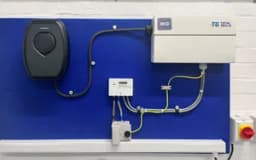
EV Charging (2921)
Add EV charger installation to your solar PV services — a natural upsell
Battery storage
Battery storage is already covered in most solar PV courses, but the technology is evolving rapidly. Staying current with the latest battery systems, virtual power plant (VPP) technology, and time-of-use tariff optimisation sets you apart. See our Battery Storage Guide for the latest developments.
The complete green energy package
The most successful green energy electricians offer solar PV, battery storage, and EV charging as a combined service. A homeowner who is investing in solar panels is the ideal customer for all three — they are already committed to reducing their energy costs and carbon footprint. Being able to design and install a complete home energy system (solar generation, battery storage, and EV charging) commands premium pricing and generates strong word-of-mouth referrals.
Getting Started: Your Next Steps
Your next step depends on where you are in your electrical career.
If you are already a qualified electrician
Check that your 18th Edition is current, confirm you have the 2391 Inspection and Testing, and book onto the solar PV course. At Total Skills, we run this course regularly at our Nottingham training centre, covering both solar PV and battery storage installation in a single programme.
Related Course
Solar PV & Battery Storage
View dates, pricing, and payment plans for our solar PV and battery storage course
If you need to renew your 18th Edition
An expired 18th Edition means you cannot enrol on the solar PV course. Renew it first — it is a 2-day course.
Related Course
18th Edition (2382)
Need to update your 18th Edition first? View our upcoming course dates
If you are not yet a qualified electrician
Start with the How to Become an Electrician guide to understand the full pathway. The most efficient route is the Level 2 and Level 3 Diploma Package, followed by the 18th Edition, 2391, and NVQ. Once you have your Gold Card, you can add the solar PV specialism.
Related Course
Level 2 & 3 Package
Level 2 and Level 3 together at a discounted package price — the fastest route to qualifying
Frequently Asked Questions
Do I need to be a qualified electrician to install solar panels?
Can I install solar panels without being an electrician?
How long does it take to become a solar panel installer?
How much does it cost to become a solar installer from scratch?
Do I need the NVQ Level 3 before I can take the solar PV course?
What is MCS certification and do I need it?
How much can a solar panel installer earn?
Is solar panel installation a good career in the UK?
Can I install battery storage systems as well as solar panels?
What insurance do I need as a solar panel installer?
Ready to Start Training?
Browse our City & Guilds accredited courses and take the next step in your electrical career.
Related Guides
Solar Panel Installation Courses UK: Which Do You Need?
Solar panel installation courses for UK electricians compared — what each covers, prerequisites, and which qualification suits your experience level.
Read guideMCS Certification Explained: Installers & What to Look For
How MCS certification works for solar PV and battery installers — costs from around £1,500, requirements, and which accreditations customers should check.
Read guideBattery Storage Systems: A Guide for Electricians
How battery storage works, the growing market, qualifications needed, and opportunities for electricians.
Read guideGreen Energy Training: Renewable Courses for Electricians
Renewable energy courses for electricians — solar PV, EV charging, and battery storage training to future-proof your career in the green energy transition.
Read guide