
Solar Panel Installation Courses UK: Which Do You Need?
Solar panel installation courses for UK electricians compared — what each covers, prerequisites, and which qualification suits your experience level.
In this guide
Which Solar Panel Installation Course Do You Need?
If you are comparing solar panel installation courses in the UK, the first thing to understand is that there is more than one solar PV qualification available — and which one you need depends on your existing electrical credentials and the type of work you want to carry out. This guide compares the main options, explains the prerequisites, costs, and MCS certification requirements, and helps qualified electricians choose the right solar PV course for their situation.
Our Solar PV and Battery Storage Installation Course is designed for electricians who already hold their core qualifications — particularly the Level 2 and Level 3 diplomas, the 18th Edition Wiring Regulations, and the 2391 Inspection and Testing — and want to add solar PV to their skill set. It combines classroom theory with hands-on practical sessions, giving you the knowledge and confidence to carry out installations from day one.
With the UK solar market continuing to break records — more than 257,000 MCS-certified installations in 2025, the highest annual total on record — and the government's Solar Roadmap targeting 45 to 47GW of installed capacity by 2030, there has never been a better time for qualified electricians to gain this qualification. For a full overview of the career pathway, see our guide to becoming a solar panel installer.
This course is for qualified electricians only
Prerequisites and Entry Requirements
Before enrolling on the solar PV course, you must hold the following qualifications or their equivalents. These are not optional recommendations — they are requirements because solar PV installation is electrical installation work that must comply with BS 7671 and Part P of the Building Regulations.
Both of the following are required
- ✓BS7671 18th Edition Wiring Regulations (C&G 2382) or later — the current edition (now BS 7671:2018+A4:2026) is mandatory
- ✓JIB Gold Card (Installation, Maintenance, or Domestic Electrician) or an Electrical Installation/Maintenance NVQ — NICEIC or NAPIT membership alone is not acceptable
Strongly recommended
- ✓2391-52 Inspection and Testing — needed to test, inspect, and certify your solar PV installations
- ✓Competent person scheme registration (NICEIC, NAPIT, or equivalent) — needed to self-certify work under Part P
If you are missing any of the essential prerequisites, you will need to complete them before enrolling on the solar PV course. See our guides on the NVQ Level 3, ECS Gold Card requirements, and the 2391 Inspection and Testing course for more details.
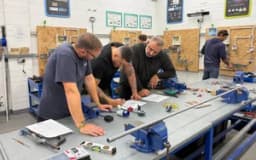
Related Course
Level 2 & 3 Package
Not yet qualified? Our Level 2 and 3 Diploma Package is the fastest route
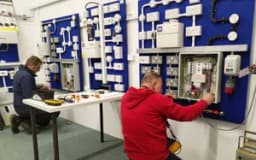
Related Course
Inspection & Testing (2391)
Need Inspection and Testing? Essential for signing off solar installations
Why Qualified Electricians Only?
Solar PV installation is sometimes perceived as simple rooftop work — fixing panels to a roof and plugging them in. In reality, it is complex electrical engineering that carries serious safety risks if done incorrectly. There are several reasons why only qualified electricians should carry out this work.
DC safety risks
Solar panels generate DC electricity whenever light falls on them. Unlike AC circuits, which can be isolated at the consumer unit, a solar array produces voltage as soon as daylight hits the panels and cannot be switched off. DC arcs are harder to extinguish than AC arcs, and DC faults can cause fires that are extremely difficult to detect behind roof tiles. Understanding DC circuit behaviour, fault currents, and correct isolation procedures requires a solid foundation in electrical theory.
Grid connection
Every solar PV installation connects to the public electricity supply. Incorrect installation can export power when it should not, fail to disconnect during a power cut (creating a lethal backfeed to line workers), or cause voltage and frequency disturbances on the local network. The G98 and G99 regulations exist specifically to prevent these scenarios, and understanding them requires knowledge of how the electricity grid operates.
BS 7671 compliance
Solar PV installations must comply with BS 7671 (the IET Wiring Regulations), including Section 712 which covers photovoltaic power supply systems specifically. This covers cable sizing, overcurrent protection, isolation requirements, earthing, and the testing and certification of the completed installation. Without a thorough understanding of BS 7671, you cannot design or certify a compliant installation.
Part P Building Regulations
Solar PV installation is notifiable electrical work under Part P of the Building Regulations (England and Wales). To self-certify the work, you must be registered with a competent person scheme such as NICEIC or NAPIT. Without scheme membership, every installation must be notified to building control and inspected — adding cost and delay for your customers.
There are no shortcuts
Who Is This Course For?
The solar PV course is aimed at qualified electricians who want to enter the renewable energy market. It builds on your existing electrical competence and adds the specialist knowledge needed for solar and battery storage installations.
Ideal candidates
- ✓Qualified electricians wanting to specialise in renewable energy
- ✓Self-employed electricians looking to add solar PV as a profitable service
- ✓Electricians working for companies that offer or plan to offer solar installations
- ✓Domestic and commercial electricians wanting to future-proof their career
- ✓Electricians who already install EV chargers and want to offer a combined solar, EV, and battery package
- ✓Electricians with an NVQ Level 3 and Gold Card looking for their next specialism
No prior solar experience needed
What You Will Learn on a Solar PV Course
The course is comprehensive, covering every aspect of solar PV installation from initial customer consultation through to system commissioning and handover.
Solar PV fundamentals
- ✓How photovoltaic cells convert sunlight to electricity
- ✓Panel types: monocrystalline, polycrystalline, and thin-film technologies
- ✓Module specifications: voltage, current, power, and efficiency ratings
- ✓The effect of temperature, shading, and orientation on system performance
- ✓Series and parallel string configurations and their impact on system voltage and current
System design
- ✓Site assessment: roof orientation, pitch, shading analysis, and structural suitability
- ✓System sizing: matching array size to customer energy usage and available roof space
- ✓Energy yield calculations: estimating annual generation based on location and orientation
- ✓Financial modelling: payback period, return on investment, and SEG income projections
- ✓Design software tools used in the industry
Inverter technology
- ✓String inverters: central conversion from DC to AC, most common for domestic systems
- ✓Microinverters: panel-level conversion, ideal for partially shaded roofs
- ✓Hybrid inverters: combined solar and battery management in one unit
- ✓Power optimisers: panel-level DC optimisation with a central inverter
- ✓Inverter sizing and selection for different system configurations
Installation and wiring
- ✓Roof mounting systems: on-roof (rail-based), in-roof (integrated), and flat roof systems
- ✓DC wiring: MC4 connectors, string cabling, and DC isolator requirements
- ✓AC wiring: inverter to consumer unit connection, protective devices, and metering
- ✓Earthing and bonding requirements for solar PV installations
- ✓Cable sizing and voltage drop calculations for DC and AC circuits
Battery storage integration
- ✓Battery technologies: lithium-ion (LFP and NMC), capacity and power ratings
- ✓AC-coupled vs DC-coupled battery systems and when each is appropriate
- ✓Hybrid inverter configuration for solar-plus-storage systems
- ✓Battery management systems (BMS) and safety requirements
- ✓Time-of-use tariff optimisation and self-consumption strategies
For a deeper dive into battery technology and its role in the energy market, see our battery storage explained guide.
Grid connection and regulations
- ✓G98 notification: for systems up to 16A per phase (approximately 3.68kW single-phase)
- ✓G99 application: for larger systems requiring DNO approval before connection
- ✓BS 7671 requirements specific to solar PV installations (Section 712)
- ✓MCS standards: MIS 3002 for solar PV, documentation and reporting requirements
- ✓Part P Building Regulations and self-certification via competent person schemes
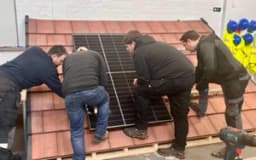
Related Course
Solar PV & Battery Storage
Our comprehensive solar PV and battery storage course
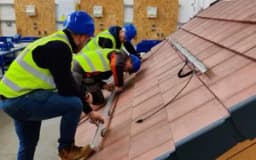
Related Course
Solar PV CPD (2-Day Practical)
Not an electrician? This 2-day practical course is open to anyone
Solar PV Course Structure and Duration
The course is delivered over approximately 5 days, combining classroom theory sessions with practical hands-on workshops. The balance between theory and practical ensures you understand both the technical principles and the physical skills needed for real-world installations.
Typical week structure
- ✓Day 1: Solar PV fundamentals, panel technology, and system components
- ✓Day 2: System design, sizing, energy yield calculations, and financial modelling
- ✓Day 3: Installation techniques, roof mounting, DC and AC wiring, and earthing
- ✓Day 4: Battery storage integration, hybrid systems, and grid connection requirements
- ✓Day 5: Commissioning, testing, documentation, MCS standards, and assessment
The practical sessions use real solar panels, inverters, and battery storage systems. You will physically wire a solar PV system, configure an inverter, and commission the installation — giving you confidence for your first real-world project.
Solar PV Course Cost, Duration and Requirements
Here is the quick-reference summary for electricians comparing solar panel installation courses in the UK — what the course costs, how long it takes, and what you need before enrolling.
Duration
Approximately 5 days at our Nottingham training centre, combining classroom theory with practical workshops using real solar panels, inverters, and battery storage systems.
Entry requirements
- ✓18th Edition Wiring Regulations (BS 7671 — the current edition, now including Amendment 4:2026)
- ✓JIB Gold Card (Installation, Maintenance, or Domestic Electrician) or an Electrical Installation/Maintenance NVQ
- ✓2391-52 Inspection and Testing — strongly recommended for certifying your installations
- ✓Competent person scheme registration (NICEIC, NAPIT, or equivalent) — strongly recommended for self-certifying under Part P
Cost
Solar PV course fees vary between providers depending on course length and whether battery storage is included. For our current pricing, upcoming dates, and payment plan options, see the Solar PV and Battery Storage Installation Course page.
Related Course
Solar PV & Battery Storage
5-day course — view current pricing, dates, and payment plans
How the Solar PV Course Is Assessed
The assessment tests your competence across the full range of course content. The exact format depends on the awarding body, but typically includes:
- ✓Written or online examination covering theory, regulations, and design principles
- ✓Practical assessment: demonstrating installation and commissioning skills
- ✓Design exercise: sizing a system and producing installation documentation
- ✓Knowledge of relevant standards: BS 7671 Section 712, MCS MIS 3002, G98/G99
Open-book elements
Regulations and Standards
Solar PV installation is governed by a comprehensive framework of regulations and standards. Understanding these is not optional — non-compliance can result in unsafe installations, invalid insurance, and legal liability. The course covers all of these in detail, but here is an overview of the key standards you will work with.
BS 7671 — Section 712
Section 712 of BS 7671 (the IET Wiring Regulations) covers the specific requirements for photovoltaic power supply systems. It addresses DC cable sizing, overcurrent protection on both DC and AC sides, isolation and switching requirements, earthing arrangements, and the protection against electric shock from both sides of the inverter. Every solar PV installation must comply with Section 712 in addition to the general requirements of BS 7671.
G98 and G99 — Grid connection
G98 is the notification process for connecting small-scale generation (up to 16A per phase, approximately 3.68kW on a single-phase supply) to the distribution network. For most domestic installations, G98 applies and is a straightforward notification to the Distribution Network Operator (DNO). G99 applies to larger systems and requires formal application and approval from the DNO before connection, which can take several weeks.
MCS MIS 3002 — Solar PV installation standard
MIS 3002 is the MCS installation standard for solar PV systems. It specifies requirements for system design, component selection, installation methods, commissioning, and handover documentation. The standard was refreshed in 2026 — Issue 6.0 was published on 18 March 2026 and became mandatory for MCS-certified installers on 18 June 2026, tightening documentation and design evidence requirements — and MCS is migrating installers to its streamlined MCS:2025 scheme framework through 2026. Since August 2025, flat-roof installations must also use MCS 012-certified mounting systems. Compliance with MIS 3002 is mandatory for MCS-certified installers and is what enables customers to access the Smart Export Guarantee (SEG) for selling excess electricity back to the grid. For more on MCS, see our MCS certification explained guide.
Part P Building Regulations
Solar PV installation is notifiable electrical work under Part P (England and Wales). Electricians registered with a competent person scheme (NICEIC, NAPIT, or equivalent) can self-certify their work. Without scheme registration, installations must be notified to local authority building control and inspected, which adds cost and delay.
ENA Engineering Recommendation G100
G100 covers the technical requirements for embedded generation, including metering arrangements and export limitation. For systems that may need to limit export (common in areas with network constraints), understanding G100 ensures your installation meets DNO requirements.
BS 7671 Amendment 4 (2026)
Amendment 4 to BS 7671 (BS 7671:2018+A4:2026) was published on 15 April 2026, with the previous version withdrawn on 15 October 2026. It introduces dedicated requirements for battery energy storage systems for the first time, alongside updates relevant to solar PV, EV charging, and inspection and testing. If your 18th Edition qualification predates Amendment 4, updating your knowledge keeps your design and certification work compliant with the current edition.
Career Prospects After Your Solar PV Course
Completing the solar PV course qualifies you to design, install, and commission solar PV and battery storage systems. The career prospects are excellent, driven by sustained market growth and a shortage of qualified installers. For broader salary context across all electrical specialisms, see our electrician salary guide.
What you can do
- ✓Install domestic solar PV systems (typically 3 to 10kW)
- ✓Install domestic battery storage systems alongside solar PV
- ✓Work for an MCS-certified solar installation company
- ✓Set up your own solar installation business and pursue MCS certification
- ✓Offer combined solar PV, battery storage, and EV charging packages
- ✓Carry out commercial rooftop solar installations (larger systems, higher project values)
- ✓Retrofit battery storage to existing solar installations
- ✓Provide system design and consultancy services
Earning potential
Solar PV installation is one of the highest-earning specialisms available to electricians. The combination of strong demand, limited supply of qualified installers, and high project values creates excellent earning opportunities.
- ✓Employed solar installer: 35,000 to 50,000 pounds per year (experienced installers at the higher end)
- ✓Senior installer or team leader: 45,000 to 55,000 pounds per year
- ✓Self-employed day rate: 300 to 500 pounds per day
- ✓Domestic installation (4kW system): 5,000 to 8,000 pounds to customer, typical 1 to 2 day job
- ✓Domestic solar plus battery: 8,000 to 15,000 pounds to customer
- ✓Full green package (solar, battery, EV charger): 12,000 to 25,000 pounds to customer
- ✓Commercial rooftop projects: 20,000 to 100,000+ pounds per project
- ✓Retrofit battery installation: 3,000 to 6,000 pounds to customer, often a single-day job
Market demand and job security
The UK solar market needs significantly more qualified installers. The government's Solar Roadmap targets 45 to 47GW of solar capacity by 2030 — nearly treble the roughly 19GW installed by mid-2025 — which requires a massive expansion in the installer workforce. Government estimates suggest the solar sector will support around 35,000 UK jobs by 2030, close to double today's figure. Rising energy prices, 0% VAT on domestic solar and battery installations until March 2027, the growth of battery storage, and the push for energy independence through domestic generation all contribute to sustained demand.
Qualified solar PV installers are in short supply, which means strong job security and competitive rates for the foreseeable future. Many installers report being booked weeks or months in advance, and companies actively recruit qualified installers with attractive salaries and benefits.
Combining Solar with EV Charging and Battery Storage
Solar PV is increasingly part of a broader package of green technologies. Electricians who can offer solar PV, battery storage, and EV charging as a combined service are extremely well-positioned. A homeowner wanting all three might spend 15,000 to 25,000 pounds — and they strongly prefer a single, trusted installer who can design and deliver the whole system rather than coordinating multiple contractors.
Why the combination works
- ✓Solar panels generate electricity during the day, batteries store excess for evening use, and the EV charges overnight or from stored solar — a complete energy system
- ✓Customers save on multiple installer visits and benefit from an integrated design
- ✓You can optimise the system as a whole: sizing the battery to match solar generation and EV consumption patterns
- ✓Higher total project values mean better profitability per customer
- ✓Fewer competitors offer the full package, giving you a significant market advantage
The full green skills pathway for qualified electricians
- ✓Solar PV and Battery Storage — this course, covering design, installation, and commissioning
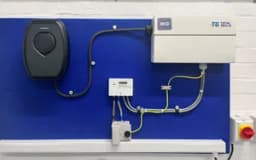
- ✓EV Charging (C&G 2921-34) — domestic and small commercial charger installation, BS 7671 Section 722, and the IET Code of Practice
- ✓Commercial EV Charging (C&G 2921-32/33) — three-phase, rapid charging, and fleet installations for higher-value commercial projects
For more on the EV side of the equation, see our EV charging course guide.
Related Course
Solar PV & Battery Storage
Start with our solar PV and battery storage course
MCS Certification for Solar Installers
MCS (Microgeneration Certification Scheme) is a company-level certification, not an individual qualification. It is the quality standard that enables your business to carry out installations that qualify for the Smart Export Guarantee (SEG), allowing your customers to be paid for excess electricity they export to the grid.
What MCS certification requires
- ✓Qualified installers on staff — holding relevant solar PV qualifications
- ✓Compliance with MCS installation standard MIS 3002
- ✓Adequate public liability and professional indemnity insurance
- ✓Quality management procedures and documentation systems
- ✓A desktop audit of your business processes and documentation
- ✓An on-site assessment of completed installations by an MCS assessor
- ✓Ongoing surveillance audits and annual re-certification
Is MCS worth it?
For most solar installation businesses, MCS certification is essential. Without it, your customers cannot access the SEG, which is often a key selling point. MCS certification also provides consumer confidence and is increasingly required for local authority and social housing contracts. The certification process involves an initial cost and annual fees, but the commercial benefits typically far outweigh the investment.
The scheme has been through a significant refresh: the solar PV installation standard (MIS 3002 Issue 6.0) became mandatory for certified installers on 18 June 2026, and MCS is migrating installers to its streamlined MCS:2025 framework through 2026. Training to the current standard matters — certification bodies audit against the version in force at the time of your assessment.
For a detailed breakdown of the application process and requirements, see our MCS certification explained guide.
The Full Qualification Pathway
If you are not yet a qualified electrician but want to work towards solar PV installation, here is the complete pathway. Each step builds on the previous one, and there are no shortcuts — every qualification in this chain is there for a reason.
Step 1: Level 2 Diploma in Electrical Installations (C&G 2365)
The foundation qualification covering electrical science, wiring systems, health and safety, and practical installation skills. This takes approximately 16 to 23 weeks at Total Skills.

Step 2: 18th Edition Wiring Regulations (C&G 2382-26)
The current edition of BS 7671. Understanding the wiring regulations is mandatory for all electrical installation work, including solar PV. This is typically a 3-day course with an online exam.
Related Course
18th Edition (2382)
BS 7671 — required for all installation work
Step 3: Level 3 Diploma in Electrical Installations (C&G 2365)
Advanced installation design, inspection and testing principles, fault diagnosis, and complex system design. This builds directly on the Level 2 content and typically takes 12 to 16 weeks.
Step 4: 2391 Inspection and Testing (C&G 2391-52)
Teaches you to inspect, test, and certify electrical installations. Essential for solar PV work because you need to test and certify every installation you complete. See our 2391 course guide for full details.
Related Course
Inspection & Testing (2391)
Test and certify your installations — essential for solar PV
Step 5: NVQ Level 3 (C&G 2357) and ECS Gold Card
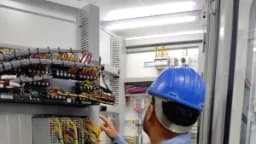
The NVQ proves your occupational competence through on-the-job assessment and qualifies you for the ECS Gold Card — the industry-standard proof that you are a fully qualified electrician. While not strictly mandatory for the solar PV course, having the NVQ and Gold Card significantly strengthens your professional standing and is required for many employers and competent person scheme applications. See our NVQ Level 3 guide for the full details.
Related Course
5357 Level 3 Electrotechnical
Prove your occupational competence and get your Gold Card
Step 6: Solar PV and Battery Storage Course
With all the above qualifications in place, you are ready for the solar PV course. Your electrical foundation means you will get far more from the training and be genuinely competent — and safe — from your first installation.
Related Course
Solar PV & Battery Storage
The final step — add solar PV and battery storage to your skill set
Ready to Enrol?
The solar PV market is growing rapidly and needs more qualified installers. If you are a qualified electrician looking to specialise in renewable energy, the solar PV course is the essential next step. At Total Skills, we deliver this course at our Nottingham training centre with experienced tutors and hands-on practical sessions using real equipment.
If you are still building your qualifications, do not be discouraged — the pathway is clear and every step has strong career value in its own right. Many of our learners complete the full diploma route and go on to add solar PV as their first specialism.
Related Course
Solar PV & Battery Storage
View current course dates, pricing, and payment plans
Related Course
18th Edition (2382)
Need the 18th Edition first? View our upcoming dates
Related Course
Level 2 & 3 Package
Starting from scratch? Our Level 2 and 3 Package is the fastest route to qualification
Frequently Asked Questions
What does the solar PV course cover?
How long is the solar PV course?
Do I need to be a qualified electrician to take the solar PV course?
Does the course include battery storage?
What can I do after completing the solar PV course?
Is there an exam?
What prerequisite qualifications do I need before enrolling?
Can I combine the solar PV qualification with EV charging?
What is MCS certification and how do I apply?
Is there a good business opportunity in battery storage?
How much does a solar PV course cost in the UK?
What changed for MCS solar installers in 2026?
Does Amendment 4 to BS 7671 affect solar PV installers?
Ready to Start Training?
Browse our City & Guilds accredited courses and take the next step in your electrical career.
Related Guides
How to Become a Solar Panel Installer: Salary & Training
How to become a solar panel installer in the UK — qualifications, training pathway, and earning potential: £35,000–£50,000/yr employed or £300–£500/day.
Read guideMCS Certification Explained: Installers & What to Look For
How MCS certification works for solar PV and battery installers — costs from around £1,500, requirements, and which accreditations customers should check.
Read guideBattery Storage Systems: A Guide for Electricians
How battery storage works, the growing market, qualifications needed, and opportunities for electricians.
Read guideGreen Energy Training: Renewable Courses for Electricians
Renewable energy courses for electricians — solar PV, EV charging, and battery storage training to future-proof your career in the green energy transition.
Read guide