
Renewable Energy Electrician: Net Zero Career Guide
Green energy is reshaping electrical careers. Solar PV, EV charging, and heat pump roles driving demand for renewable energy electricians in the UK.
In this guide
The UK's Net Zero Commitment
The UK's legally binding net zero by 2050 target is driving unprecedented demand for renewable energy electricians — specialists in solar PV, EV charging, battery storage, and heat pump electrical connections. If you want a future-proof electrical career in green energy, this guide explains what the transition means and the roles it creates.
To achieve this, the UK must fundamentally transform how it generates energy, heats buildings, powers transport, and runs industry. At the heart of virtually every aspect of this transformation is electricity — and the electricians who install, maintain, and upgrade the systems that carry it.
National Grid ESO projects that UK electricity demand could increase by approximately 50 per cent by 2035 and could roughly double by 2050. This is a step change in how the country uses energy, requiring a massive expansion of the electrical workforce.
Legal framework
The Climate Change Act 2008 (amended 2019) sets a legally binding net zero target for 2050. The Sixth Carbon Budget requires 78 per cent emissions reduction by 2035. These are statutory obligations, not voluntary targets.
Electrification of Heating
Heating is responsible for approximately 37 per cent of UK carbon emissions. Around 85 per cent of UK homes use gas central heating. Decarbonising this is one of the biggest challenges on the road to net zero.
Heat pumps
The government has set a target of 600,000 heat pump installations per year by 2028, up from approximately 55,000 in 2023. Every installation requires significant electrical work — supply upgrades, new circuits, consumer unit modifications, and compliance certification.
The Boiler Upgrade Scheme provides grants of up to 7,500 pounds per installation. Combined with the Future Homes Standard (no gas boilers in new builds from 2025) and the Clean Heat Market Mechanism, the policy framework is driving a wholesale shift from gas to electric heating.
Electric heating in new builds
The Future Homes Standard means every new home from 2025 will use low-carbon heating. The electrical installation in these homes will be more complex, with higher demand, more circuits, and integrated smart controls — increasing both the volume and value of electrical work.
Related Course
Solar PV & Battery Storage
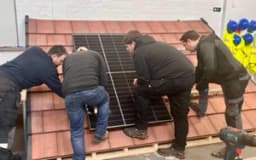
Solar PV and battery storage complement heat pumps for complete low-carbon energy
Electrification of Transport
Transport is responsible for approximately 27 per cent of UK greenhouse gas emissions, making it the largest emitting sector. The transition to electric vehicles is central to decarbonising transport.
The EV transition
The sale of new pure petrol and diesel cars will end in 2030, with some hybrids permitted until 2035 — creating a massive EV charging business opportunity. Battery electric vehicles already account for over 20 per cent of new car sales. There are currently around 33 million cars registered in the UK — transitioning a significant proportion requires massive charging infrastructure.
Charging infrastructure scale
- ✓UK needs approximately 300,000 public chargepoints by 2030 (currently around 50,000)
- ✓Millions of home and workplace chargers also needed
- ✓Building Regulations require EV chargepoints in all new homes with parking
- ✓New commercial buildings with 10+ parking spaces must install EV chargers
- ✓Government committed 1.6 billion pounds to EV charging infrastructure

Related Course
EV Charging (2921)
The City and Guilds 2921 is the recognised standard for EV charger installation
Renewable Energy Generation
The UK has committed to a fully decarbonised electricity grid by 2035. This requires a dramatic expansion of renewable energy generation, supported by energy storage and grid upgrades.
Solar PV
UK installed solar capacity was approximately 16 GW in 2024. The government ambition is 70 GW by 2035 — more than a fourfold increase. The Solar Trade Association estimates installations need to run at five times the current rate to meet this target. For electricians, domestic solar PV is one of the most accessible routes into green energy work.
Battery storage
Domestic battery storage installations increased by over 60 per cent year-on-year in 2023-24. Battery systems allow homeowners to store excess solar generation, charge from cheap overnight rates, and provide backup. Each system requires professional electrical installation.
Offshore and onshore wind
The UK is a world leader in offshore wind with over 15 GW installed and a target of 50 GW by 2030. The onshore electrical infrastructure — substations, cabling, grid connections — requires significant electrical work.
Grid Upgrades and Distribution
The existing UK electricity grid was designed for one-way power flow from large stations to consumers. Net zero transforms this into a two-way, distributed system where millions of homes generate, store, and export electricity.
National Grid investment
National Grid has outlined a multi-billion-pound programme to upgrade the transmission network — new overhead lines, underground cables, interconnectors, and offshore transmission infrastructure. The Great Grid Upgrade is the biggest overhaul since the 1950s.
Local distribution networks
Distribution Network Operators are investing billions in upgrading local networks to handle increased demand from heat pumps, EVs, and solar PV. Each project requires qualified electricians.
Grid demand
National Grid ESO projects UK peak electricity demand could increase from approximately 60 GW today to over 90 GW by 2035 and potentially 120 GW by 2050. This requires complete transformation of how electricity is distributed and managed.
The Green Skills Gap
The scale of the net zero transition demands a massive expansion of the skilled workforce, and the UK is not yet training enough people.
Workforce estimates
The Green Jobs Taskforce estimated the UK would need up to 480,000 green jobs by 2030. The Climate Change Committee states the heating transition alone requires tens of thousands of additional trained electricians. CITB forecasts show electrical trades will see some of the strongest demand growth.
What this means for electricians
- ✓Up to 480,000 green jobs needed by 2030 (Green Jobs Taskforce)
- ✓Tens of thousands of additional electricians required for heat pump transition
- ✓CITB forecasts electrical trades among strongest demand growth
- ✓Current training volumes insufficient to meet net zero needs
- ✓Rising wages and strong job security for qualified electricians
For qualified electricians and those entering the trade, the green skills gap means strong demand, rising wages, job security, and choice of work. Electricians who add green energy skills will be in the strongest position.
How to Position Yourself for Net Zero
The net zero transition is already underway and accelerating. Here is how to position your electrical career to benefit.
Build your foundation
Every aspect of net zero electrical work starts with core qualifications. The Level 2 and Level 3 Diplomas, 18th Edition, and 2391 are the foundation for all electrical installation work.
Related Course
18th Edition (2382)
The 18th Edition is the regulatory foundation for all net zero electrical work
Add green technology skills
- ✓EV Charging Installation (City and Guilds 2921) — immediate and growing demand
- ✓Solar PV and Battery Storage Installation — rapidly expanding market
- ✓Heat pump electrical work — aligns with gas boiler phase-out
- ✓Smart energy management systems — premium market segment
Related Course
EV Charging (2921)
EV charging is one of the fastest-growing areas of electrical work
Consider MCS certification
For electricians who want to install renewable energy systems and access government grant schemes, MCS certification is essential. MCS-certified installers can install solar PV, battery storage, and heat pumps that qualify for the Smart Export Guarantee and Boiler Upgrade Scheme.
The Bigger Picture
Net zero is not just a UK phenomenon. The Paris Agreement commits 196 countries to limiting global warming. The global demand for electrical skills to deliver this transition is enormous.
The International Energy Agency estimates global clean energy investment needs to reach 4 trillion US dollars per year by 2030. A significant proportion flows through the hands of electricians — installing solar panels, connecting wind farms, fitting EV chargers, upgrading buildings, and reinforcing power grids.
The electrical trade has always been essential to how society functions. In the net zero era, it becomes the central trade of the energy transition. Electricians are not just benefiting from the shift to clean energy — they are the workforce that makes it physically possible.
The bottom line
The UK's legally binding net zero 2050 target requires electrification of heating, transport, and industry. National Grid projects 50 per cent more electricity demand by 2035. This is backed by legislation, international commitments, and trillions of pounds of investment. Electricians are at the centre.
Related Course
EV Charging (2921)
Start building your green energy skill set with EV charging
Related Course
Solar PV & Battery Storage
Solar PV and battery storage — the backbone of distributed energy
Frequently Asked Questions
What is net zero and what does it mean for the UK?
How does net zero create work for electricians?
What qualifications do I need for green energy work?
Is there government funding for green skills training?
How much more electricity will the UK need by 2035?
What are the highest-paying green energy roles for electricians?
Ready to Start Training?
Browse our City & Guilds accredited courses and take the next step in your electrical career.
Related Guides
How to Become a Smart Home Installer (Electrician's Guide)
Smart home installer career guide for electricians — skills, brands, qualifications, and adding smart lighting, heating and automation to your services.
Read guideHeat Pumps and Electricians: What You Need to Know
How the gas boiler phase-out is driving demand for electricians and what qualifications are relevant.
Read guideUK Construction Boom: Why Electricians Are Needed More Than Ever
How major infrastructure projects, housing targets, and data centres are driving unprecedented demand for electricians.
Read guideWill AI Replace Electricians? Why the Trade Is Robot-Proof
Why physical trades like electrical work are among the safest careers from automation and AI disruption.
Read guide