
A Day in the Life of an Electrician
What a typical working day looks like for domestic and commercial electricians at different career stages.
In this guide
What Does a Typical Day Look Like?
There is no single answer to what an electrician's day looks like because it depends on the type of work you do, whether you are employed or self-employed, and the sector you work in. A domestic electrician working for themselves has a very different day to a commercial electrician on a construction site, and both differ from an apprentice splitting time between college and on-site learning.
This guide walks through typical days for the most common types of electrician so you can get a realistic picture of what the job actually involves day to day. If you are considering a career change or wondering whether the trade is right for you, this is a good place to start.
A Typical Day: Domestic Electrician
Most self-employed domestic electricians work directly with homeowners, landlords, and small businesses. The work is varied, the days are busy, and no two weeks are exactly the same.
7:30am — Van check and stock up
The day starts with a quick check of the van. You confirm you have the right materials for today's jobs, top up any consumables like cable clips, connectors, and fuses, and check your test equipment is charged. Many electricians grab a coffee and review the day's schedule before heading to the first job.
8:00am — First job: consumer unit replacement
You arrive at the customer's home to replace an old fuse board with a modern consumer unit. This involves isolating the supply, removing the old board, fitting the new unit, reconnecting all circuits, and carrying out full testing. The customer has been told the power will be off for most of the morning. A consumer unit swap typically takes 4 to 5 hours including testing and certification.
12:30pm — Lunch and admin
Lunch is usually eaten in the van or at a local cafe. This is also when many electricians reply to customer enquiries, send quotes, and check tomorrow's schedule. Being self-employed means you are running a business as well as doing the practical work.
1:00pm — Second job: new circuit for kitchen extension
The afternoon job is installing a new radial circuit for a kitchen extension. This involves first fix work — running cables from the consumer unit to the new socket and switch positions, fitting back boxes, and leaving cables ready for second fix after plastering. You coordinate with the builder on site to agree cable routes and avoid clashes with plumbing.
3:30pm — Paperwork and certificates
Back home or in the van, you complete the Electrical Installation Certificate for the consumer unit job, including the schedule of test results. You email it to the customer and log it with your competent person scheme. Then you reply to a couple of enquiry emails and prepare a quote for a rewire that you surveyed last week.
Related Course
Level 2 Diploma (2365)
Start your journey to becoming a domestic electrician
A Typical Day: Commercial Electrician
Commercial electricians work on larger projects — office fit-outs, retail units, schools, hospitals, and industrial buildings. The work is usually contracted through an electrical company and managed as part of a wider construction programme.
7:00am — Site arrival and toolbox talk
You arrive at the construction site, sign in, put on your PPE (hard hat, hi-vis, safety boots), and attend the morning toolbox talk. This is a short safety briefing covering the day's tasks, any hazards, and coordination with other trades. On a busy site, you might be working alongside plumbers, HVAC engineers, data cablers, and general builders.
7:30am — Morning work: containment and cable pulling
Today's task is installing cable containment (trunking and tray) on the second floor of an office fit-out, then pulling cables through to distribution boards. Commercial work involves larger cable sizes, three-phase supplies, and more complex containment systems than domestic work. You work from drawings provided by the project designer.
12:00pm — Lunch break
Lunch is taken in the site canteen or welfare facilities. On large sites, breaks are staggered to keep the project moving. This is a good time to catch up with your supervisor about the afternoon's priorities.
12:30pm — Afternoon: terminating and testing
The afternoon is spent terminating cables at distribution boards and accessories. Once circuits are complete, you carry out initial verification testing — continuity, insulation resistance, polarity — and record the results. On commercial sites, quality and documentation standards are high. Everything is recorded and checked.
4:30pm — Site tidy and handover
The last 30 minutes are spent tidying the work area, securing any open containment, and updating the site supervisor on progress. Commercial sites are strict about housekeeping. You sign out and head home.
Commercial vs domestic work
A Typical Day: Apprentice Electrician
Apprentice electricians split their time between studying at college (or a training centre) and working on site with a qualified electrician. A typical pattern is one day per week at college and four days on site, though this varies by employer.
College days
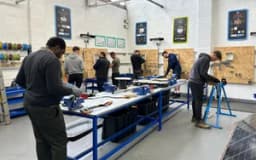
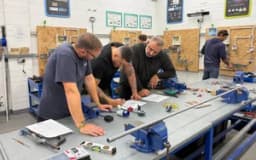
On college days you study the theory behind electrical installation — electrical science, health and safety, wiring regulations, and installation methods. You also get hands-on practice in purpose-built workshops, wiring mock installations and learning to use test equipment. College gives you the underpinning knowledge for the practical work you do on site.
On-site days
On working days you shadow a qualified electrician, helping with installations and gradually taking on more responsibility. Early on, you might be cutting cable, fitting back boxes, and running cables. As you progress, you start wiring accessories, working from drawings, and carrying out basic testing under supervision. The qualified electrician checks your work and explains the reasoning behind each step.
The Self-Employed Difference
If you are self-employed, your day includes much more than just electrical work. You are also running a business, which means a significant portion of your time is spent on tasks that employed electricians never have to think about.
Business tasks alongside the tools
- ✓Quoting new jobs — surveying the property, calculating materials and labour, writing and sending the quote
- ✓Invoicing — raising invoices, chasing payment, managing your accounts
- ✓Buying materials — visiting trade counters or ordering online for the next day
- ✓Marketing — maintaining your website, managing social media, and responding to enquiries
- ✓Vehicle maintenance — keeping the van serviced, clean, and stocked
- ✓CPD and training — keeping your qualifications up to date, attending manufacturer training
Self-employed electricians typically spend 60 to 70 percent of their time on billable work and the rest on administration. Successful self-employed electricians are good at managing their time and staying organised. Many use apps like Tradify or Powered Now to handle quoting, invoicing, and job scheduling from their phone.
Earning potential
Skills You Use Every Day
Being a good electrician is about more than technical knowledge. The best electricians combine practical skill with communication, problem-solving, and professionalism.
- ✓Technical knowledge — understanding circuits, regulations, and installation methods
- ✓Practical skill — neat, accurate work with hand tools and power tools
- ✓Problem-solving — diagnosing faults, working around unexpected issues on site
- ✓Customer service — explaining work to customers, being punctual and tidy
- ✓Time management — estimating job duration accurately and meeting deadlines
- ✓Attention to detail — ensuring every connection is secure and every test is recorded
For a full list of what you will need in your kit, see our electrician tools guide.
Related Course
Level 2 Diploma (2365)
Build the foundation skills you need for your electrical career
Frequently Asked Questions
What time do most electricians start work?
Do electricians work weekends?
How physically demanding is electrical work?
How many jobs does a domestic electrician do per day?
What paperwork do electricians have to complete?
Ready to Start Training?
Browse our City & Guilds accredited courses and take the next step in your electrical career.
Related Guides
Electrician Van Setup: Kit, Storage & Best Vans
Practical advice on choosing and fitting out a van for electrical work — popular models, racking systems, and costs.
Read guideHow to Quote Electrical Jobs: Pricing Guide for Electricians
How to price electrical work — day rates, fixed pricing, common job costs, and tips for winning quotes.
Read guideFirst Fix vs Second Fix Electrical: What's Involved
What first fix and second fix mean in electrical installation, what each stage includes, and the skills required.
Read guideElectrical Certificates Explained: EIC, EICR & Minor Works
The three UK electrical certificates — EIC, Minor Works Certificate and EICR. An EIC certifies new work; an EICR reports on an existing installation.
Read guide