
Work Lights & Head Torches for Electricians
A guide to head torches, magnetic work lights, area lights and 110V site lighting — what to buy and why.
In this guide
Why Work Lights Matter for Electricians
Electricians spend a lot of their working day in the dark, quite literally. Safe isolation means switching off the very circuit that would normally light the room, and much of the work happens in places that were never lit in the first place: lofts, under-floor voids, cupboards, and the inside of a consumer unit. A good work light is not a nice-to-have, it is part of being able to work safely and accurately.
This guide covers the main types of work light an electrician needs, what to look for when buying one, and why site lighting follows different rules to the lights you would buy for home use. For the rest of a working electrician's toolkit, see our electrician tools guide.
Types of Work Light
Most working electricians end up carrying a small collection of lights, each suited to a different situation rather than one light that does everything.
Head Torches
A head torch is usually the first light an electrician buys and the one used most often. It keeps both hands completely free, which matters when you are holding a screwdriver in one hand and a torch would otherwise need to be the other. Rechargeable models are worth seeking out over disposable-battery ones, since they are cheaper to run and easy to top up in the van.
Magnetic Handheld Lights
A magnetic work light clips or sticks to a metal surface, whether that is the inside of a consumer unit door, a piece of steel containment, or a van shelf, and stays put while you work with both hands free elsewhere. These are particularly useful for lighting the inside of an enclosure without needing a second person to hold a torch steady.
Tripod and Area Lights
When an entire room needs lighting, typically during first and second fix when the permanent lighting circuit is dead, a tripod or area light floods the space far more effectively than a handheld torch. These are usually twin-headed so the light can be angled in two directions at once.
110V Festoon Site Lighting
On construction sites, temporary lighting is typically supplied via 110V festoon strings rather than mains-voltage fittings. See the section below for why this matters.
What to Look For
Beyond the type of light, a few general features are worth prioritising when you are choosing between models.
- ✓Rechargeable over disposable batteries, cheaper to run and one less thing to run out of on site
- ✓A magnetic base or mounting clip so the light can be positioned hands-free
- ✓Multiple brightness or beam modes, so you can switch between close detail work and lighting a whole space
- ✓A robust, site-rated build — work lights get dropped, knocked, and left in a damp van
- ✓A charging cable or dock that is easy to keep in the van, so the light is always ready
Keep a light charged and ready
The most common failure mode with rechargeable work lights is simply forgetting to charge them. Many electricians keep a dedicated charging point in the van so lights are topped up between jobs rather than discovered flat halfway through a loft inspection.
Site Lighting: Why 110V Is Standard
On UK construction sites, temporary lighting and power tools typically run on a 110V centre-tapped-earth supply rather than the 230V mains supply used in a finished building. This is standard site practice because a fault on 110V equipment presents a much lower shock risk than the same fault would on 230V equipment — it is one of the reasons 110V transformers and festoon lighting are a fixture on almost every UK construction site.
If you regularly work on sites rather than purely domestic properties, 110V festoon lighting and the transformer to run it are worth having in the van alongside your rechargeable lights, since site management will often expect 110V equipment as standard practice.
Work Lights Worth Buying
A sensible starting point is one head torch for hands-free work, one magnetic light for enclosures and dead boards, and one larger light for flooding a room during first and second fix.
Related Course
Level 2 Diploma (2365)
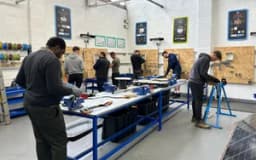
During your diploma training, all tools and equipment are provided. You build up your own kit, including lighting, once you start working.
Frequently Asked Questions
Why do electricians need dedicated work lights?
What type of work light should I buy first?
What should I look for in a work light?
What is 110V festoon lighting and why is it used on site?
Can I use a normal torch instead of a proper work light?
Ready to Start Training?
Browse our City & Guilds accredited courses and take the next step in your electrical career.
Related Guides
How to Go Self-Employed as an Electrician UK (2026 Step-by-Step)
Step-by-step guide to going self-employed as an electrician — HMRC registration, insurance, Part P scheme, pricing, VAT (£90,000), and finding customers.
Read guideElectrician Day Rates UK 2026: JIB Rates & Hourly Rates
UK electricians charge £250–£500 a day in 2026. JIB rates: £18.38/hr Electrician, £20.08/hr Approved Electrician. Day, hourly and fixed prices compared.
Read guideEssential Electrician Tools: Complete Kit List
Every tool an electrician needs — from basic hand tools to specialist test equipment, with buying guidance.
Read guideElectrician Starter Kit: What to Buy and What to Wait On
What learners need to buy before starting a Level 2 electrical course, what to add in your first year on the job, and what to leave until later.
Read guide