
Electrician Starter Kit: What to Buy and What to Wait On
What learners need to buy before starting a Level 2 electrical course, what to add in your first year on the job, and what to leave until later.
In this guide
Starting Level 2? Here Is What to Actually Buy
Every week, someone starting their Level 2 asks the same question: what tools should I buy before I begin? The honest answer is less than you think, and considerably less than most tool lists suggest.
This guide covers what you genuinely need on day one, what is worth buying properly once you start working, and what to leave until a job pays for it. For the full list a working electrician eventually builds up, see our electrician tools guide, the complete kit list for later.
What You Need for the Course: Almost Nothing
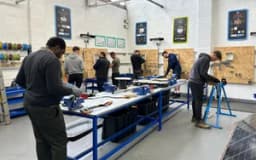
The training centre provides all tools and test equipment on every practical day. You do not need to buy a screwdriver, a set of pliers or a multifunction tester to start your Level 2. What you bring yourself is your own PPE.
That means safety boots, eye protection and gloves. Nothing more is expected on day one. For guidance on choosing the right boots and basic protective gear, see our workwear guide.
Buying your own basic hand tools before or during training is entirely optional. Some learners like having a set at home to practise with between sessions, but it is a personal choice, never a course requirement.
Related Course
Level 2 Diploma (2365)
All tools and test equipment are provided on practical days. Bring your own PPE and nothing else.
The Six Tools Worth Buying Properly When You Start Working
Once you move from training to paid work, a small number of hand tools are worth buying properly rather than picking up the cheapest version available. These are the tools you hold for hours at a time, use on every job, and rely on for your own safety. A cheap screwdriver or a pair of pliers with a loose joint fails you while you are still holding it, not on a shelf back at the wholesaler.
A properly rated VDE screwdriver set matters most of all. If a tool does not carry the VDE mark and the 1000V rating, it is not insulated for the purpose, and that is a safety issue, not a quality one. Combination pliers and side cutters see similar daily use, automatic wire strippers save time and stop you nicking conductors, and a decent tool bag keeps the whole set together instead of loose in a van door pocket. A quality tape measure rounds out the set: cheap ones stick, kink and lose their hook far sooner than a good one.
Check for the VDE mark and the 1000V rating
Some budget tools are styled to look like insulated VDE gear without carrying the marking. If it does not say VDE and carry the 1000V marking, it is not insulated for the purpose, a safety issue, not a quality one.
Worth Adding in Your First Year
Beyond the day-one set, the rest of your kit builds up naturally as jobs call for particular tools. There is no need to buy any of the following before you start working, and no fixed order to add them in beyond what your work actually requires.
A Torque Screwdriver
Manufacturers specify tightening torques for their terminals, and getting it right by feel alone is guesswork. A torque screwdriver takes that guesswork out, so terminals are neither left loose nor overtightened.
Cable Rods, Water Pump Pliers and a Cable Cutter
A compact set of cable rods earns its keep the first time you need to pull cable through a void with no other access. Water pump pliers handle glands that ordinary combination pliers cannot grip cleanly, and a proper cable cutter shears heavier cable instead of crushing it the way side cutters do on anything beyond twin and earth.
Holesaws
A set of sheet steel holesaws covers the knockout sizes you meet on consumer units and trunking. They blunt with regular use, so treat them as a consumable you replace rather than a one-off purchase.
Not Yet: Wait Until You Need It
A few items are worth naming specifically, because buying them early is one of the more common ways new tool lists overspend for no real benefit.
A Multifunction Tester
A multifunction tester is one of the largest single purchases in a working kit, and there is no reason to own one before you are qualified to use it. When that time comes, our testing equipment guide covers how to choose one.
A Voltage Indicator and Proving Unit
These are needed once you are working on real installations, not before. An approved voltage indicator is always used as a pair with a proving unit, proved before and after every test, never a non-contact pen for proving dead. See our voltage indicators guide when you are ready to choose a pair.
A Power Tool Platform
Makita LXT, DeWalt XR, Milwaukee M18 and Bosch Professional are all fine choices, and no one platform has a real edge over the others for the drilling and driving an electrician does day to day. The advice that actually matters is to pick one system and stay in it, since every battery and charger you add afterwards only works with that platform.
What Not to Buy
A pre-packed fifty-piece kit looks like good value in the box, but six good tools beat fifty mediocre ones on every job you actually do. The extra pieces mostly sit unused while the poor-quality ones that see daily use wear out fast.
Also avoid tools styled to look like insulated VDE gear without the proper marking, and resist buying a full socket set on day one. A socket set is genuinely useful once you know which sizes you reach for, but that only becomes clear after a few months on real jobs.
One more thing worth knowing before you start: course fees do not include the IET books. See our 18th Edition exam guide when you need the regs book.
Frequently Asked Questions
What do I need for the course itself?
How much does it cost to start?
Are cheap tools ever fine?
When do I buy a multifunction tester?
Do I need power tools to start?
Ready to Start Training?
Browse our City & Guilds accredited courses and take the next step in your electrical career.
Related Guides
How to Go Self-Employed as an Electrician UK (2026 Step-by-Step)
Step-by-step guide to going self-employed as an electrician — HMRC registration, insurance, Part P scheme, pricing, VAT (£90,000), and finding customers.
Read guideElectrician Day Rates UK 2026: JIB Rates & Hourly Rates
UK electricians charge £250–£500 a day in 2026. JIB rates: £18.38/hr Electrician, £20.08/hr Approved Electrician. Day, hourly and fixed prices compared.
Read guideEssential Electrician Tools: Complete Kit List
Every tool an electrician needs — from basic hand tools to specialist test equipment, with buying guidance.
Read guideGifts for Electricians: Ideas They Will Actually Use
Practical gift ideas for electricians and apprentices, what to avoid, and how to buy for someone starting out in the trade.
Read guide