
City & Guilds Course Numbers Explained: 2365, 2391, 2382 & More
Decode every City & Guilds electrical course number — what the scheme numbers and suffixes mean, popularity rankings, and the order you should take them.
In this guide
Why Do City & Guilds Courses Have Numbers?
If you are researching a career in the electrical trade, you will quickly encounter a bewildering set of numbers: 2365, 2382, 2391, 2357, 2921 and more. These are not random — each number is a City & Guilds scheme number that identifies a specific qualification programme.
City & Guilds is the UK's largest vocational awarding body, and every qualification they offer is assigned a unique scheme number. The suffix after the dash (such as -02, -52, or -34) identifies the specific variant, level, or version within that scheme. Once you understand the system, navigating the qualification landscape becomes much simpler.
This guide decodes every City & Guilds electrical course number, explains what the suffixes mean, ranks the qualifications by popularity, and shows you the order in which you should take them. For the full step-by-step pathway, see our qualification pathway diagram.
How the Numbering System Works
Every City & Guilds qualification follows a consistent numbering format:
Scheme number (the main number)
The four-digit scheme number (e.g. 2365) identifies the qualification programme. This number is assigned when City & Guilds creates a new qualification and stays with it throughout its life. When a qualification is significantly updated or replaced, it usually receives a new scheme number entirely — which is why the old 2330 became the current 2365.
Suffix number (after the dash)
The two-digit suffix after the dash identifies the specific variant within the scheme. The most common patterns are:
- ✓Level indicators: -02 for Level 2, -03 for Level 3 (e.g. 2365-02, 2365-03)
- ✓Version/edition indicators: -26 for the 2026 version of the 18th Edition (2382-26), which replaced the 2022 version (2382-22)
- ✓Scope indicators: -34 for domestic and small commercial (2921-34), -52 for the combined award (2391-52)
- ✓Route indicators: -13 for installation route, -23 for maintenance route (within the NVQ 2357)
- ✓Prior learning variants: -34, -44, -91 for holders of specific older qualifications (within the NVQ 2357)
- ✓Special routes: -82 for APL (Accreditation of Prior Learning), -04 for entrance tests
The suffixes are not standardised
There is no universal rule for what suffixes mean across different schemes. In the 2365, -02 means Level 2. In the 2391, -52 means the combined pathway. In the 2921, -34 means domestic and small commercial. You need to learn what each suffix means within its own scheme.
Foundation Qualifications (Career Entry)
2365 — Diploma in Electrical Installation
The City & Guilds 2365 is the UK's primary classroom-based qualification for becoming an electrician — see our complete 2365 course guide for a deep dive. It replaced the older 2330 and 2360 qualifications and is available at two levels:
- ✓2365-02: Level 2 Diploma — covers electrical science fundamentals, wiring systems, health and safety, and basic installation skills. Typically 14 to 16 weeks full-time. No prior experience required.
- ✓2365-03: Level 3 Diploma — covers advanced circuit design, cable sizing, fault diagnosis, inspection and testing principles, and three-phase systems. Typically 16 to 20 weeks full-time. Requires Level 2 completion.
The 2365 is the most common starting point for adult career changers and is delivered at training centres across the UK. It provides the technical knowledge needed to work as an electrician, though you will also need an NVQ and AM2 assessment to become fully qualified.
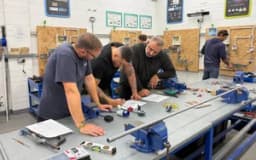
Related Course
Level 2 & 3 Package
Save money and time with our combined Level 2 & 3 Diploma package
2357 — NVQ Level 3 in Electrotechnical Technology
The City & Guilds 2357 is the competence-based qualification that proves you can do the job in a real working environment. Unlike the 2365, which is classroom-based, the NVQ is assessed through a portfolio of on-site evidence collected while you are working as an electrician.
- ✓2357-13: Installation route — for electricians installing systems in buildings and structures
- ✓2357-23: Maintenance route — for electricians maintaining and servicing existing systems
- ✓2357-44: Entry variant for holders of the 2365 Level 3 Diploma (the most common route for adult learners)
- ✓Requires you to be working on site (employed or self-employed under supervision)
- ✓Evidence is gathered over 12 to 18 months through photographs, work logs, and assessor observations
- ✓Includes the AM2 occupational competence assessment as the final unit
- ✓Essential for ECS Gold Card application and full industry recognition
2357 closes 31 October 2026 — replaced by 5357-95 and 5393-43
The 2357 NVQ has a final registration date of 31 October 2026 (final certification 31 December 2029). It is being replaced for everyone — not just apprentices — by two new Level 3 Electrotechnical qualifications: 5357-95 for the installation route (leading to the Gold Card) and 5393-43 for the domestic-only route (Electrotechnical in Dwellings, around 18 months, ending with the AM2D instead of the AM2).
The new route is sequential rather than parallel: you complete the Level 2 and Level 3 diplomas first, then spend a minimum of two years building an on-site competence portfolio — earning as an ECS Trainee electrician throughout — before sitting the AM2 (or AM2D). It also recognises prior learning from EAL and other awarding bodies, not just City & Guilds. Existing Total Skills diploma learners can register for the 2357 via the learner portal until 24 October 2026; new learners take the 5357-95 route — bookings open 24 October 2026, with City & Guilds registration from 1 November 2026.
Related Course
5357 Level 3 Electrotechnical
The 5357 Level 3 Electrotechnical Qualification proves on-site competence — bookings open 24 October 2026
Regulations & Testing Qualifications
2382 — 18th Edition Wiring Regulations (BS 7671)
The City & Guilds 2382 is the qualification that proves you understand the current edition of the IET Wiring Regulations (BS 7671). Our 18th Edition guide explains what the course covers. It is mandatory for all practising electricians and is the single most widely taken electrical qualification in the UK.
- ✓2382-26: the current version, covering BS 7671:2018+A4:2026 (Amendment 4, the Orange Book). The -26 suffix refers to the 2026 amendment. It replaced the 2382-22 (Amendment 2).
- ✓Typically a 2 to 3 day intensive course followed by an open-book, multiple-choice exam
- ✓Required before you can take the 2391 Inspection & Testing qualification
- ✓Must be renewed when new editions of BS 7671 are published
Related Course
18th Edition (2382)
The mandatory foundation — required for all electricians
2391 — Inspection and Testing
The City & Guilds 2391 qualifies you to inspect, test, and certify electrical installations — see our 2391 course guide for details. This is the qualification you need to sign off EICRs (Electrical Installation Condition Reports) and issue electrical certificates.
- ✓2391-52: the combined award covering both initial verification and periodic inspection and testing. This is the most popular variant and the one most training centres deliver.
- ✓The 2391 suite replaced the older separate pathways 2394 (initial verification only) and 2395 (periodic inspection only). The standalone 2391-50 and 2391-51 awards remain available for those who need only one discipline.
- ✓Typically a 5-day intensive course with both theory exams and practical assessments
- ✓Requires prior knowledge of BS 7671 — you should hold the 2382 before enrolling
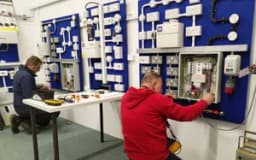
Related Course
Inspection & Testing (2391)
Add inspection and testing to your skill set — one of the most in-demand qualifications
Specialist & Green Energy Qualifications
2921 — Electric Vehicle Charging Installation
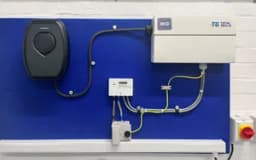
The City & Guilds 2921 covers the design and installation of electric vehicle charging equipment. With the UK banning new pure petrol and diesel car sales from 2030 and all new-build homes required to have charge points, EV charging installation is one of the fastest-growing specialisms in the electrical trade.
- ✓2921-34: Design and Installation of Domestic and Small Commercial EV Charging. This is the entry-level variant, covering home and small business charge points. Typically a 1-day course.
- ✓2921-32 and 2921-33: Large-Scale EV Charging Infrastructure. Combined course covering commercial car parks, fleet depots, and public charging networks. Typically a 3-day course.
2922 — Solar Photovoltaic Systems (NEW)
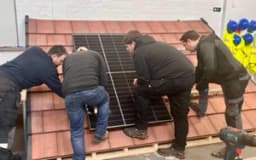
The City & Guilds 2922-34 is the Level 3 Award in the Installation and Maintenance of Small Scale Solar Photovoltaic Systems. Launched in late 2024, it equips qualified electricians with the skills to safely design, install, commission, and maintain solar PV systems in compliance with the IET Code of Practice and BS 7671.
- ✓Covers statutory legislation, system components, design and specification, installation, testing and commissioning
- ✓Supports MCS (Microgeneration Certification Scheme) accreditation
- ✓Designed for practising electricians — you must already hold relevant electrical qualifications
- ✓Typically a 3 to 4 day course with both theory and practical assessment
Related Course
Solar PV & Battery Storage
Train in solar PV and battery storage — one of the fastest-growing green energy sectors
2923 — Electrical Energy Storage Systems (NEW)
The City & Guilds 2923-34 is the Level 3 Award in the Design, Installation and Commissioning of Small Electrical Energy Storage Systems (EESS). Also launched in late 2024, this qualification covers battery storage systems — an essential companion to solar PV installations.
- ✓Covers battery technology principles, system design, installation, inspection and testing, commissioning and handover
- ✓Follows the IET Code of Practice for Electrical Energy Storage Systems
- ✓Assessment includes a 30-question multiple-choice exam and a practical assignment
- ✓Typically a 2-day course for qualified electricians
Solar PV and EESS work together
Most domestic solar PV installations now include battery storage. Holding both the 2922 and 2923 qualifications positions you to offer complete solar and storage packages, which is increasingly what homeowners and businesses expect.
Experienced Worker Qualifications
2346 — Experienced Worker Assessment (Standard)
The City & Guilds 2346-03 is the Experienced Worker Assessment (EWA) for installation and maintenance electricians. It is designed for people who have been working in the electrical trade for at least 5 years but have never completed a formal apprenticeship or gained a recognised Level 3 vocational qualification.
- ✓Covers domestic, commercial, and industrial electrical work
- ✓Assessed through a portfolio of on-site evidence and workplace observations
- ✓Requires a minimum of 5 years relevant experience and a Level 2 qualification
- ✓Must also hold 18th Edition (2382) and Inspection & Testing (2391)
- ✓Leads to the AM2E practical assessment and ultimately the ECS Gold Card
2347 — Experienced Worker Assessment (Domestic)
The City & Guilds 2347-03 is the domestic-only variant of the EWA. It is for electricians with at least 3 years of experience working specifically on domestic installations. It leads to a Domestic Installer ECS card rather than the full Gold Card.
- ✓Scope limited to dwelling installations (houses, flats, bungalows)
- ✓Requires a minimum of 3 years relevant domestic experience
- ✓Leads to the AM2ED practical assessment
- ✓Results in a Domestic Installer card — not the Installation Electrician Gold Card
Choose the right EWA route
The 2347 domestic route is faster and easier, but it limits your card and the scope of work you can self-certify. If you have 5+ years of experience across domestic and commercial work, the 2346 standard route is the better long-term investment.
Popularity Ranking
Based on industry demand and enrolment patterns, here is how the main City & Guilds electrical qualifications rank in terms of popularity:
Highest volume
- ✓2382 (18th Edition) — mandatory for every electrician in the UK. Renewed every time BS 7671 is updated. By far the most widely taken qualification.
- ✓2365 (Level 2 & 3 Diploma) — the primary entry qualification for career changers and adult learners. Thousands enrol each year.
- ✓2391 (Inspection & Testing) — essential for anyone who needs to sign off electrical certificates. Training centres report booking months in advance.
High and growing
- ✓2357 (NVQ Level 3) — required for the Gold Card. Steady demand tied to the number of people completing the diploma route.
- ✓2921-34 (EV Charging — Domestic) — rapid growth driven by government regulations and the shift to electric vehicles. Affordable, short course with fast return on investment.
- ✓2922/2923 (Solar PV & EESS) — emerging qualifications launched in late 2024. Expected to grow significantly as the UK pushes towards net zero.
Specialist and steady
- ✓2921-32/33 (Large-Scale EV) — growing demand from commercial clients, councils, and fleet operators.
- ✓2346/2347 (EWA) — steady demand from experienced workers seeking formal recognition. Niche but important route.
What Order Should You Take Them?
The qualifications build on each other. Here is the typical progression for someone starting from scratch:
- ✓Step 1: Level 2 Diploma (2365-02) — learn the fundamentals
- ✓Step 2: Level 3 Diploma (2365-03) — advance to design, fault-finding, and complex systems
- ✓Step 3: 18th Edition (2382-26) — mandatory knowledge of the wiring regulations
- ✓Step 4: Inspection & Testing (2391-52) — learn to inspect, test, and certify
- ✓Step 5: NVQ Level 3 (2357) — prove on-site competence through workplace evidence
- ✓Step 6: AM2 Assessment — practical end-point assessment to demonstrate full competence
- ✓Step 7: ECS Gold Card — apply once you hold all the above. You are now a fully qualified electrician.
Once you hold the Gold Card, you can add specialist qualifications like EV charging (2921), solar PV (2922), and battery storage (2923) to expand your services and increase your earning potential.

Related Course
Level 2 Diploma (2365)
Start your journey — the Level 2 Diploma is the first step
Old Qualifications and Their Current Equivalents
If you trained years ago or are returning to the trade, you may hold qualifications with different numbers. Here is how the older qualifications map to current ones:
Superseded qualifications
- ✓236 — the original City & Guilds electrical installation course, dating back decades. Long superseded.
- ✓2360 — Electrical Installation. Replaced by the 2330, then later by the 2365.
- ✓2330 — Certificate in Electrotechnical Technology. Replaced by the 2365 Diploma in approximately 2010.
- ✓2351 — an older electrical qualification that predates the current structure.
- ✓2394 — Initial Verification. Now part of the combined 2391-52.
- ✓2395 — Periodic Inspection and Testing. Now part of the combined 2391-52.
- ✓2391-50 and 2391-51 — standalone Initial Verification and Periodic Inspection awards. Still offered by City & Guilds, but most candidates now take the combined 2391-52 instead.
Old qualifications are still recognised
If you hold a 2360, 2330, or other older qualification, it is still recognised as evidence of prior learning — see our Award vs Diploma vs NVQ guide for how these types differ. You do not need to retake the 2365. However, you will need a current 18th Edition (2382) and may need to take the 2391 if your testing qualification has expired or you never held one.
Frequently Asked Questions
What do the numbers in City & Guilds qualifications mean?
What is the difference between 2365-02 and 2365-03?
What replaced the old 2330 and 2360 qualifications?
What is the most popular City & Guilds electrical qualification?
Do I need to take these courses in a specific order?
What are the new 2922 and 2923 qualifications?
Ready to Start Training?
Browse our City & Guilds accredited courses and take the next step in your electrical career.
Related Guides
Become an Electrician Without an Apprenticeship: Diploma Route
Yes — become an electrician without an apprenticeship via the C&G 2365 diploma route. Full-time training, no employer needed, qualified in 8–12 months.
Read guideNVQ Level 3 Electrical: Everything You Need to Know
A complete guide to the City & Guilds 2357 NVQ Level 3 — who it is for, how it works, evidence requirements, and how it leads to your gold card.
Read guideCity & Guilds 5357: New Level 3 Electrotechnical Qualification
What City & Guilds 5357 (5357-95 and 5393-43) means — the qualification replacing the 2357 NVQ from 31 October 2026, and the new ECS Gold Card route.
Read guideNVQ Level 2 Electrical: Why It Doesn’t Exist & What You Need
There is no NVQ Level 2 in Electrical Installation. The qualification you need is the C&G 2365-02 Level 2 Diploma — we explain the difference.
Read guide