
ELCAS Funding for Electrical Training: Full Guide
How Enhanced Learning Credits work, eligibility requirements, and how to use ELCAS funding for electrical training.
In this guide
What Is ELCAS?
The Enhanced Learning Credits Administration Service (ELCAS) is a Ministry of Defence initiative that provides financial support for service personnel and veterans who want to pursue education and training after leaving the armed forces. It is one of the most valuable funding sources available for military personnel looking to retrain as electricians.
The scheme recognises that service leavers have transferable skills and discipline that make them excellent candidates for skilled trades — see our military to electrician guide for the full transition pathway. Electrical training is one of the most popular uses of ELCAS funding because the trade offers strong job security, good earnings, and a clear career path. If you are considering a career change into the electrical trade, ELCAS can make the transition significantly more affordable.
Total Skills is an ELCAS approved training provider, which means you can use your Enhanced Learning Credits directly towards our City & Guilds electrical courses. We regularly train service leavers and understand the ELCAS process thoroughly — from initial claim submission through to course completion and payment processing.
Key fact
ELCAS funding can cover a significant portion of your electrical training costs. On the Higher tier (8+ years of service), you can claim up to 2,000 pounds per claim across three claims — up to 6,000 pounds total. On the Lower tier (6+ years), it is up to 1,000 pounds per claim, or 3,000 pounds total. Our ELCAS provider number is 12999.
Eligibility Requirements
ELCAS eligibility is based on your length of service. The scheme has different tiers that provide different levels of funding. Understanding which tier you fall into helps you plan how to use your credits effectively.
Higher Tier
The Higher tier is available to personnel who have completed 8 or more years of service. This tier provides:
- ✓Up to 2,000 pounds per claim
- ✓ELCAS pays 80 percent of the course fee, up to the 2,000 pound maximum
- ✓You are responsible for the remaining 20 percent (or any amount above 2,000 pounds)
- ✓Maximum of three claims in total, one per financial year (April to March)
- ✓Total maximum funding: 6,000 pounds across all three claims
Lower Tier
The Lower tier is available to personnel who have completed 6 or more years of eligible service. It works in the same way as the Higher tier but with a lower maximum per claim:
- ✓Up to 1,000 pounds per claim (80 percent of the course fee)
- ✓Maximum of three claims in total, one per financial year
- ✓Total maximum funding: 3,000 pounds across all three claims
Who Is Eligible
- ✓Regular members of the UK Armed Forces (Army, Royal Navy, Royal Air Force, Royal Marines)
- ✓Minimum 6 years of eligible service for Lower tier, 8 years for Higher tier
- ✓Service leavers who left on or after 1 April 2016 must claim within 5 years of discharge; those who left earlier have 10 years
- ✓Serving personnel can claim once they meet the minimum service length requirement
- ✓Courses must be Level 3 or above on the Regulated Qualifications Framework
- ✓Reservists may be eligible in certain circumstances
Check your eligibility now
Visit elcas.co.uk and log in with your service details to check your exact eligibility, remaining credits, and expiry dates. If you are still serving, your unit education officer can help you navigate the process.
Which Total Skills Courses Are ELCAS Eligible?
ELCAS only funds qualifications at Level 3 or above on the Regulated Qualifications Framework. This is a firm rule — not all electrical courses qualify. Here is a clear breakdown of which Total Skills courses are eligible and which are not.
ELCAS-Eligible Courses
The following courses are at Level 3 or above and can be funded through ELCAS:
- ✓Level 3 Diploma in Electrical Installations (2365) — Level 3 qualification, ELCAS eligible
- ✓18th Edition Wiring Regulations (2382) — Level 3 qualification, ELCAS eligible
- ✓2391 Inspection and Testing — Level 3 qualification, ELCAS eligible
- ✓NVQ Level 3 Electrical Installation (2357) — Level 3 qualification, ELCAS eligible
- ✓EV Charging Installation (2921) — Level 3 Award, ELCAS eligible
- ✓Solar PV & Battery Storage — Level 3 Award, ELCAS eligible
Not ELCAS-Eligible
The following course sits below Level 3 and cannot be funded through ELCAS. You would need to cover it through other means such as your CTP resettlement grant, a charitable grant, a payment plan, or personal funds:
- ✓Level 2 Diploma in Electrical Installations (2365) — Level 2 qualification, NOT ELCAS eligible
Level 2 is not ELCAS funded
A common misconception is that the Level 2 Diploma can be claimed through ELCAS. It cannot — ELCAS strictly requires Level 3 or above. If you need the Level 2 Diploma as a prerequisite for Level 3, budget for it separately. Many service leavers use their CTP resettlement grant (534 pounds) or a charitable grant towards Level 2 and save their ELCAS claims for the more expensive Level 3+ qualifications.
For a full overview of the qualifications you need on the pathway to becoming a qualified electrician, see our guide to becoming an electrician.
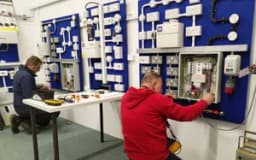
Related Course
Inspection & Testing (2391)
The 2391 Inspection and Testing course is ELCAS eligible — a valuable qualification for electricians seeking to carry out periodic inspections.
How to Claim ELCAS Funding
The ELCAS claim process is straightforward but does require planning ahead. You cannot simply turn up to a training provider and expect to pay with ELCAS — the funding must be approved before the course starts.
Step 1: Register on the ELCAS Website
If you have not already registered, create an account at elcas.co.uk. You will need your service number and personal details. The system will confirm your eligibility tier and available credit balance.
Step 2: Choose an ELCAS Approved Provider
You can only use ELCAS funding with approved training providers. Total Skills is an ELCAS approved provider for our Level 3 and above City & Guilds electrical qualifications. When choosing a provider, confirm their ELCAS approval status and discuss which courses your funding can cover.
Step 3: Submit a Claim
Log into the ELCAS portal and submit a claim for the specific course you want to attend. You will need to provide the course details, dates, and the training provider's ELCAS reference number. The Total Skills ELCAS provider number is 12999. The claim must be submitted at least 25 working days before the course start date.
Step 4: Receive Approval
Once your claim is approved, you will receive a Claim Authorisation Note (CAN). This confirms the approved amount. Share this with your training provider, who will invoice ELCAS directly for their portion. You pay the remaining balance to the provider.
Step 5: Complete the Course
Attend and complete the course. After completion, the training provider confirms your attendance to ELCAS, and the payment is processed. If you withdraw from or fail to attend the course, ELCAS may require repayment of the funding.
Plan ahead
The 25 working day lead time for claims means you need to plan well in advance. Popular course dates can fill up, so book your place with the training provider first (confirming you are paying via ELCAS), then submit your claim. Do not leave the claim submission to the last minute.

Related Course
Level 3 Diploma (2365)
Use your ELCAS credits towards the Level 3 Diploma — an ELCAS-eligible qualification that is a key step to becoming a fully qualified electrician.
Example Funding Plans
Understanding how ELCAS, CTP, and other funding sources combine can be confusing. Here are worked examples showing how service leavers at different tiers can fund their electrical training. These examples use approximate course fees — contact us for current pricing.
Example 1: Higher Tier (8+ Years Service)
A service leaver with 10 years of service qualifies for the Higher tier. They want to complete the full pathway from Level 2 through to NVQ Level 3 over three financial years.
- ✓Level 2 Diploma: self-funded or covered by CTP resettlement grant (534 pounds) — NOT ELCAS eligible
- ✓ELCAS Claim 1 (Year 1): Level 3 Diploma — ELCAS covers 80 percent up to 2,000 pounds
- ✓ELCAS Claim 2 (Year 2): 2391 Inspection & Testing — ELCAS covers 80 percent up to 2,000 pounds
- ✓ELCAS Claim 3 (Year 3): NVQ Level 3 — ELCAS covers 80 percent up to 2,000 pounds
- ✓18th Edition: covered by CTP resettlement grant remainder or payment plan
- ✓Total ELCAS funding used: up to 6,000 pounds across three claims
- ✓Any remaining balance: flexible payment plan with Total Skills
Example 2: Lower Tier (6+ Years Service)
A service leaver with 7 years of service qualifies for the Lower tier. They want the same qualifications but have a lower ELCAS cap per claim.
- ✓Level 2 Diploma: self-funded — NOT ELCAS eligible
- ✓ELCAS Claim 1 (Year 1): Level 3 Diploma — ELCAS covers 80 percent up to 1,000 pounds
- ✓ELCAS Claim 2 (Year 2): 2391 Inspection & Testing — ELCAS covers 80 percent up to 1,000 pounds
- ✓ELCAS Claim 3 (Year 3): NVQ Level 3 — ELCAS covers 80 percent up to 1,000 pounds
- ✓CTP resettlement grant (534 pounds): towards 18th Edition
- ✓SSAFA or RBL charitable grant: applied for to cover remaining gaps
- ✓Total ELCAS funding used: up to 3,000 pounds across three claims
- ✓Any remaining balance: flexible payment plan with Total Skills
Example 3: Combining ELCAS with CTP and a Charitable Grant
This example shows a Higher tier service leaver who maximises every funding source available to minimise out-of-pocket costs.
- ✓CTP resettlement grant (534 pounds): applied towards Level 2 Diploma
- ✓ELCAS Claim 1: Level 3 Diploma — up to 2,000 pounds funded
- ✓ELCAS Claim 2: 2391 Inspection & Testing — up to 2,000 pounds funded
- ✓ELCAS Claim 3: NVQ Level 3 — up to 2,000 pounds funded
- ✓SSAFA grant application: towards 18th Edition and remaining 20 percent co-payments
- ✓Payment plan: for any final shortfall after all grants are applied
Remember the 80 percent rule
ELCAS always pays 80 percent of the course fee, up to the tier maximum. Even on the Higher tier, you will need to cover the remaining 20 percent yourself. Factor this co-payment into your budget. For a course costing 2,500 pounds, ELCAS pays 2,000 pounds (80 percent) and you pay 500 pounds. For a course costing 1,500 pounds, ELCAS pays 1,200 pounds (80 percent of 1,500) and you pay 300 pounds.
For a full breakdown of all the costs involved in becoming a qualified electrician, see our complete cost guide.
Using Your ELCAS Credits Effectively
With a maximum of three claims available (one per financial year), it is worth planning how to use your credits strategically. Remember that ELCAS only funds courses at Level 3 or above, so your strategy should focus on those qualifications. Here are some approaches that military service leavers commonly use for electrical training.
Strategy 1: Cover the Key Level 3+ Qualifications
Use your three claims to cover the Level 3 Diploma, the 2391 Inspection and Testing course, and the NVQ Level 3 on the diploma route. These are the most expensive Level 3+ qualifications and are all ELCAS eligible. The 18th Edition can often be covered through your CTP resettlement grant or a payment plan. Note that the Level 2 Diploma is below Level 3, so it cannot be funded through ELCAS and would need to be self-funded or covered by other funding sources.
Strategy 2: Prioritise the Most Expensive Courses
Because ELCAS covers 80 percent of the fee up to the tier maximum, you get the best value by using claims on higher-cost courses. The Level 3 Diploma and NVQ Level 3 are typically the most expensive, so using your claims on these gives you the greatest financial benefit. Cheaper courses like the 18th Edition may be better funded through other means.
Strategy 3: Combine with Resettlement
ELCAS is separate from your resettlement entitlement through the Career Transition Partnership (CTP). Your resettlement training grant (typically 534 pounds) can be used alongside ELCAS to further reduce your costs. Some CTP-contracted providers offer additional funded courses.
- ✓ELCAS claim 1: Level 3 Diploma in Electrical Installations
- ✓ELCAS claim 2: 2391 Inspection & Testing
- ✓ELCAS claim 3: NVQ Level 3 Electrical Installation
- ✓Resettlement grant: towards 18th Edition or Level 2 Diploma
- ✓Payment plan: for any remaining balance (including Level 2 Diploma if needed)
Related Course
Level 3 Diploma (2365)
The Level 3 Diploma can be funded through ELCAS — speak to us about your claim.
Timeline: From Service Leaver to Qualified Electrician
Planning the transition from military service to qualified electrician takes careful coordination of ELCAS claims, course dates, and financial years. Here is a practical timeline for someone using ELCAS to fund their training through the diploma route.
Before Discharge (3-6 Months Out)
- ✓Register on elcas.co.uk and confirm your tier and credit balance
- ✓Meet with your CTP advisor to discuss your resettlement plan
- ✓Research training providers — confirm ELCAS approval and course dates
- ✓Contact Total Skills (provider 12999) to discuss your training plan
- ✓Submit your first ELCAS claim at least 25 working days before your chosen course date
Year 1: Foundation Qualifications
- ✓Complete Level 2 Diploma (self-funded or via CTP grant — not ELCAS eligible)
- ✓Use ELCAS Claim 1 towards Level 3 Diploma
- ✓Complete 18th Edition Wiring Regulations (via CTP grant or payment plan)
- ✓Begin seeking work experience or employment as a trainee electrician
Year 2: Advanced Qualifications
- ✓Use ELCAS Claim 2 towards 2391 Inspection and Testing
- ✓Gain practical on-site experience under supervision
- ✓Begin building your portfolio of evidence for NVQ Level 3
Year 3: NVQ and Professional Registration
- ✓Use ELCAS Claim 3 towards NVQ Level 3 (workplace assessment)
- ✓Complete AM2 practical assessment
- ✓Apply for ECS Gold Card (JIB)
- ✓Register with a competent person scheme (NICEIC, NAPIT, or similar)
This timeline assumes one ELCAS claim per financial year (April to March). Depending on your discharge date, you may be able to accelerate this by timing your first claim in one financial year and your second in the next, even if they are only months apart. For example, a claim in February and another in April would fall in two different financial years.
Use resettlement leave wisely
Many service leavers use their resettlement leave (typically the final weeks of service) to attend intensive training courses. The Level 2 and Level 3 Diplomas at Total Skills are delivered as intensive classroom courses, making them ideal for resettlement leave periods. Plan your leave dates around course availability.
For more on salary expectations once qualified, see our electrician salary guide.
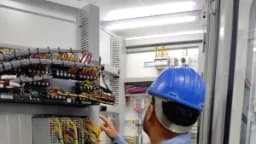
Related Course
5357 Level 3 Electrotechnical
The NVQ Level 3 is ELCAS eligible and the final qualification before your AM2 assessment and Gold Card.
Resettlement and the Career Transition Partnership
In addition to ELCAS, service leavers can access support through the Career Transition Partnership (CTP). The CTP is the official resettlement service for the UK armed forces and offers a range of support including career advice, training grants, and access to courses and workshops.
Resettlement Training Grant
Most service leavers are entitled to a resettlement training grant, which is currently 534 pounds. This can be used towards any training course and is separate from ELCAS. While 534 pounds will not cover a full diploma, it reduces the amount you need to fund from other sources. Many service leavers use this specifically towards the 18th Edition course or as a contribution towards the Level 2 Diploma, keeping their ELCAS claims free for the more expensive Level 3+ qualifications.
Additional CTP Support
- ✓Career guidance and skills assessment
- ✓CV writing and interview preparation
- ✓Access to CTP job board and employer partnerships
- ✓Networking events with trade employers
- ✓Workshops on self-employment and business start-up
The CTP can help you plan your entire transition from military service to civilian electrical work. Many service leavers find that the discipline, practical skills, and work ethic developed in the armed forces translate exceptionally well to the electrical trade. Your CTP advisor can also help you coordinate your ELCAS claims with your resettlement timeline to ensure you make the most of every funding source available.
Related Course
18th Edition (2382)
The 18th Edition is ELCAS eligible, or you can cover it with your CTP resettlement grant to save an ELCAS claim for a more expensive qualification.
Additional Funding Sources
Beyond ELCAS and CTP resettlement, several military charities and organisations offer grants or financial assistance for service leavers undertaking vocational training. These can fill the gaps that ELCAS and the resettlement grant do not cover — particularly the 20 percent co-payment, the Level 2 Diploma, and additional costs such as tools and equipment.
SSAFA (Soldiers, Sailors, Airmen and Families Association)
SSAFA is one of the largest armed forces charities and offers grants for education and training. Applications are made through a SSAFA caseworker, who will assess your circumstances and training plan. Grants are typically means-tested and can cover course fees, equipment, or living expenses during training. The application process usually takes 4 to 6 weeks, so apply early. Visit ssafa.org.uk to find your local branch and request a caseworker.
Royal British Legion (RBL)
The Royal British Legion provides financial assistance for retraining through their welfare grants programme. Like SSAFA, applications go through a caseworker who assesses your needs. RBL grants can cover course fees that ELCAS does not fund, including Level 2 qualifications. Contact the RBL helpline on 0808 802 8080 or visit britishlegion.org.uk to start your application.
Other Charitable Sources
- ✓ABF The Soldiers Charity: supports Army veterans with training and career development grants
- ✓The White Ensign Association: helps naval service leavers with career transition funding
- ✓RAF Benevolent Fund: supports RAF veterans with retraining costs
- ✓Service-specific benevolent funds: each branch has its own support fund for veterans
- ✓Officers Association: provides career transition support for former officers
- ✓RFEA (Regular Forces Employment Association): employment support and sometimes training grants
These grants are usually means-tested and application-based. They can be used alongside ELCAS to cover remaining costs, tool purchases, or living expenses during training. Your CTP advisor can help you identify which grants you may be eligible for and assist with applications.
Do not leave money on the table
Many service leavers do not use all the funding available to them. Between ELCAS, resettlement, and charitable grants, it is often possible to fund the majority of your electrical training. Speak to your CTP advisor early and explore every option before paying out of pocket. Apply for charitable grants as soon as you know your training plan — processing times can be several weeks.
Common ELCAS Mistakes to Avoid
Over the years, we have seen service leavers make avoidable mistakes that cost them time or money. Here are the most common pitfalls and how to avoid them.
Mistake 1: Not Claiming Early Enough
ELCAS claims must be submitted at least 25 working days before the course start date. That is roughly five weeks. If you miss this deadline, your claim will be rejected and you will need to reschedule the course or pay out of pocket. Build the lead time into your plan from the start.
Mistake 2: Trying to Use ELCAS for Level 2
The Level 2 Diploma is a Level 2 qualification and does not meet the Level 3+ requirement for ELCAS funding. We regularly hear from service leavers who assumed Level 2 would be covered. It is not. Plan to fund Level 2 through your CTP grant, a charitable grant, or a payment plan.
Mistake 3: Letting Credits Expire
If you left service on or after 1 April 2016, you have 5 years to use your credits. Once they expire, they are gone — there is no extension or appeal process. Check your expiry date on elcas.co.uk and plan your training well within the deadline. If your credits are close to expiring, contact us immediately to find the earliest available course date.
Mistake 4: Not Combining with CTP
ELCAS and the CTP resettlement grant are separate funding streams. Some service leavers only use one or the other, leaving money unused. Use both: save your ELCAS claims for the most expensive Level 3+ courses and use the CTP grant (534 pounds) towards the 18th Edition, Level 2 Diploma, or other costs.
Mistake 5: Choosing an Unapproved Provider
Not all training providers are ELCAS approved. If you book with an unapproved provider, your claim will be rejected. Always confirm the provider's ELCAS approval status before booking. Total Skills is an approved provider — our ELCAS provider number is 12999.
Mistake 6: Forgetting the Financial Year Rule
You can only make one ELCAS claim per financial year (April to March). Some service leavers try to submit two claims in the same financial year and have the second one rejected. However, you can use this rule to your advantage — a claim in March and another in April fall in different financial years, even though they are only one month apart.
Talk to us before you claim
If you are unsure about any aspect of the ELCAS process, contact Total Skills before submitting your claim. We can confirm course eligibility, help you plan your claims across financial years, and ensure your paperwork is correct first time. Visit our ELCAS funding page or call us to discuss your options.

Related Course
Level 2 Diploma (2365)
The Level 2 Diploma is NOT ELCAS eligible but is a prerequisite for Level 3. We offer flexible payment plans to help you get started.
Next Steps
If you are a service leaver or veteran considering a career in the electrical trade, ELCAS can significantly reduce the cost of your training. The key is to plan early, understand which courses are eligible, and combine ELCAS with every other funding source available to you.
Useful Links
These guides provide more detail on specific aspects of your journey from military service to qualified electrician:
- ✓How to become an electrician — the full pathway from beginner to qualified
- ✓Cost to become an electrician — complete breakdown of every cost involved
- ✓Career change to electrician — practical guide for career changers
- ✓Electrician salary guide — what you can expect to earn once qualified
- ✓NVQ Level 3 guide — everything you need to know about the workplace assessment
Ready to start? Visit our ELCAS funding page for more information, or contact us to discuss your ELCAS claim and training plan. Our team has extensive experience helping service leavers navigate the funding process and will guide you through every step.

Related Course
Level 2 & 3 Package
Our Level 2 & 3 Package covers the full diploma pathway. Use ELCAS for the Level 3 component and fund Level 2 separately.
Frequently Asked Questions
How much funding can I get through ELCAS?
Can I use ELCAS for electrical training?
How long after leaving the military can I use ELCAS?
Can I combine ELCAS with other funding?
Is ELCAS the same as resettlement?
How do I check my ELCAS eligibility?
Which electrical courses are ELCAS eligible?
Can I use ELCAS for Level 2?
What if my ELCAS credits have expired?
Can I start training while still serving?
Ready to Start Training?
Browse our City & Guilds accredited courses and take the next step in your electrical career.
Related Guides
Electrical Exam Tips: How to Pass City & Guilds Exams
Practical exam tips for City & Guilds electrical qualifications — revision strategies, time management, and common pitfalls.
Read guideFunding Your Electrician Training: All Options
Every funding option for electrical training — ELCAS, bursaries, payment plans, employer sponsorship, and government schemes.
Read guideFree Electrician Courses UK: What's Actually Available (2026)
Free electrical courses in the UK, explained for 2026 — apprenticeships, FE college funding, Skills Bootcamps and ELCAS, and what "free" actually costs you.
Read guideHow to Become an Electrician in the UK: 4 Routes Compared (2026)
Four routes to becoming a qualified electrician: apprenticeship, fast-track diploma, FE college, or experienced worker assessment. Costs from £0–£11k.
Read guide