
Part P Building Regulations: What Electricians Need (2026)
What is Part P? Do you need a "Part P course"? The building regulations for electrical work, the qualifications you need, and how to self-certify.
In this guide
What Is Part P of the Building Regulations?
Part P is a section of the Building Regulations for England and Wales that covers electrical safety in dwellings. Introduced in January 2005 and significantly amended in 2013, it requires that electrical installation work in homes is designed, installed, inspected and tested to meet BS 7671 (the Wiring Regulations / 18th Edition).
Part P applies to houses, flats, maisonettes, and their associated gardens, outbuildings, and shared access areas. Its purpose is to reduce the number of deaths, injuries, and fires caused by faulty electrical installations in homes. Before Part P, there was no requirement to notify building control about domestic electrical work, which meant substandard installations could go completely undetected.
Part P changed this by making certain types of electrical work notifiable — meaning they must either be carried out by a registered competent person or inspected by building control. For electricians, understanding Part P is essential because it directly affects how you carry out and certify domestic work.
Scope of Part P
Part P applies to dwellings and their associated outbuildings and gardens in England and Wales only. It does not apply to commercial premises, industrial buildings, or common parts of blocks of flats (which are covered by other parts of the Building Regulations). Scotland and Northern Ireland have their own separate building standards.
"Part P Course" — What People Actually Mean
There Is No Such Thing as a "Part P Course"
If you have been searching for a "Part P course" or "Part P qualification", you need to know that no such course exists. Part P is a building regulation (a law), not a qualification or training course. You cannot "get your Part P" by attending a short course.
When people search for a "Part P course", what they actually need are the qualifications that allow them to self-certify work under Part P. This means becoming a registered member of a competent person scheme (such as NICEIC or NAPIT), which requires holding the correct City & Guilds qualifications.
The qualifications you need to self-certify under Part P are:
- ✓18th Edition Wiring Regulations (City & Guilds 2382) — understanding of BS 7671
- ✓Inspection & Testing (City & Guilds 2391) — ability to inspect, test, and certify installations
- ✓Level 2 and/or Level 3 Diplomas (City & Guilds 2365) OR equivalent practical experience — installation competence
- ✓Registration with a competent person scheme (NICEIC or NAPIT)
Any company advertising a "Part P course" or "Part P certificate" as a standalone product is misleading you. There is no shortcut. The only route to self-certifying under Part P is through proper qualifications and scheme registration.
The "Domestic Installer" Route — Why It No Longer Exists
You may have heard of the "domestic installer" route — short courses that previously allowed people to carry out limited domestic electrical work and self-certify under Part P. These courses were typically just a few days long and covered basic domestic installation skills.
The domestic installer route no longer exists as a standalone pathway. Since September 2021, the Electrotechnical Assessment Specification (EAS) has been updated, and all competent person schemes now require the full set of electrical qualifications. Short "certificates of competence" are no longer accepted for scheme registration.
This change was widely supported by the electrical industry. The old domestic installer route produced electricians with limited training who were legally allowed to self-certify work — this led to quality concerns. The new requirements ensure that everyone self-certifying under Part P has a comprehensive understanding of electrical installation, design, inspection, and testing.
What This Means For You
If you want to self-certify domestic electrical work under Part P, you now need to follow one of two routes: the full qualification route (for career changers and new entrants) or the experienced worker route (for those already working in the electrical trade with 5+ years of experience). Both lead to the same outcome — full competent person scheme registration.
What Work Falls Under Part P?
Part P distinguishes between notifiable and non-notifiable work. Understanding this distinction is critical for every electrician working in domestic properties — and for homeowners employing electricians.
Notifiable Work (MUST Be Certified)
The following types of electrical work are notifiable under Part P and must either be carried out by a registered competent person or notified to building control:
- ✓Installation of a new circuit from the consumer unit
- ✓Consumer unit (fuse board) replacement or relocation
- ✓Additions and alterations to existing circuits in a special location — in England (since April 2013) this means the zones around a bath or shower, and rooms containing a swimming pool or sauna heater
- ✓In Wales, the original 2005 scope still applies: work in kitchens, bathrooms, outdoors (garden lighting, pond pumps, outbuilding supplies), and other special locations is notifiable
- ✓Electric vehicle charging point installation (almost always involves a new circuit)
Non-Notifiable Work
The following types of work are generally non-notifiable, provided they are not in a special location:
- ✓Replacing accessories such as socket outlets, switches, and light fittings on existing circuits
- ✓Replacing a damaged cable on an existing circuit
- ✓Adding fused spurs to an existing circuit (outside special locations)
- ✓Adding lighting points to an existing circuit (outside special locations)
- ✓Installing or upgrading main or supplementary bonding
Bathroom Rule — and the England/Wales Difference
Additions and alterations within the zones around a bath or shower are notifiable, and a full bathroom rewire always is. In England, kitchen and outdoor work on existing circuits has not been notifiable since the April 2013 amendment — but in Wales it still is. A new circuit anywhere in the dwelling is notifiable in both countries. These distinctions are where electricians and homeowners most often fall foul of Part P.
Doing Notifiable Work Without Certification Is Illegal
Carrying out notifiable electrical work without proper certification can result in enforcement action from building control, fines, having to rip out and redo work, and serious problems when selling the property. Homeowners' solicitors routinely check for Part P compliance certificates during conveyancing.
How to Self-Certify Under Part P
To self-certify your own domestic electrical work under Part P, you must be registered with a competent person scheme. There are two main routes to getting the qualifications you need for registration.
Route 1: Full Qualification Route (Career Changers & New Entrants)
If you are new to the electrical trade or changing careers, you need to complete the full diploma pathway:
- ✓Level 2 Diploma in Electrical Installations (City & Guilds 2365)
- ✓Level 3 Diploma in Electrical Installations (City & Guilds 2365)
- ✓18th Edition Wiring Regulations (City & Guilds 2382)
- ✓Inspection & Testing (City & Guilds 2391)
- ✓NVQ Level 3 in Electrical Installation (City & Guilds 2357) — requires workplace evidence
- ✓AM2 practical assessment
- ✓Register with NICEIC or NAPIT
This route typically takes 18 to 24 months through an intensive training centre, or 3 to 4 years via an apprenticeship. It is the most comprehensive route and produces electricians with the deepest understanding of electrical installation.
Related Course
Level 2 & 3 Package
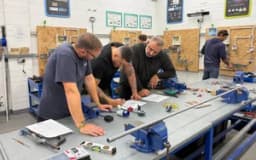
The Level 2 & 3 Package is the fastest route for career changers — covers both diplomas in one programme.
Route 2: Experienced Worker Route (5+ Years in the Trade)
If you already have 5 or more years of practical experience in electrical installation but lack formal qualifications, the experienced worker assessment (EWA) route is faster:
- ✓18th Edition Wiring Regulations (City & Guilds 2382)
- ✓Inspection & Testing (City & Guilds 2391)
- ✓Experienced Worker Assessment (EWA) — portfolio of evidence plus practical assessment
- ✓Register with NICEIC or NAPIT
This route can be completed in 3 to 6 months. The 18th Edition and 2391 qualifications can both be completed at Total Skills in Nottingham, and the EWA is arranged through your chosen competent person scheme.
Related Course
18th Edition (2382)
The 18th Edition is mandatory for both routes — it covers BS 7671, the standard that Part P references.
Related Course
Inspection & Testing (2391)
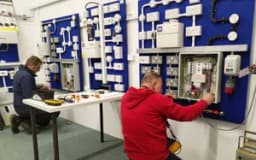
Inspection & Testing (2391) gives you the ability to inspect, test, and issue certificates for domestic work.
Competent Person Schemes Explained
The most practical way to comply with Part P is to join a competent person scheme. Members can self-certify their own notifiable domestic work without involving building control. This saves time and money for both the electrician and the customer.
The Main Schemes
- ✓NICEIC — the largest and most widely recognised scheme, managed by Certsure. Offers Domestic Installer and Approved Contractor tiers.
- ✓NAPIT — the second largest scheme, particularly popular with domestic installers. Known for a supportive assessment process.
- ✓ELECSA — formerly a third option under the Certsure group, now absorbed into NICEIC and no longer offered as a separate registration.
Costs and Registration
Annual registration fees typically range from 400 to 800 pounds per year depending on the scheme and tier. This includes your annual assessment visit, certification facilities, and the ability to self-certify. When you complete notifiable work, you test the installation, issue an Electrical Installation Certificate (EIC), and notify the local authority electronically through your scheme. The scheme then issues a Building Regulations Compliance Certificate on behalf of the local authority.
For a detailed comparison of the two most popular schemes, see our guide to NICEIC vs NAPIT.
Without Scheme Registration
If you are not registered with a competent person scheme, you (or the homeowner) must notify building control before starting any notifiable work. Building control will inspect the work and charge a fee (typically 200 to 400 pounds per job). This adds cost and delay, which is why most professional electricians choose to register with a scheme.
What Happens If You Don't Comply with Part P?
The consequences of non-compliance with Part P can be serious — for both electricians and homeowners.
- ✓Building control enforcement — the local authority can require you to open up completed work for inspection and have it tested by a qualified third party at your expense
- ✓Fines — prosecution under the Building Act 1984 can result in unlimited fines in the magistrates' court
- ✓Ripping out work — in serious cases, you may be required to remove and redo non-compliant work entirely
- ✓Property sale problems — buyers' solicitors routinely check for Part P certificates during conveyancing. Missing certificates can delay or derail a property sale, or result in a price reduction
- ✓Insurance implications — uncertified electrical work can invalidate home insurance. If a fire occurs and the installation is found to be non-compliant, the insurer may refuse to pay out
- ✓Professional liability — if someone is injured by faulty work, the electrician who installed it faces civil and potentially criminal liability
- ✓No time limit on enforcement — there is no statute of limitations on building regulations enforcement. Non-compliant work can be challenged at any time, even decades later
The Real-World Consequence
The most common practical impact of non-compliance is during a property sale. If a homeowner cannot produce Part P certificates for electrical work, the buyer's solicitor will flag it. The homeowner may need to pay for a full EICR (Electrical Installation Condition Report), have work remediated, or accept a reduction in the sale price. This is why customers increasingly insist on using registered electricians — and why scheme registration is essential for your credibility and your customers' peace of mind.
Part P in Scotland and Northern Ireland
Part P specifically applies to England and Wales only. If you work in Scotland or Northern Ireland, different regulations apply:
- ✓Scotland — electrical work in dwellings is covered by Section 4 of the Building (Scotland) Regulations. The principles are similar (work must comply with BS 7671 and be certified), but the notification process and competent person scheme requirements differ. SELECT is the main trade association and competent person scheme provider in Scotland.
- ✓Northern Ireland — has its own building regulations under the Building Regulations (Northern Ireland). Electrical safety requirements exist but the specific rules and enforcement mechanisms differ from Part P.
Regardless of which jurisdiction you work in, BS 7671 (the 18th Edition) applies throughout the UK. The 18th Edition qualification is the technical standard that underpins all UK electrical installation regulations.
Certification and Documentation
Part P requires that all electrical work is tested, inspected, and certified in accordance with BS 7671. The type of certificate depends on the nature of the work.
Electrical Installation Certificate (EIC)
An EIC is required for all new installations and for alterations or additions that include a new circuit. This is the primary certificate for notifiable work. It includes a schedule of inspections and test results, and must be signed by a competent person. Understanding how to complete an EIC properly is covered in the 2391 Inspection & Testing course.
Minor Electrical Installation Works Certificate (MEIWC)
The MEIWC is used for minor work that does not include a new circuit, such as adding a fused spur to an existing circuit. Despite common misconception, a consumer unit replacement typically requires a full EIC, not just an MEIWC.
Building Regulations Compliance Certificate
When notifiable work is completed by a competent person scheme member, the scheme issues a Building Regulations Compliance Certificate on behalf of the local authority. This is the document that confirms Part P compliance. A copy goes to the homeowner and the local authority. This certificate is critical when selling a property — solicitors routinely request it during conveyancing.
For more on electrical certificates and when each one is required, see our dedicated guide.
The Qualifications You Actually Need
Here is a summary of the qualifications needed to self-certify domestic electrical work under Part P, depending on your starting point:
For Career Changers (No Electrical Background)
- ✓Level 2 Diploma (2365) — foundational knowledge of electrical science, wiring systems, and health & safety
- ✓Level 3 Diploma (2365) — advanced installation design, fault-finding, and complex circuits
- ✓18th Edition (2382) — understanding of BS 7671 wiring regulations
- ✓Inspection & Testing (2391) — ability to inspect, test, and certify electrical installations
- ✓NVQ Level 3 (2357) — workplace competence evidence (requires an employer or work placement)
- ✓AM2 assessment — practical skills test at a NET-approved centre

Related Course
Level 2 Diploma (2365)
Start here — the Level 2 Diploma is the foundation of the full qualification pathway.

Related Course
Level 3 Diploma (2365)
The Level 3 Diploma builds on Level 2 with advanced installation design and complex systems.
For Experienced Workers (5+ Years in the Trade)
- ✓18th Edition (2382) — if not already held or if previous edition has expired
- ✓Inspection & Testing (2391) — ability to inspect and certify
- ✓EWA portfolio assessment — evidence of competence through work portfolio and practical assessment
Related Course
18th Edition (2382)
The 18th Edition is mandatory for all routes — it is the technical standard that Part P references.
Related Course
Inspection & Testing (2391)
Inspection & Testing is essential for issuing the certificates that Part P requires.
Both routes lead to the same outcome: eligibility to register with a competent person scheme and self-certify your domestic work under Part P. For a full breakdown of every qualification and how they fit together, see our guide to electrician qualifications explained.
Part P Amendments and Key Dates
Part P has been amended several times since its introduction. Here are the key milestones:
- ✓January 2005 — Part P comes into force. Almost all domestic electrical work is notifiable.
- ✓April 2013 — major amendment simplifies the scope. Only new circuits and work in special locations now require notification. Non-notifiable work expanded significantly.
- ✓September 2021 — EAS (Electrotechnical Assessment Specification) updated. Short "domestic installer" courses no longer accepted for competent person scheme registration. Full qualifications now required.
The 2013 amendment was widely welcomed by the electrical industry. It focused notification requirements on higher-risk work while allowing straightforward modifications to existing circuits without the bureaucratic overhead of building control notification.
Frequently Asked Questions
Is there a Part P course?
Can a homeowner do their own electrical work under Part P?
How much does Part P certification cost?
Do I need Part P to change a socket?
Can I do a bathroom rewire without Part P?
What is the difference between Part P and the 18th Edition?
How long does it take to become Part P registered?
Is Part P required for commercial work?
Ready to Start Training?
Browse our City & Guilds accredited courses and take the next step in your electrical career.
Related Guides
JIB Preferred Provider: What It Means & Why It Matters (2026)
JIB Preferred Provider is a recognised upgrade over JIB Approved Centre. What the status means and why it matters for your ECS Gold Card application.
Read guideECS Card Types, Costs & How to Apply (2026 Guide)
Every ECS card type explained — Trainee, Registered, Gold, Labourer and more. Requirements, costs (~£36), colours, and how to apply for each card in 2026.
Read guideECS Gold Card Requirements: Full Qualification Checklist (2026)
ECS Gold Card requires NVQ Level 3 (or Experienced Worker Assessment), current BS 7671 18th Edition, and ECS Health & Safety Assessment. Full checklist.
Read guideECS Health & Safety Test: Free Practice Questions & Revision
ECS HSE practice quiz with all 327 official revision questions. Free topic-by-topic study, instant feedback, timed mock exams, and progress tracking.
Read guide