
Fast-Track Electrician Course: Qualified in 18–24 Months
Fast-track electrical courses explained: the same City & Guilds qualifications as a 4-year apprenticeship in 18–24 months. Online theory, intensive practicals.
In this guide
What Are Fast-Track Electrical Courses?
Fast-track electrical courses are intensive, adult-focused training routes that deliver the same City & Guilds qualifications as a 4-year apprenticeship in 18 to 24 months. The full pathway — Level 2 Diploma, Level 3 Diploma, 18th Edition, NVQ Level 3 and the AM2 — costs £7,000 to £11,000 and needs no prior experience. It is built for adult career changers who cannot afford 3 to 4 years on apprentice wages, and it ends with exactly the same JIB ECS Gold Card.
This is not a watered-down shortcut. The fast-track route uses the exact same City & Guilds 2365 syllabus and assessments as every other route. The difference is how the learning is delivered: concentrated full-time study rather than one day per week over several years.
At Total Skills, the fast-track pathway is our Level 2 & 3 Diploma Package — a combined course that takes you from complete beginner to diploma-qualified in the shortest possible time, with a clear pathway through the NVQ and AM2 to your Gold Card. See the full installation electrician pathway for the step-by-step route.
Still comparing timelines? Our guide to how long it takes to become an electrician compares every route side by side — and if cost is the sticking point, our free electrician courses guide explains which funded options genuinely exist in 2026.
Fast-Track Routes Compared
Three recognised fast-track routes exist for adults training as an electrician in the UK. Each leads to the same ECS Gold Card but suits a different starting point.
| Route | Best for | Duration | Typical cost | Outcome |
|---|---|---|---|---|
| Adult Diploma Package City & Guilds 2365 Level 2 & 3 | Beginners with no prior experience | 18–24 months | £7,000–£11,000 | ECS Gold Card (via NVQ + AM2) |
| NVQ Level 3 Fast-Track City & Guilds 2357 | Trainees already in electrical employment | 6–12 months | £2,000–£3,500 | ECS Gold Card (with AM2) |
| Experienced Worker Assessment EWA / assessment-only route | Workers with 5+ years on-the-tools experience | 6–12 months | From £2,400 | C&G 2346 Level 3 EWA → Gold Card |
Total Skills UK delivers the Adult Diploma Package and the NVQ Level 3 fast-track route from its City & Guilds Accredited Centre in Nottingham (Centre No. 009512), under JIB Preferred Provider status. Online theory + hybrid practicals make the diploma route accessible to learners anywhere in the UK.
Fast-Track vs Apprenticeship: Why It's Faster
The most common question we hear is: how can you cover the same material in 18 months that an apprenticeship takes 4 years to complete? The answer is simple — it is about how the time is used.
The apprenticeship model
A traditional electrical apprenticeship splits your time roughly 80/20: four days a week on site with your employer, one day a week (or block release) at college. The qualifications are spread across 3 to 4 years because you only study part-time. Much of the on-site time in the early years involves watching, fetching materials, and doing basic tasks — valuable, but slow for learning.
The fast-track model
The fast-track route flips this. You dedicate your full attention to studying the diploma material in concentrated blocks. No waiting for an employer to release you for training. No stretching 16 weeks of content across two years of day release. You cover the same syllabus in a fraction of the time because you are studying full-time.
Same qualifications, same outcome
- ✓Same City & Guilds 2365 Level 2 and Level 3 Diplomas
- ✓Same NVQ Level 3 (2357) workplace competence assessment
- ✓Same AM2 practical assessment at a NET centre
- ✓Same ECS Gold Card at the end
- ✓No difference on your certificates — employers cannot tell which route you took
Why more people are choosing fast-track
- ✓No waiting for an employer placement — apprenticeships have 50+ applicants per place
- ✓You control the timeline and start when you are ready
- ✓No 3 to 4 years on apprentice wages (currently £8.00 per hour in year one)
- ✓Purpose-built training workshops with modern equipment
- ✓Dedicated study time rather than fitting learning around a job
Who chooses fast-track?
The Fast-Track Qualification Pathway
Here is the exact step-by-step pathway from complete beginner to fully qualified electrician via the fast-track route. Every step uses nationally recognised City & Guilds qualifications.
Step 1: Level 2 Diploma in Electrical Installations (2365)
Your foundation. The Level 2 Diploma covers the fundamentals of electrical science, health and safety, wiring systems, installation techniques, and circuit protection. You will learn Ohm's law, circuit types, earthing and bonding, and how to wire domestic installations safely. This stage takes approximately 3 to 5 months — you study theory online at your own pace from anywhere in the UK and attend practical workshops at our training centre (around 5 to 7 in-centre days).

Related Course
Level 2 Diploma (2365)
Your starting point — covers electrical science, wiring systems, and installation fundamentals.
Step 2: Level 3 Diploma in Electrical Installations (2365)
The advanced stage. Level 3 builds on your foundation with electrical design, fault diagnosis and rectification, three-phase systems, complex circuit calculations, and inspection principles. This is where you develop the deeper understanding that separates a competent installer from someone who truly understands electrical systems. Approximately 4 to 6 months, with approximately 8 to 9 in-centre days.

Related Course
Level 3 Diploma (2365)
Advanced knowledge — fault diagnosis, design calculations, and three-phase systems.
Step 3: NVQ Level 3 in Electrical Installation (2357)
The workplace competence stage. The NVQ Level 3 is not a taught course — it is an on-site assessment where you build a portfolio of evidence from real electrical work. An assessor visits your workplace to observe your skills, review photographic evidence, and conduct professional discussions. This takes 6 to 12 months alongside paid employment as a trainee electrician.

Related Course
5357 Level 3 Electrotechnical
Workplace competence assessment — the final qualification before your Gold Card.
Step 4: AM2 Assessment
The final practical test. The AM2 is a 2-day assessment at a NET (National Electrotechnical Training) centre where you demonstrate your installation skills under exam conditions. You wire circuits, carry out inspection and testing, and prove you can work safely and competently to industry standards. For full details, see our AM2 assessment guide.
Step 5: ECS Gold Card Application
With your NVQ Level 3, 18th Edition, and AM2 completed, you apply for your ECS Gold Card — the industry-standard proof that you are a fully qualified electrician. You are now eligible to register with NICEIC or NAPIT, self-certify Part P work, and work independently on any electrical installation.
Save with the Level 2 & 3 Package
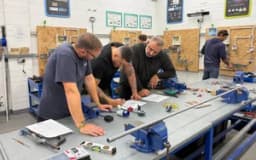
Related Course
Level 2 & 3 Package
The fast-track package — Level 2 and Level 3 together at a discounted price.
Who Is the Fast-Track Route For?
The fast-track route is designed for motivated adults who want to qualify as quickly as possible. You do not need any prior electrical experience — just the commitment to study intensively and the drive to build a new career.
Ideal candidates
- ✓Career changers — whether you are 25 or 55, the fast-track route is the quickest way to retrain. See our career change guide
- ✓Adults who cannot do an apprenticeship — whether due to age, financial commitments, or not wanting to spend 4 years on low wages
- ✓Ex-military personnel — ELCAS funding can cover a significant portion of your training costs. See our ELCAS funding page
- ✓People with practical or DIY experience — if you have hands-on skills and want formal qualifications to match
- ✓Anyone motivated to qualify quickly — the fast-track route rewards dedication and commitment
You are a good fit if you
- ✓Are comfortable with intensive, full-time study
- ✓Can commit to attending every session (the course moves fast)
- ✓Have a basic level of maths — you will work with calculations throughout
- ✓Are physically able to do practical work (bending conduit, pulling cables, working at height)
- ✓Want a hands-on career with strong earning potential
- ✓Are self-motivated and can study independently between sessions
How Much Does Fast-Track Training Cost?
We believe in transparency. Here is what you need to budget for the complete fast-track pathway from beginner to Gold Card holder. Visit our course pages for current prices.
Training costs
- ✓Level 2 Diploma (2365) — online + practical course
- ✓Level 3 Diploma (2365)
- ✓5357 Level 3 Electrotechnical — workplace assessment
- ✓AM2 Assessment — £885 + VAT, around £1,060 (external, at a NET centre)
- ✓ECS Gold Card application — £36-£56 (depending on JIB membership)
- ✓Tools and test equipment — £500 to £1,500 (built up over time)
How it compares
Consider the alternatives. A university degree costs £27,000 or more in debt and takes 3 years. An apprenticeship is free for training costs but means 3 to 4 years on low wages — at apprentice rates, you could earn £40,000 to £60,000 less over that period compared to qualifying faster and earning a full electrician's salary sooner.
For a detailed breakdown, see our full cost guide.
Return on investment
Related Course
Level 2 & 3 Package
The best value option — Level 2 and Level 3 combined at a package discount.
What You'll Learn
The fast-track course covers everything you need to work as a competent electrician. The curriculum follows the BS 7671 (18th Edition) wiring regulations throughout, so you are learning to current industry standards from day one.
Level 2 — Foundation knowledge
- ✓Electrical science: voltage, current, resistance, and Ohm's law
- ✓Health and safety in electrical installation
- ✓Wiring systems and installation methods
- ✓Circuit protection: fuses, MCBs, and RCDs
- ✓Domestic installation work: ring finals, lighting circuits, cooker circuits
- ✓Earthing and bonding principles
Level 3 — Advanced skills
- ✓Electrical design: cable sizing, voltage drop, and fault current calculations
- ✓Fault diagnosis and systematic rectification
- ✓Three-phase systems and commercial power supplies
- ✓Complex circuit design and distribution boards
- ✓Inspection and testing principles
- ✓Environmental technology awareness: solar PV, heat pumps, EV charging
NVQ Level 3 — Workplace competence
- ✓Real-world installation evidence from your workplace
- ✓Professional discussion with your assessor
- ✓Photographic evidence of completed work
- ✓Demonstrated competence across the full range of electrical tasks
All diploma training includes extensive hands-on practical work in purpose-built workshops. You will wire real circuits, use professional test equipment, and build the muscle memory needed for efficient, safe installation work.
After Qualifying: Your Career Options
Once you hold your ECS Gold Card, you have a career with genuine earning potential and long-term security. The UK has a well-documented shortage of qualified electricians — an estimated 15,000 retire each year while only around 5,000 new ones qualify. Demand is not going away.
Earning potential
- ✓Employed electrician: £35,000 to £45,000 per year
- ✓Self-employed domestic: £50,000 to £70,000 per year
- ✓Specialist (EV, solar, testing): £60,000 to £80,000 or more
For detailed salary data by region and specialism, see our electrician salary guide.
Career paths after qualifying
- ✓Register with NICEIC or NAPIT to self-certify Part P domestic work
- ✓Go self-employed — set your own rates and choose your own work
- ✓Specialise in commercial, industrial, or domestic work
- ✓Progress to site supervisor or project manager roles
- ✓Move into testing and inspection (lucrative EICR day rates)
Add specialist qualifications
Once qualified, you can add high-demand specialisms to increase your earning potential further:
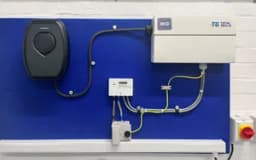
Related Course
EV Charging (2921)
EV charging installation — one of the fastest-growing specialisms in the trade.
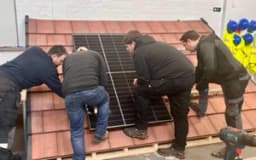
Related Course
Solar PV & Battery Storage
Solar PV and battery storage — renewable energy installation skills.
Why Train at Total Skills?
Total Skills is a City & Guilds accredited training provider with learners from across the UK. Our purpose-built training centre is easily accessible by road and rail. Here is why learners choose us for their fast-track pathway:
- ✓City & Guilds accredited centre — your qualifications are awarded by the UK's leading awarding body
- ✓Purpose-built practical workshops — modern training bays with professional equipment, not a classroom with a few wiring boards
- ✓Experienced industry tutors — qualified electricians who have worked in the trade, not just teaching it
- ✓Small class sizes — hands-on attention when you need it, so nobody falls behind
- ✓Clear qualification pathway — from your first day on Level 2 through to your Gold Card, we guide you through every step
- ✓Accessible from anywhere in the UK — training centre with free on-site parking, learners travel from London, Birmingham, Manchester and beyond
- ✓Payment plans available — spread the cost of your training to make it affordable
Related Guides
How to Become an Electrician in the UK: 4 Routes Compared (2026)
Four routes to becoming a qualified electrician: apprenticeship, fast-track diploma, FE college, or experienced worker assessment. Costs from £0–£11k.
Read guideCareer Change to Electrician at 30, 40 or 50: A Realistic Guide
Honest advice for adults retraining as an electrician — no experience needed. Train part-time around your job, qualify in 18–24 months, earn £35k–45k.
Read guidePart-Time Electrician Course: How to Train Around Your Job (2026)
Become an electrician part-time — study theory online in evenings, attend practical workshops on weekdays or weekends. Same City & Guilds qualification.
Read guideElectrician Course Online: What You Can Study From Home
Online electrician courses let you study theory from home, but practical skills need hands-on training. Our online-plus-workshop model gets you qualified.
Read guideFrequently Asked Questions
How long does the fast-track electrician course take?
How much do fast-track electrical courses cost in 2026?
Are there free fast-track electrical courses?
Is the fast-track qualification the same as an apprenticeship?
Do I need any prior experience to start?
Can I work while doing the fast-track course?
What age can I start the fast-track route?
Do I need GCSEs to enrol?
Is there funding available for fast-track courses?
What is the pass rate for the fast-track course?
Where does the training take place?
What tools do I need for the course?
Ready to Start Training?
Browse our City & Guilds accredited courses and take the next step in your electrical career.